Budget 2025: At a glance - what is in Rachel Reeves' announcement
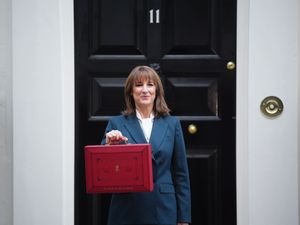
Rachel Reeves's second Budget has been delivered, both in the House of Commons and partly ahead of time after an analysis by watchdog the Office for Budget Responsibility (OBR) was inadvertently published.
Here is a handy guide outlining some of the key points in today's statement by the Chancellor.
Economic growth
The OBR has increased its forecast for economic growth this year from one per cent to 1.5 per cent but downgraded its forecasts for the following four years.
Income tax thresholds.
The Chancellor will extend a freeze of income tax thresholds until 2030, a move previously described as a "stealth" tax rise.
This will drag more people into paying the tax for the first time and others into paying a higher rate as wages rise.
The OBR said the freeze in tax thresholds would result in 780,000 more basic-rate, 920,000 more higher-rate and 4,000 more additional-rate income tax payers in 2029/30 and estimated it will raise around £7.6 billion in 2029/30.
Pensions and salary sacrifices
Ms Reeves will limit the amount of money people can put into their private pension pot, through a scheme called a salary sacrifice, before it incurs tax.
Anything above the new £2,000 cap will incur national insurance contributions from 2029, a move which has been estimated to raise £4.7 billion in 2029/30 and £2.6 billion in 2030/31. At the moment, there is no limit.
Property taxes
A council tax surcharge will be introduced on properties worth more than £2 million in a so-called "mansion tax".
"There will be four price bands with the surcharge rising from £2,500 for a property valued in the lowest £2 million to £2.5 million band, to £7,500 for a property valued in the highest band of £5 million or more, all uprated by CPI inflation each year," the OBR said.
It is set to raise £0.4 billion in 2029/30.
Electric vehicles tax
Drivers of electric vehicles (EVs) will have to pay 3p per mile they drive under a new tax introduced by the Chancellor.
The move is in part to make up for falling revenues from fuel duty, as more motorists move towards using EVs.
Two-child benefit cap scrapped
The two-child cap prevents parents from claiming universal credit or tax credits for more than their first two children.
The cap, introduced by the Conservative government in 2017, has been widely criticised by Labour MPs and anti-poverty advocate groups who have said lifting it is one of the main levers ministers could take to alleviate poverty
The move is estimated to cost £3 billion by 2029/30, according to the OBR.
Travel costs frozen
A cut to fuel duty will be extended as a means of holding down the price of petrol at the pump.
The tax has been held at 57.95p since 2011, but the effective rate paid by drivers since 2022 has been 52.95p as a result of a "temporary" 5p cut. Rail fares have also been frozen for a year.