'Hard to imagine Shrewsbury without it' - The market hall building a town 'learned to love' marks 60 years
Shrewsbury's market hall building turns 60 this week - but its bold looks continue to be a point of contention for some.
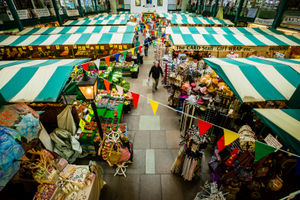
This week(Tuesday, September 16) marks six whole decades since the building's grand opening, with the indoor market, voted four times Britain's best, a firm favourite for years among the town's shoppers.
These days it's hard to imagine Shrewsbury without its imposing, modernist-style, market clock tower, towering over the county town at a height of over 200 feet.
The building has been an unmistakeable facet of the town's skyline for the over half a century, creating a stark contrast with medieval Shrewsbury's well known love-affair with tudor architecture when it opened in late 1965.
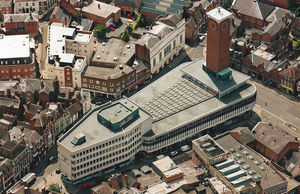
But it's not always been popular, and like many buildings of its era, it's proved something of an acquired taste.
Even so, it's fair to say the structure it replaced, the Italianate 19th-century market hall and corn exchange, fared little better in the hearts of Salopians.
Built in 1869 at a cost of £70,000, the building was the product of a grand programme of Victoria market hall-building, constructed as part of an effort to build grand new central market halls in towns and cities across the country.
Arguments had raged for 15 years about where to build Shrewsbury's grand new market, and after Wyle Cop and Pride Hill were both ruled out due to their topography, around 70 timber-frame buildings, including a number of pubs and a 16th century hotel were demolished to make way for a building which was to last less than a hundred years at the top of Mardol.
These days, perhaps greater efforts might be made to save a 19th century civic building, constructed at such grand scale and expense.
When it was eventually pulled down as part of a new-wave of municipal market-building, it was regarded as "no longer fit for purpose" by Shropshire Council.