'Progress made, but more to do' to address number of serious concerns at Shropshire Fire and Rescue Service says inspectorate
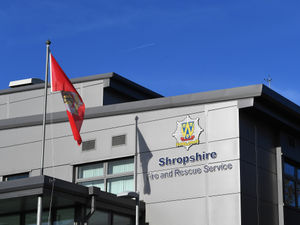
The county's fire service still has "work to do" to address a number of serious concerns, despite making "good progress" since a damning inspection, a new report has found.
Last year, His Majesty’s Inspectorate of Constabulary and Fire & Rescue Services (HMICFRS) identified "cause for concern" around the Shropshire Fire and Rescue Service's (SRFS) internal governance.
Inspectors said the fire service lacked adequate processes and controls to effectively manage strategic risks, performance, and improvement plans, and issued five formal recommendations for improvement.
Between July 21 and 24, inspectors returned to SFRS to review progress against a detailed action plan developed in response. During the revisit, they spoke with key personnel, including Chief Fire Officer Simon Hardiman.
In a letter to Mr Hardiman published today (September 19), inspector Kathryn Stone OBE acknowledged the service’s efforts to tackle the issues but said there is "still more work to do" to embed and sustain the changes.
"Despite good progress being made with cause of concern recommendations, there is still more work to do," the letter stated. "The service recognises this and has set deadlines for completing all tasks within its action plan that extend beyond the time of our revisit.
"The action plan is comprehensive and directs activity to address the recommendations. But most of the systems and processes developed so far in response to the cause of concern are still relatively new. The service will need to evaluate the changes and make sure they are accepted and understood by everyone across the service and are sustained in the longer term.
"We will continue to monitor progress as part of our next scheduled inspection."
The fire service was instructed to develop an action plan that included "appropriate strategic oversight arrangements" to effectively manage risks, performance and improvement plans effectively.
It was also told to ensure that the corporate risk register is actively used to mitigate and manage known risks, that performance management processes are effective, that the service has access to accurate data and analysis, and that there are robust systems in place for reporting detailed financial and risk information to the fire and rescue authority.
The inspector found that "appropriate" governance arrangements were in place to monitor progress of the action plan. These include monthly informal meetings between the transformation team and action owners to monitor activity, as well as fortnightly reviews by the senior management team, focusing on the cause of concern.
However, the inspector noted that the service should "improve the robustness of its governance arrangements". The letter highlighted that some updates provided to the fire authority were "brief and lack sufficient detail" on the challenges and barriers affecting progress against the recommendations.

The inspection found that SRFS has developed a well-structured action plan to address the previously identified concerns. The plan is said to break down each recommendation into specific tasks and objectives, assigns senior responsible officers, and sets clear timeframes for completion.
The letter said progress is tracked using an electronic system that allows action owners to provide live updates, enabling better visibility of ongoing work.
While most updates were found to be "comprehensive", the inspector noted that some lacked sufficient detail. The report advises the service to improve how it scrutinises these updates before marking actions as complete.
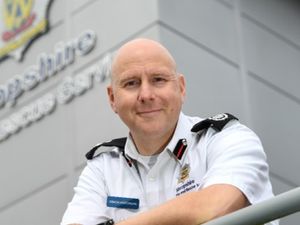
Responding to the letter, SRFS Chief Fire Officer Simon Hardiman said: "I am pleased that our good progress has been acknowledged, and the inspectorate has recognised all the hard work and dedication of our staff to get us to this point.
"We appreciate there is still work to do but I am confident we can deliver against the HMICFRS recommendations."
Progress against 'cause of concern'
The inspector said SRFS has made progress against the first recommendation, which focuses on strengthening strategic oversight of risks, performance, and improvement plans.
Key steps taken include overhauling the internal corporate meeting structure, embedding risk management oversight into fortnightly senior management meetings, and appointing a portfolio manager to enhance strategic direction. The fire service has also reviewed its internal structure to support these changes.
However, one objective - developing new corporate performance and health indicators - has been delayed. Despite this, the inspector said SRFS remains "confident" that it will meet the overall target for completing this recommendation by March 1 next year.
The inspection also found that the fire service had made "good progress" on ensuring its corporate risk register is actively used to "mitigate and manage" risks.
The fire service was found to have introduced a new risk assessment approach, delivered risk awareness training to senior managers and fire authority members, and developed a new corporate risk register and policy. It has also aligned its internal meetings to support regular monitoring.
However, inspectors noted that this work is still in its early stages and must now be embedded across the organisation to ensure long-term effectiveness. The letter said the fire service remains on track to meet its target completion date of July 31.
With regards to performance management, SFRS has reportedly completed several key actions, including publishing a new Community Risk Management Plan, introducing aligned departmental and station plans, providing mandatory training for managers, and improving performance review processes for staff.
Despite this progress, the letter said some timelines have been extended due to delays in developing new corporate performance and health indicators. However, the fire service is "confident" it will meet its deadline of March 1 for completing this recommendation.
The area requiring the most improvement relates to the service’s ability to access accurate data and analysis to support effective performance management. The letter stated that the fire service needs to do "more work within this cause of concern recommendation than any other".
The report said progress has been hindered by the unexpected retirement of the ICT manager, although the service has since developed a new digital strategy, reviewed its ICT structure, and completed a gap analysis.
The letter said it is a "positive" that the fire service is exploring collaborations with West Midlands Fire Service and has brought in external cyber security support.
Inspectors said it "appreciates the negative effect" of losing the ICT manager, and "realises" that the new head of digital and data will need time to get up to speed.
The fire service has set a longer completion target of December 31, 2028 to complete this work. Inspectors warned that this timeframe may not be prioritised strongly enough and requires "greater focus" moving forward.
Furthermore, regarding the recommendation to improve financial and risk reporting, the fire service has reportedly made positive steps by strengthening leadership capacity, revising reporting processes, and improving statutory officer provision. It has also gathered feedback from senior managers and fire authority members to enhance the quality of financial reports.
However, the letter said further work remains, particularly around project reporting. SRFS has pushed its original completion date back from April 1 to September 1 this year.
The letter can be found here. SRFS has been contacted for comment.