Alarm at low uptake of crucial vaccines for five-year-olds - we have all the figures for the West Midlands
Not a single childhood vaccine in England last year met the target needed to ensure diseases cannot spread among youngsters, according to new figures.
There also continues to be sharp differences in uptake across regions of the country – and rural parts of the West Midlands like Shropshire and Staffordshire have a far higher uptake than urban areas like the Black Country.
It comes as health officials warned almost one in five children will be starting primary school next month without full protection against a number of serious diseases.
The World Health Organisation (WHO) recommends at least 95 per cent of children should receive vaccine doses for each illness to achieve herd immunity.
However, none of the main childhood vaccines in England reached this target in 2024/25, new figures from the UK Health Security Agency (UKHSA) show.
Some 91.9 per cent of five-year-olds had received one dose of the MMR (measles, mumps & rubella) vaccine, unchanged from 2023/24 and the lowest level since 2010/11.
Just 83.7 per cent of five-year-olds had received both MMR doses, down year on year from 83.9 per cent and the lowest level since 2009/10.
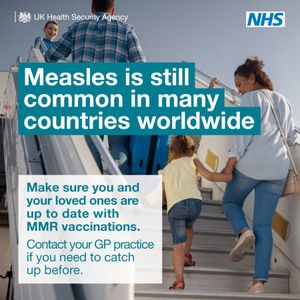
Uptake of the first MMR dose at 24 months stood at 88.9 per cent in 2024/25 - unchanged on the previous year, but again the lowest figure since 2009/10.
Coverage for the Hib/MenC vaccine, which protects against haemophilus influenzae type B and meningitis C, stood at 88.9 per cent for children in England aged five, down from 89.4 per cent in 2023/24 and the lowest level since 2011/12.
Meanwhile, uptake of the four-in-one pre-school booster vaccine - which protects against polio, whooping cough, tetanus and diphtheria - stood at just 81.4 per cent among five-year-olds in England in 2024/25.
This is down from 82.7 per cent the previous year and the lowest since current data began in 2009/10. The figure peaked at 88.9 per cent in 2012/13.
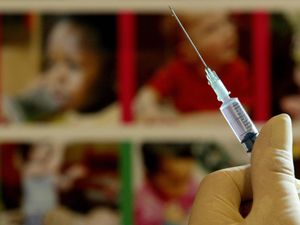
Here are all the figures you need to know for the West Midlands:
Vaccine at age five. 2024/5 figure with 2023/24 figure in brackets.
1. MMR vaccine (measles, mumps & rubella), both doses at age five:
Top: Cumbria 94.3% (94.8%)
Worcestershire 90.4% (90.6%)
Shropshire 90.3% (89.3%)
Dudley 88.5% (87.9%)
Staffordshire 88.2% (87.9%)
Telford & Wrekin 87.9% (85.5%)
Walsall 83.7% (83.2%)
Wolverhampton 80.1% (77.6%)
Sandwell 79.2% (79.4%)
Birmingham 75.5% (74.8%)
2. Four-in-one booster (polio, whooping cough, tetanus & diphtheria) at age five:
Top: Cumbria 94.3% (94.4%)
Shropshire 89.3% (88.7%)
Worcestershire 89.2% (89.5%)
Staffordshire 87.4% (87.4%)
Dudley 87.2% (87.2%)
Telford & Wrekin 86.4% (84.8%)
Walsall 81.8% (82.1%)
Wolverhampton 78.8% (76.3%)
Sandwell 76.9% (77.7%)
Birmingham 73.5% (73.9%)
3. Six-in-one vaccine (diphtheria, pertussis, tetanus, polio, disease caused by Haemophilus influenzae type B, and hepatitis B) at age five:
Top: East Riding of Yorkshire 97.6% (97.8%)
Shropshire 96.4% (95.5%)
Staffordshire 96.2% (95.6%)
Worcestershire 95.8% (96.5%)
Telford & Wrekin 95.4% (95.1%)
Dudley 94.6% (94.8%)
Walsall 92.9% (93.1%)
Wolverhampton 91.5% (90.2%)
Sandwell 91.4% (91.4%)
Birmingham 88.5% (89.0%)
Dr Mary Ramsay , director of immunisation at UKHSA, said: "Far too many children will not be fully protected and safe when starting school, and are at risk of serious diseases, such as measles and whooping cough, that have in recent years caused outbreaks.
"Measles, being the most infectious disease, is the 'canary in the coalmine' and a wake-up call that urgent action is needed to stop the very real risk of other diseases re-emerging.
"That is why there needs to be a concerted effort in providing these vitally important vaccines, to make time to speak and reassure any parents who may have concerns, and make it as easy as possible for their children to get vaccinated."
The UKHSA urged parents to check their children are up to date with their jabs and to contact their GP as soon as possible if they are not.
Dr Ramsay added: "Ensuring all our children starting primary school are fully protected is essential to keep them safe and give them the best opportunity to thrive at school."
Elsewhere, some 91.4 per cent of children had completed their primary course of the six-in-one vaccine by the age of 12 months, up year on year from 91.2 per cent.
The jab protects against diphtheria, pertussis, tetanus, polio, disease caused by haemophilus influenzae type B, and hepatitis B, and comprises three doses given at eight, 12 and 16 weeks.
It is the first year-on-year increase in uptake of this type of vaccine since 2019/20.
The proportion of five-year-olds in England covered by the six-in-one vaccine also rose slightly, from 92.6 per cent in 2023/24 to 92.8 per cent in 2024/25.
It is the first time uptake at age five has risen since 2019/20.
Coverage for the six-in-one vaccine at age five met the 95 per cent target for 10 years in a row, from 2011/12 to 2020/21 (it was known as the five-in-one vaccine for part of this period).
UKHSA data also shows there are still sharp differences in vaccine uptake in regions of England .
Some 90.2 per cent of five-year-olds in the North East were estimated to have received both doses of the MMR vaccine in 2024/25, the highest level for any region, while London had the lowest figure, at 69.6 per cent.
Take-up of the Hib/MenC vaccine among five-year-olds ranged from 93.5 per cent in south-west England to 80.0 per cent in London .
North-east England had the highest estimated take-up for the primary course of the six-in-one vaccine by the age of 12 months, at 95.4 per cent, while London again had the lowest, at 86.3 per cent.
For take-up of the six-in-one vaccine at the age of five, south-west England had the highest figure at 95.6 per cent while London had the lowest at 86.5 per cent.
Regional uptake of the four-in-one booster for the most recent year ranges from 88.9 per cent in north-east England to 63.8 per cent in London .
Health minister Stephen Kinnock said: "We know parents want to do right by their children and we're working with the NHS to make it easier for all families to access these life-saving vaccines.
"Vaccines save thousands of lives every year and prevent countless hospital admissions. I urge all parents to check their child's vaccination record and contact their GP practice if any jabs are missing."