Watch: Birth of rare African 'unicorn' caught on camera at Chester Zoo
The birth of one of Africa's shyest animals has been caught on CCTV cameras at Chester Zoo.
Nicknamed the 'African unicorn' due to its shy and mysterious nature, Chester Zoo has celebrated the birth of a rare okapi in the early hours of May 6.
Caught on CCTV, the footage shows the calf falling to the ground before clambering to its feet only a few minutes later and taking its first wobbly steps.
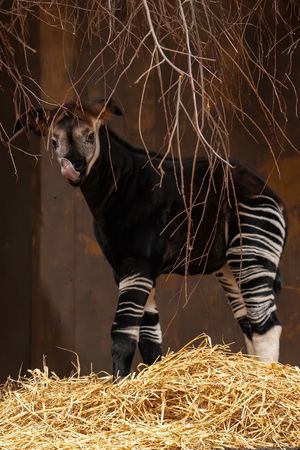
The African okapi is the national symbol of the Democratic Republic of Congo (DRC) and is protected under Congolese law.
However, despite being a protected species, the population of okapi has declined by more than 50 per cent over the last 20 years.
The sharp decline is driven by illegal hunting for their meat and skins, the widespread loss of their natural habitat and the civil conflict in the country.
Having spent the first few weeks with its family's hidden next, the newborn okapi was affectionately named Miloli, which translates to 'Joy' in Bantu, a family of languages spoken in central Africa.
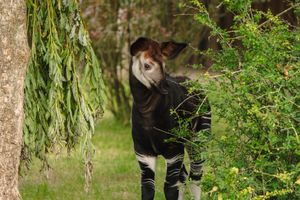
The species is only found in the dense rainforest of the DRC, and so elusive that it went undiscovered to Western science until 1901. The International Union for the Conservation of Nature (IUCN) has classified the species as Endangered on its Red List of Threatened Species.
Fiona Howe, lead keeper at Chester Zoo, said: "The birth of an okapi is always a very special occasion and cause for celebration, but to watch as mum Ada calmly welcomes her new baby into the world and gently encourages him to his feet, was nothing short of magical and offers a special insight into one of nature’s most elusive and secretive species.
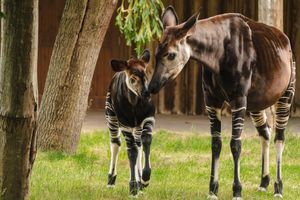
“Miloli has spent the first few weeks of life tucked away in a quiet nest area, bonding with mum Ada as she forages for food nearby, periodically returning to feed her new youngster with milk – she’s a doting mum and is doing everything perfectly so far, which is just great to see.
“Although it looks like Miloli is sporting black and white stripey socks, these patterns play an important role as, now that he’s gained enough confidence to do so, he has followed the stripes on his mum’s hind legs and has she lead him out of the nest to begin exploring their outdoor habitat for the first time together.”
The zoo has been working alongside the Uganda Wildlife Authority to conduct surveys for Okapis in Semuliki National Park, Uganda, which borders the DRC.
It has also been a long-term supporter of the Okapi Conservation Project that is based at the Okapi Wildlife Reserve in the Ituri Forest, DRC.