We go behind the scenes with the West Midlands RAF Museum on its exciting mission to relocate an 'Aladdin's cave' of aviation heritage
Sitting innocuously amongst thousands of historic objects including bombs, artillery, clothes and aircraft, is a hair comb - but one like no other.
Hidden away within the comb is a hacksaw blade that soldiers and RAF personnel could use to help them return to Allied territory.
The hair comb was part of a package of evasion aids that were distributed to servicemen during World War Two. They were invented and designed by an MI9 team, under direction of Christopher William Clayton Hutton, and sent to prisoner of war camps.
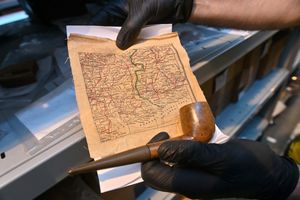
Other objects included a pipe that featured a map, as well as magnetic pins that could be used for navigation purposes and to help someone find out which way was north.
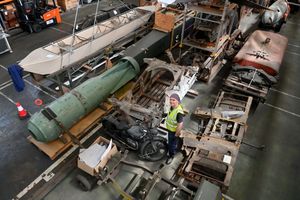
These items make up a small percentage of a cave of aviation heritage at MOD Stafford, including everything from aircraft and ejector seats to uniforms, medals and memorabilia, that belong to the West Midlands Royal Air Force Museum in Cosford.
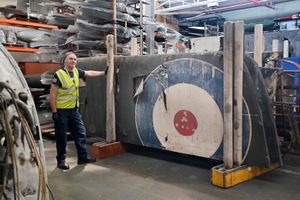
The Star went behind the scenes as the museum is on a mission to relocate more than 50,000 objects, each with their own remarkable story, to a new purpose-built collections hub at its facility, where they will be made available for public viewing for the very first time.
To achieve this feat, the museum is inviting residents and businesses to join its fundraising campaign 'The Crate Escape', which will support the project and the preservation of the historic objects.
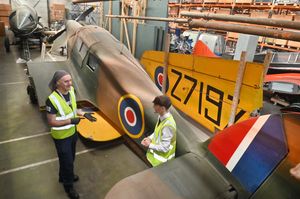
The huge logistical operation marks a key phase in the museum's wider transformation project that is due to be completed in the summer of 2027. This will see the creation of a new exhibition that explores the role of the RAF from 1980 through to space and cyber defence, alongside the creation of a state-of-the-art learning centre and green spaces for visitors.
Curator at the RAF Museum in Cosford, Ewen Cameron is part of the team who are packaging and moving these objects out of storage. And his knowledge is remarkable.
During a tour of the facility, Ewen revealed some of the weird and wonderful historic objects within the storage space, including a tin can that once contained fluid which was used on a toilet inside a plane such as a Lancaster bomber.
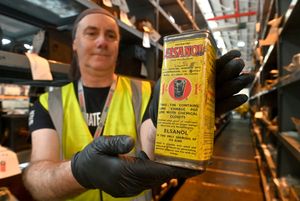
"Everything you see inside the hangar has to be packed away and brought to the new collections hub at the museum in Cosford," said Ewen. "So we have just a little bit of a job to do as there are more than 50,000 items catalogued in our system here.
"That is only the stuff that is catalogued, there are thousands of more items as well.