New chapter for Soulton Hall as committee findings enter Hansard
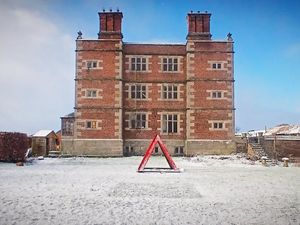
The effort to decode the 16th-century enigmas of Soulton Hall has moved from the realm of private research into the permanent archives of the British state. This month, the outputs of an initial committee of inquiry were formally recorded in the House of Commons, providing a democratic seal of arrival for discoveries that link this Shropshire estate to the "spiritual heart" of Tudor London.
This milestone follows the successful entry of the inquiry’s findings into the Shropshire Council record, but the transition to Westminster elevates the "Soulton Case" to a matter of national policy.
The process began on March 3, when North Shropshire MP Helen Morgan challenged the Department for Culture, Media and Sport (DCMS) to assess the Byrga Geniht studies. These studies suggest that Soulton Hall was not merely a home, but a sophisticated, purpose-built repository designed by Sir Rowland Hill to safeguard the High Altar stone of Old St Paul’s and the remains of Saint Erkenwald during the cultural upheavals of the 1550s.
Responding on 10 March, Minister Ian Murray confirmed that the government has formally acknowledged the research. In a significant procedural development, the Minister revealed that Historic England is currently reviewing an application to update the "List entry"—the statutory legal description—for Soulton Hall to reflect these findings.

This move suggests the site’s heritage status is being re-evaluated to account for its possible role as a 16th-century memorial and sanctuary.
The ministerial responses also clarified the state’s role in supporting such "unexpected discoveries."
While the government noted that no specific "faith fund" exists, it pointed to direct support available through Historic England for the conservation of archaeological remains. Significantly, the DCMS highlighted that planning reforms are underway to ease the burden on private stewards who manage national patrimony, acknowledging that the preservation of such high-status history often rests on independent shoulders.
While the physical evidence was being debated, the inquiry also secured a victory for Shropshire’s regional strategy. On 9 March, Minister Stephanie Peacock validated a new inter-county partnership between Shropshire and Essex, designed to launch a modern "Grand Tour of England." The Minister cited this as a "strong example of partnership working," confirming that VisitEngland and VisitBritain are now integrating these regional heritage narratives into the global travel trade.
By placing these findings within the Parliamentary record, the committee of inquiry has ensured that Soulton Hall’s connection to the broader English story is no longer a matter of local speculation, but a recognized asset in the UK’s national cultural strategy.