The murder that shocked Shropshire
In 1848, Mercy Newton was arrested in Bridgnorth and charged with murder. Her trials made her famous all over Britain. Local author, Emma Woodhouse, has unearthed her story in her new book, Mercy, published by Cranthorpe Millner, released for sale this week.
In December 1848, a charred corpse was discovered in the brew house of a house belonging to Richard Dyer, on Underhill Street in Bridgnorth. His housekeeper, Mercy Newton, was arrested and charged with murder. The victim was her own mother, Anne Newton.
"I first discovered Mercy's story three years ago, as I was looking through the British Newspaper Archives," Emma Woodhouse says. "Newspaper article after newspaper article kept on cropping up and I realised that her story was sensational. Not only that, but there was so much more to her life story. I was hooked."
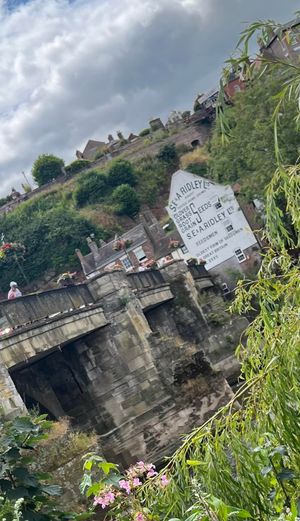
Emma began searching the historical record for anything she could find. Prison records, census records, birth, marriage and death certificates, maps and Last Will and Testament documents all provided valuable sources to uncover the details. "I used Shrewsbury Archives, and went on so many walks around Bridgnorth, checking locations and just imagining how it all unfolded," she says.

Public opinion at the time was against Mercy. People amassed outside Bridgnorth Town Hall, calling for her to be found guilty as the coroner conducted his inquiry.
"People believed she was guilty of matricide," Woodhouse says. "They wanted her hanged."
Mercy's story became famous across the UK for the three years after her arrest. Jury after jury failed to reach a verdict. And during that time, public opinion changed.
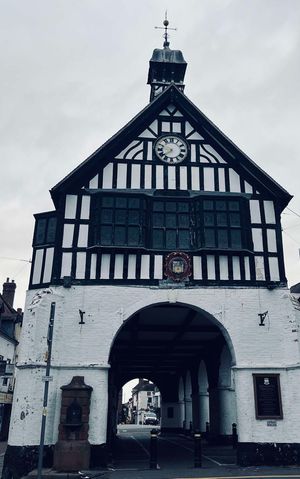
"The people of Bridgnorth did an about face," Woodhouse says. "They'd been through local lockdowns due to cholera outbreaks, they'd suffered. They'd read about her in the papers, they'd gossiped about her on street corners, walked past the house she was arrested in. By 1850, they wanted her released. They petitioned the Home Office."
One thing Woodhouse does not want to do, is to cast Mercy as a heroine. One Goodreads reviewer, freelance writer and reviewer, Jonathan Crain, writes of the novel:
""Mercy" traces three generations of women—Anne Edwards, her daughter Mercy Newton, and granddaughter Maria Newton—whose lives are marred by cycles of addiction, violence, and social marginalization. But this is not a story of redemption in any conventional sense. Woodhouse explicitly resists the idea of a heroine; what she offers instead is a study of human resilience under conditions designed to crush it."
Woodhouse agrees. "Mercy is not always a likeable character," she says. "She is flawed, like I am, like we all are. What I wanted to show was the struggle and the depths she straddled to keep herself out of poverty. In fact, all of my writing does this. My standpoint is one of social critique, exploring how some women chose to behave in ways others would never consider in order to remain above water, so to speak."
Although the novel begins in Bridgnorth, Shrewsbury, Wolverhampton and Cardiff are all part of the story too.
"The book is a novel, but it is massively factual, and that really mattered to me, that readers got to know Mercy's true story, and that of her mother, Anne, and her daughter, Maria. These are real lives, real loves, real suffering, real triumph, real loss. I truly believe that, had Mercy been a rich woman, nobility or royalty, everyone would know her story. But as a working-class woman, she has been forgotten."
Forgotten, that is, until now.
First becoming obsessed with the Victorian era when she worked for the Ironbridge Gorge Museum at the Blists Hill site, Emma's writing is all grounded in the Victorian age. "Working at Blists Hill had a profound effect upon me," says Emma, who has been working as a teacher now for fifteen years. "Working there changes you. You become so immersed in the time period, and I've never been able to shake it off."
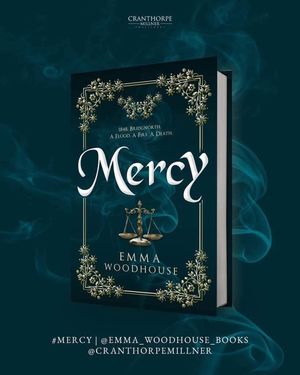
Emma will be undertaking signing events at bookshops and libraries, and chatting on BBC Radio Shropshire on Tuesday 5th August about Mercy.
Mercy is Emma's fourth novel, published this month by Cranthorpe Millner. She is also the author of The Prendergast Watch, Simple Twists of Fate, and Mary, Queen of the Forty. Emma's first non-fiction book comes out in January 2026 with Pen and Sword Books.
Mercy is published by Cranthorpe Millner Publishers, ISBN: 9781803783093 and is available in paperback (£12.99) and Kindle format.