Sudan tops global humanitarian crisis watchlist for third year as war continues
The International Rescue Committee called for scaling up global funding as 2025 is on track to become the deadliest year for humanitarians.
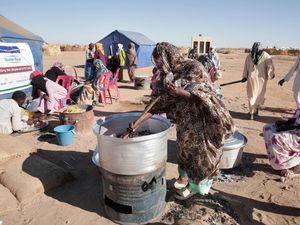
Sudan topped a watchlist of global humanitarian crises released on Tuesday by an international aid group for the third year in a row, as a devastating war grips the north-eastern African country.
The International Rescue Committee (IRC) said Sudan was at the top of its annual Emergency Watchlist, which included 20 countries at risk of worsening humanitarian crises in 2026.
The IRC called for scaling up global humanitarian funding, which has shrunk by 50% in the outgoing year and is on track to become the deadliest year for humanitarians.
The list had the occupied Palestinian territories and South Sudan ranked second and third, respectively, due to debilitating humanitarian conditions.
It also included Ethiopia, Haiti, the Democratic Republic of Congo, Lebanon and Ukraine.
Syria and Yemen, both riddled with civil wars for more than a decade, were also listed.
Though the 20-country list represents just 12% of the world’s population, it accounts for 89% of those in need, with 117 million displaced people, the IRC said.
The group expects the listed countries to host more than half of the world’s extremely poor by 2029, calling the crises a “New World Disorder” replacing “the post-Second World War international system once grounded in rules and rights”.
The IRC said many of the conflicts are driven by struggles for power and profit.
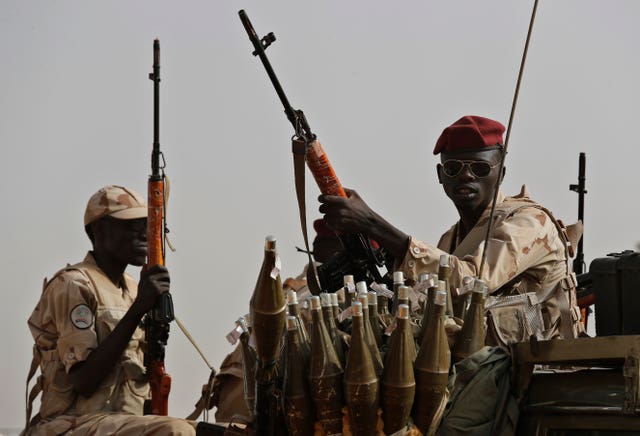
In Sudan, the group says, the warning parties and their international backers are benefiting from the gold trade, which has devastating impacts on civilians.
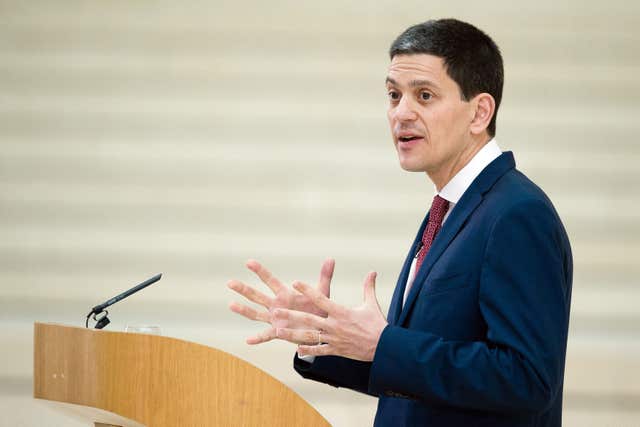
David Miliband, president and chief executive of the IRC, said: “This year’s watchlist is a testament to misery but also a warning. The New World Disorder is here, and winds are picking up everywhere. Disorder begets disorder.”
The group called for a set of binding actions in response to global crises, including the suspension of UN Security Council veto power in cases of mass atrocities.
Sudan plunged into chaos in April 2023 when a power struggle between the military and the powerful paramilitary Rapid Support Forces (RSF) exploded into open fighting, with widespread mass killings and rapes, and ethnically motivated violence.
This has amounted to war crimes and crimes against humanity, according to the UN and international rights groups.
The devastating war has killed more than 40,000 people, according to United Nations figures, but aid groups say that is an undercount and the true number could be many times higher.
The conflict created the world’s largest humanitarian crisis, with more than 14 million people displaced, disease outbreaks and famine spreading in parts of the country.
Mr Miliband added: “The scale of the crisis in Sudan … is a signature of this disorder.”
He called on the international community to take urgent action to stop 2026 from becoming “the most dangerous year yet”.
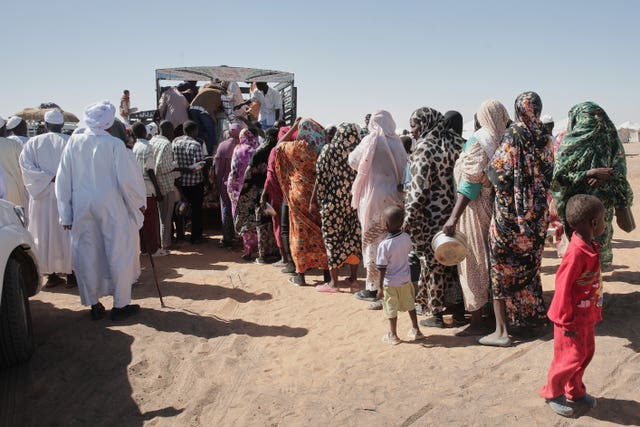
Both the RSF and the military were accused of violating international law over the course of the war.
However, most of the atrocities were blamed on the RSF, which the Biden administration said had committed genocide in Darfur.
The most recent atrocities happened in late October when the RSF took over el-Fasher city, which was the military’s last stronghold in the sprawling Darfur region.
Witnesses told The Associated Press in October that RSF fighters went house to house, killing civilians and committing sexual assaults in the city.
UN High Commissioner for Human Rights Volker Turk said last week that war crimes and “potentially” crimes against humanity were committed in the city.
Satellite images, analysed by the Yale School of Public Health’s Humanitarian Research Lab (HRL), appear to show that the RSF, since gaining control of the city, engaged in “widespread and systematic mass killing,” including of civilians attempting to flee the city and those seeking refuge in the Daraja Oula neighbourhood, the last known major civilian refuge in the city.
The HRL’s report, released on Tuesday, said the RSF then launched a “systematic multi-week campaign” that aimed at destroying evidence of atrocities in the city.
The RSF did not immediately respond to a request for comment.