Japanese PM Shigeru Ishiba vows to stay in power despite growing calls to resign
The ruling coalition lost its majority on Sunday.
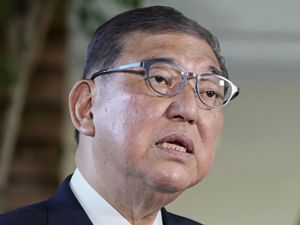
Japanese Prime Minister Shigeru Ishiba has vowed to remain in power to oversee the implementation of a new Japan-US tariff agreement, despite media speculation and growing calls for him to resign after the historic defeat of his governing party.
Mr Ishiba met heavyweights from his Liberal Democratic Party (LDP) and former prime ministers Taro Aso, Fumio Kishida and Yoshihide Suga at party headquarters.
He told reporters afterwards that they did not discuss his resignation or a new party leadership contest, but only the election results, voters’ dissatisfaction and the urgent need to avoid party discord.
Despite his business-as-usual demeanour, Mr Ishiba is under increasing pressure to bow out after the LDP and junior coalition partner Komeito lost their majority in Sunday’s election in the 248-member upper house, the smaller and less powerful of Japan’s two-chamber parliament, shaking his grip on power.
It came after a loss in the more powerful lower house in October, and so his coalition now lacks a majority in both houses of parliament, making it even more difficult for his government to pass policies and worsening Japan’s political instability.
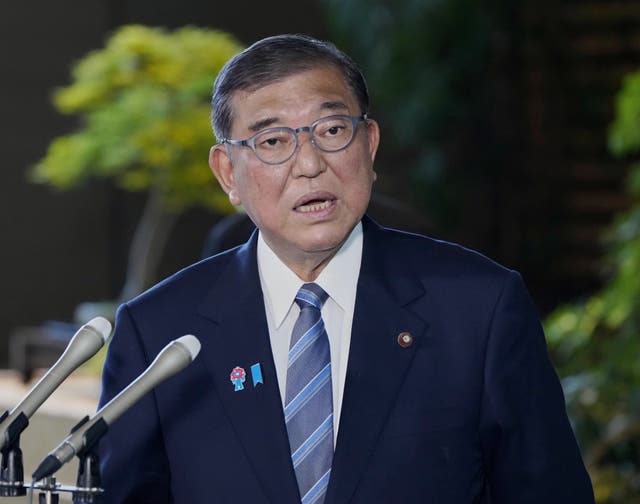
Mr Ishiba says he intends to stay on to tackle pressing challenges, including tariff talks with the US, so as not to create a political vacuum despite calls from inside and outside his party for a quick resignation.
Mr Ishiba “keeps saying he is staying on. What was the public’s verdict in the election all about?”, said Yuichiro Tamaki, head of the surging Democratic Party for the People (DPP).
At the LDP, a group of younger politicians led by Yasutaka Nakasone started a petition drive seeking Mr Ishiba’s early resignation and renewal of party leadership.
“We all have a sense of crisis and think the election results were an ultimatum from the voters,” he said.
Japanese media reported that Mr Ishiba is expected to soon announce plans to step down in August.
The conservative Yomiuri newspaper said in an extra edition on Wednesday that Mr Ishiba had decided to announce his resignation by the end of July after receiving a detailed report from his chief trade negotiator, Ryosei Akazawa, on the impact of the US tariffs on the Japanese economy, paving the way for a new party leader.
Mr Ishiba denied the report and said that he wants to focus on the US trade deal, which covers more than 4,000 goods affecting many Japanese producers and industries.
He welcomed the new agreement, which places tariffs at 15% on Japanese cars and other goods imported into the US from Japan, down from the initial 25%.
Still, local media are already speculating about possible successors. Among them are ultraconservative former economic security minister Sanae Takaichi, who lost to Mr Ishiba in September. Another conservative ex-minister, Takayuki Kobayashi, and agriculture minister Shinjiro Koizumi, the son of former popular prime minister Junichiro Koizumi, are also seen as potential challengers.
In Sunday’s election, voters frustrated with price increases exceeding the pace of wage hikes, especially younger people who have long felt ignored by the ruling government’s focus on senior voters, rapidly turned to the emerging conservative DPP and right-wing populist Sanseito party.
None of the opposition parties have shown an interest in forming a full-fledged alliance with the governing coalition, but they have said they are open to co-operating on policy.