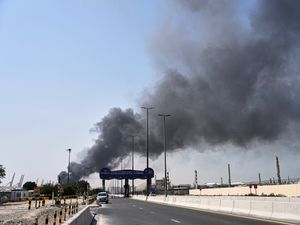
UK mounts major operation to support thousands stranded in the Gulf
Those in Bahrain, Israel, Palestine, Qatar and the UAE have been urged to register their presence with the Foreign Office online.
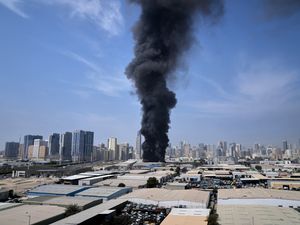
The UK has mounted an unprecedented operation to support hundreds of thousands of British nationals in the Gulf as Iranian missile strikes continue to rock the region.
Officials at the Foreign Office are understood to be working on plans for potential evacuation routes should airspace in the Gulf remain closed.
But British nationals are currently being advised to stay where they are and follow the instructions of local authorities and monitor the Foreign Office’s travel advice, which officials expect to change rapidly.
Those in Bahrain, Israel, Palestine, Qatar and the UAE have been urged to register their presence with the Foreign Office online.
More than 76,000 people, mostly in the UAE, have already registered their presence, a scheme the Government has used before to provide urgent updates to people affected by international crises.
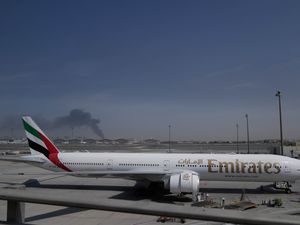
Ambassadors in the UAE and Qatar also remain in frequent contact with major airlines.
The scale of the consular operation is unprecedented, with the “register your presence” scheme never previously handling so many people in so many different countries.
Efforts to support British nationals, driven by the Foreign Secretary Yvette Cooper and minister Hamish Falconer, come as US and Israeli combat operations against Iran entered their second day on Sunday.
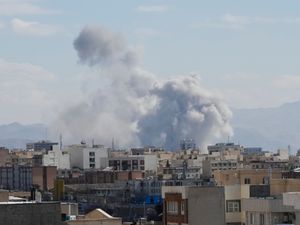
The Israeli military said it had continued to hit sites in central Tehran following the death of Supreme Leader Ayatollah Ali Khamenei in an airstrike on Saturday morning.
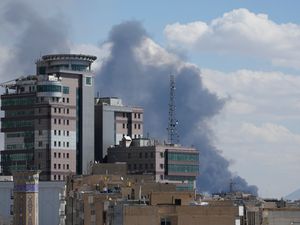
Iran has vowed to retaliate with “devastating blows” and has fired missiles at many of its neighbouring countries as well as US military targets.
Israeli authorities reported Iranian missiles had killed nine civilians in Beit Shemesh, near Jerusalem, while the US military’s Central Command said three American service members had been killed and five others severely wounded on Sunday.
Central Command gave no further details about those killed or wounded, but has rejected Iranian claims that the aircraft carrier USS Abraham Lincoln had been hit by ballistic missiles.

It is understood that no British nationals have been killed or injured so far in the conflict.
But Defence Secretary John Healey said some 300 UK troops had been within “a few hundred yards” of an Iranian strike on a base in Bahrain.
Two missiles have also been fired in the direction of Cyprus, where thousands of UK personnel are stationed, although the Government does not believe these were deliberately targeted at the British bases there.
Meanwhile, Sir Keir Starmer has spoken to regional leaders to express his “solidarity” in the face of “dangerous Iranian escalation”.
Ms Cooper has also been engaged in a major diplomatic push, speaking to her regional counterparts along with US secretary of state Marco Rubio and other G7 foreign ministers.
The UK played no role in the strikes on Saturday, but has begun defensive operations, including shooting down Iranian drones over northern Iraq.
On Sunday, a Typhoon jet from the RAF’s 12 Squadron – based at the Al Udeid airbase in Qatar – shot down an Iranian drone, according to defence sources.
While Britain, along with France and Germany, has condemned Iran’s retaliation, ministers have so far declined to say whether they support the joint US-Israeli attack or whether they believe the initial strikes were legal.
Asked six times by the BBC’s Laura Kuenssberg whether the UK backed the strikes or thought they were legal, Mr Healey declined to give a direct answer.
He said: “Britain played no part in the strikes on Iran.
“We share, however, the primary aim of all allies in the region and the US that Iran should never have a nuclear weapon.”
He later added: “It is for the US to set out the legal basis of the action that it took.”
The Government, along with France and Germany, has condemned Iran’s retaliation and urged Tehran to return to the negotiating table.
But other allies have gone further, with both Canada and Australia saying they supported the US “acting to prevent Iran from obtaining a nuclear weapon” and continuing to threaten “international peace and security”.
The Government’s reluctance to say whether it backed the strikes has drawn criticism from parties to both its left and right.
Branding the attacks “illegal and unprovoked”, Green Party leader Zack Polanski told the BBC: “We’ve got a Defence Secretary saying that diplomacy is the long runway we need but won’t condemn Donald Trump when he attacks a country and assassinates its leader.
“That’s the law of the jungle. That’s an end to international law.”
But Conservative shadow foreign secretary Dame Priti Patel said the Government should have been “more proactive” in supporting the strikes.
She said: “Why were some of our bases not used? And was the British Government asked about use of our military bases in the defensive strikes that took place?”
The Government has so far declined to say whether the US asked for permission to use British bases for the strikes, including Diego Garcia in the Indian Ocean.