Outrage is driving rapid social media law changes, leading campaigner says
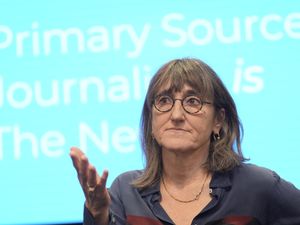
Baroness Kidron told the Press Association recently passed laws have failed to meet campaigners’ expectations.
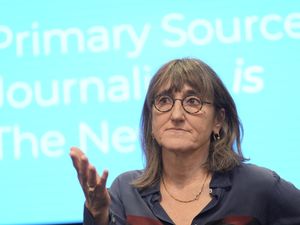
Online safety campaigners are not “winning the argument” but “outrage” is driving change in the law, a filmmaker and children’s rights campaigner has warned.
Baroness Kidron, who founded the digital child safety organisation 5Rights, told the Press Association recently passed laws have failed to meet campaigners’ expectations.
Ellen Roome, who believes her 14-year-old son Jools Sweeney died while attempting an online challenge, has also said families are spending “years fighting for answers that should never have been denied”.
The Crime and Policing Bill is due for debate in the Lords on Tuesday, and Lady Kidron has tabled a suite of amendments in a bid to better preserve social media data which could be relevant to the authorities when they investigate a child death.
The crossbench peer also voted for an under-16s social media ban last Wednesday, as part of the Children’s Wellbeing and Schools Bill.
But she called in the Lords for “a better answer than a ban” which tackles “root harms” while still giving children access to the internet.
The Government is consulting on measures to bolster children’s wellbeing online, which could include a minimum age to access social media and removing features thought to be addictive.
“We’re winning the crisis – it’s a crisis,” Lady Kidron said.
“I don’t think we’re winning the argument, really.
“What we’re doing is we’re winning the outrage.
“And the Government will probably out of political expediency do the wrong thing which is, just bring in a ban without thinking about the political context or the regulatory context.”

Lady Kidron, whose film credits include Bridget Jones: The Edge of Reason, said she voted for a children’s social media ban because lawmakers “have to have something” in place to protect children’s wellbeing.
She said if some digital platforms were “a toy or a fridge or an airbag, they would be recalled by now”, warning tech firms had “created a state of exceptionality which actually translates into a state of lack of liability”.
Ofcom can already tell social media firms to preserve data about a child who has died, if requested by a coroner.
But this new mechanism “isn’t working”, Lady Kidron said, with coroners and investigators unaware of their Online Safety Act powers.
She has called for these data preservation notices to be automatic.
She said: “Whatever the circumstances are of a child’s death, the coroner, the police and parents need to know what’s been going on.
“This is not about apportioning blame to another user, to the site, to the child. It’s about having the information so that one can come to a conclusion about what the contributing factors are.
“And I think there’s a fundamental problem here which is, the virtual world, I think we used to conceive it as ‘other’ and ‘different’, but the virtual world is increasingly entangled with the real world and certainly for young people.
“And the same rules apply – if someone died, you’d look around the room, you’d look at what they were doing for the last few days, etcetera.
“And the same rules must apply online.
“So, I think people get confused because of the word ‘data’, but data isn’t ‘data’, data’s ‘information’. It’s the circumstances.”

Ms Roome told PA: “Things are moving more quickly now because the scale of harm has become impossible to ignore.
“Too many children have been hurt or lost, and too many families, including mine after Jools died, have spent years fighting for answers that should never have been denied.
“Progress is welcome but it is still not fast enough.
“Laws only protect children if they are actually used and right now, vital digital evidence is still being lost in the early hours after a child’s death.
“Until data is preserved automatically and investigations are digitally competent from the outset, we will continue to react to tragedy rather than prevent it, and social media companies will remain beyond accountability because the evidence of what children were shown no longer exists.”
Meanwhile, Ms Roome has joined other bereaved parents to call on the Prime Minister to back a statutory ban on mobile phones in schools.
In a letter to Sir Keir Starmer, a group urged him to support an amendment to the Children’s Wellbeing and Schools Bill due to be debated in the House of Lords.
The group, led by Esther Ghey, whose daughter Brianna was murdered by two teenagers, said: “A consultation is not action, it is a delay, and while we wait, parents and teachers continue to struggle to protect young people, and children are being harmed.”
A Government spokesperson said: “We’ve been clear – we will take action to make sure children have a healthy relationship with mobile phones and social media.
“This is a complex issue with no common consensus and it’s important we get this right. That’s why we are launching a consultation to seek views from experts, parents and young people to ensure we take the best approach, based on the latest evidence.
“Families who have suffered the devastating loss of a child must never feel that the system is working against them.
“That is why the Online Safety Act compels companies to share data and cooperate fully with coroners’ inquiries where there is evidence of a link between a child’s death and their social media use.
“We have strengthened this further by giving coroners the power to require platforms to preserve data immediately, so vital evidence cannot be deleted. We will continue to monitor these powers and will not hesitate to act where evidence shows we need to go further.”