Bird, butterfly and dragonfly numbers soar at flagship rewilding project
A 20-year ecological review at Knepp Estate in West Sussex shows the restoration of natural processes has paid dividends for wildlife.
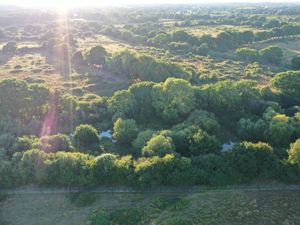
A flagship rewilding project has seen an explosion in wildlife since it began, with bird numbers increasing tenfold in the past two decades, monitoring shows.
A 20-year ecological review at Knepp in West Sussex shows soaring numbers of red-listed birds such as nightingales, while the variety of butterfly species has doubled on parts of the estate and the abundance of dragonflies and damselflies has risen by nearly 900%.
Isabella Tree, who owns Knepp with her husband Charlie Burrell, said they had “absolutely no idea” they would see such increases in nature when they began the project.
And it showed nature reserves could be much more ambitious about how much wildlife they could support, she said.

The couple halted conventional farming on their estate in 2000 and embarked on “rewilding” the estate.
This has involved restoring natural processes using animals including longhorn cattle, red and fallow deer, Exmoor ponies and pigs, whose grazing and foraging have helped create a mosaic of scrub, disturbed ground, grassland and wood pasture which provides habitat for a wealth of species.
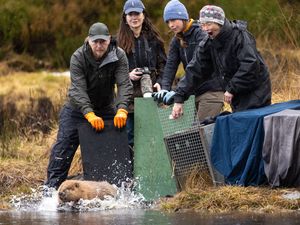
There is also woodland, the river has been “rewiggled” to a more natural state, beavers in an enclosure have turned a small stream into wetlands, and a reintroduction project has brought white storks back to the landscape.
Knepp has become a leading light for other rewilding projects that have since sprung up across Britain.
Now the latest ecological surveys show just how much wildlife has increased over two decades, compared to initial baseline surveys conducted in 2005 and 2007.

Monitoring reveals a 916% increase in the number of breeding birds in the southern part of the estate since an initial breeding bird survey in 2007.
And the number of different species has more than doubled, with a 132% rise in species richness.
Ecologists recorded a peak count of 55 individual birds from 22 species on a transect set up the southern block of the estate in a survey in 2007, but this soared to 559 individuals of 51 species along the same route in 2025.

Knepp now has around 27 species of “conservation concern” breeding on site, included 12 red-listed birds.
These include nightingales, which have seen numbers of singing males reaching 62 in 2025, up from just nine in 1999, as they benefited from the increase in scrubland and wood pasture – including 96 hectares (237 acres) of new scrub habitat in the southern part of the estate.
Knepp is estimated to hold around 1% of the entire UK population, ecologists said.
Highly threatened turtle doves have also increased from two singing males in a 2008 survey to 22 in 2024, and 14 in 2025, the monitoring shows.
Meanwhile, common whitethroats have seen numbers increase by 2,200% between 2007 and 2025 in the southern block of the estate, while lesser whitethroats are up 1,000%, chiffchaffs up 1,150% and wren numbers are up 500%.

Ecologist Fleur Dobner said the “biodiversity uplift is huge”, both in terms of variety of species, but also the numbers of individuals of each species, primarily due to the change in habitat.
“We’ve gone from a very open monoculture landscape to a real mosaic of parkland, scrubland, billowing hedgerows, open glades, rides and grassland.
“It’s a positive trajectory and it’s increasing still, year-on-year, we’re getting higher and higher numbers of what we’re recording,” she said.
There has also been a 107% increase in the number of species of butterflies recorded in the middle and northern parts of the estate, which features more open grassland habitats.

And Knepp is home to one of the UK’s largest populations of purple emperor butterflies, with 283 individuals counted in a day in 2025.
The estate has also seen a 871% increase in the number of dragonflies and damselflies between 2005 and 2025, and a 53% increase in the species recorded, along the Adur river restoration project, thriving in the cleaner, slow flowing water, wetlands and vegetation that has sprung up.
Red-eyed damselflies have increased numbers by 2,000% in just five years, while the previously rare southern migrant hawker dragonfly has colonised in recent years.
Surveys of invertebrates in 2015 and 2020 also showed a 16% increase in species over five years, with insects found in 2020 including the saproxylic weevil, which has not been seen in West Sussex for 50 years.

Ms Tree said: “We were a depleted, polluted farmland, so any uplift in nature was going to be positive.
“Of course, in a rewilding project you don’t have goals, don’t have targets and so we weren’t striving for anything in particular, we were literally sitting back and seeing what would happen.”
She said the abundance of wildlife that Knepp had generated was “absolutely key, because that’s what counts in the food chain”, with insects such as caterpillars and craneflies providing food for birds, and birds of prey benefiting from the presence of songbirds and small mammals.
She told the Press Association “every single day is astonishing” in terms of wildlife on the estate, describing a recent sighting in which a white-tailed eagle was mobbed by red kites and white storks as it flew over the beaver wetland.
Knepp was demonstrating the “shifting baseline” – where people have gradually accepted a worsening state of nature as the norm – in reverse, with birders “blown away by the numbers” of birds they see, while insect experts were finding new and rare species, she said.
“We’re actually showing that nature reserves can be much more ambitious for the carrying capacity of the land, which is exciting,” she added.