British officials feared ‘top man’ in Northern Bank robbery would avoid arrest
Downing Street chief of staff at the time, Jonathan Powell, said the robbery ‘had knocked up the price’ of peace negotiations.
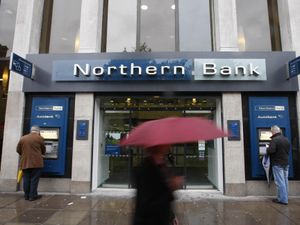
British officials feared the ‘top man’ behind the Northern Bank robbery in 2004 would be “clever enough to avoid getting arrested”.
They also agreed that the heist would not derail peace process efforts, which included the details of decommissioning, but added that “the republican movement had knocked up the price”.
The exchange about the impact of the high-profile robbery was made during a meeting of British and Irish officials at Downing Street on January 5 in 2005.
A memo where the two governments discussed the robbery of £26 million in cash stolen from the Belfast bank in December 2004 was released as part of the annual release of National Archives in Dublin.

Then Downing Street chief of staff Jonathan Powell said discussions about a bilateral deal were ruled out in the aftermath of the robbery, and a meeting with Gerry Adams in Dublin the next day would be called off.
Irish civil servant Michael Collins said the Irish side “shared the deep anxiety about the bank robbery” and said they would welcome any information the British side had gathered.
Mr Powell said that the British authorities were “pretty certain that it was the IRA” and that it was undertaken by people who were “very close to the Sinn Fein leadership”.
He said that while the PSNI hoped to be in a position to make arrests in the time ahead, he “feared that the ‘top man’ involved would be clever enough to avoid being arrested”.
He also expected that the DUP would “go on the rampage” once then PSNI Chief Constable Sir Hugh Orde attributed responsibility.
“Powell feared that the robbery would have proceeded even if the deal had been done with the DUP,” the note states.
Mr Collins said that it was “almost incomprehensible” that planning for the heist was taking place while the Sinn Fein leadership was involved in negotiations.
“The assessment on the Irish side was that the IRA remains a unified organisation; the Northern Bank was not a solo run.”
The two sides noted that while there were “fissures” in the IRA ceasefire, they were no longer recruiting in the Republic, and the organisation was becoming a “more concentrated group of able people”.
Mr Powell also said that while the heist was a “serious set-back”, there was a need to keep the process going and then prime minister Tony Blair was “not prepared to give up on the process”.
“However, the republican movement had knocked up the price,” the note said.
“Something categoric on criminality would now have to be part of the deal.”
There were two outstanding issues, of criminality and the transparency dimension of decommissioning.
Mr Collins suggested that the two governments could “stand back” from transparency and a process of third party mediation or conciliation “might, over time, identify a way forward”.
British civil servant Jonathan Phillips was “sceptical a third party engagement would succeed”.
Mr Powell also said that the British would not demilitarise in return for IRA arms decommissioning, but would demilitarise “in a house-keeping way” as it wanted to scale back its presence in Northern Ireland.
“The British Government was not really interested in decommissioning; its priority was ending paramilitary activity and criminality.”
– This article is based on documents contained in the file labelled 2025/127/90 in the National Archives of Ireland.