Around 5m wet wipes cleared from Thames as work to remove ‘island’ completed
Diggers scooped up wipes, towels, scarves, trousers, a car’s engine timing belt and a set of false teeth from the river foreshore in west London.
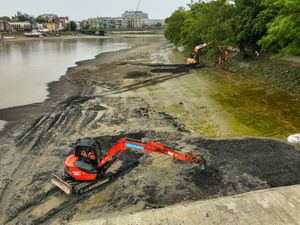
Congealed rubbish equivalent to around five million wet wipes has been cleared from the banks of the River Thames as a major project to remove the so-called “wet wipe island” reaches completion.
Last month, diggers began dredging up muddy waste that had settled along a 250-metre stretch of the foreshore near Hammersmith Bridge in west London.
The two eight-tonne excavators used a “rake and shake” method to scoop out wet wipes from the natural sediment and riverbed, but also dug up towels, scarves, trousers, a car’s engine timing belt and a set of false teeth.
The island, which was about the size of two tennis courts and up to one metre deep in places, is thought to have changed the course of the river and potentially harmed nearby aquatic wildlife and ecology.

Environment group Thames21 and its volunteers campaigned for its removal for years while monitoring the build-up of wet wipes, and researching how those containing plastic can degrade the environment.
The Port of London Authority led the three-week project, which began on August 11, in collaboration with Thames21 and Thames Water.
On Thursday, they announced that 114 tonnes of rubbish were cleared from the river and taken away in skips to landfill, including almost 200 cubic metres of wet wipes containing plastics.

Grace Rawnsley, Port of London Authority’s director of sustainability, said: “After months of planning and hard work, we’re so pleased to have finally been able to clear this stretch of the Thames.
“The reaction of local communities – and of people across the country and beyond – has been really encouraging but also slightly incredulous that this work was needed in the first place.
“As a business which reinvests all the money we make back into the river and its communities, we are proud to have been able to drive forward this first-of-its-kind project and, while at times the work was pretty gross, it was well worth it to help clean the river.”

Chris Coode, chief executive at Thames21, said: “Plastic wet wipes have no place in our rivers or natural environment, so it’s fantastic news that work has been completed to remove wet wipe island in the Thames.
“This vital move is a crucial step towards protecting the health of the River Thames and its wildlife, as it will reduce the introduction of microplastics into the environment from this site.
“Thames21 and its dedicated volunteers have been building evidence for eight years. We want to give our volunteers a huge shout-out for their persistence. This has been a massive piece of work.”

The campaign group continues to call for more systemic change to tackle the issue of plastics entering the environment via wet wipes and other sanitary waste, including producers changing to plastic-free alternatives and water firms increasing investment in sewage infrastructure.
John Sullivan, Thames Water’s head of Tideway Integration Group, called the estimate of five million wet wipes “staggering”.
“This ‘island’ was a direct result of people flushing away wet wipes containing plastic and shows the damage that is caused by putting the wrong things down your toilet,” he said.

“Blockages caused by wipes are a leading cause of pollution and we remove an estimated 3.8 billion wipes from our network each year.”
The Government earlier this year published draft legislation banning wet wipes that contain plastic.
Local MP Fleur Anderson said: “I’m glad that the Government has agreed to bring in a new law to ban plastic in wet wipes so we don’t have wet wipe islands in the Thames or any other river in the future.
“The message is clear – don’t flush any wet wipes.”