'Forget your resolutions - New Year is the wrong time to make change': West Midland academic explains why we should wait until the spring instead
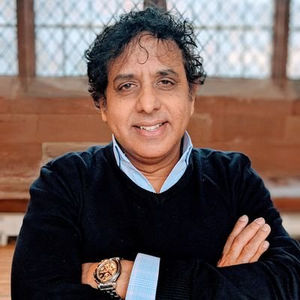
Academic and former Birmingham Poet Laureate Roshan Doug explains why we should put away our resolutions until the spring.
Now that Christmas is done, attention has inevitably turned to the week’s New Year, culminating in celebrations as 2025 turned into 2026.
As the Gregorian calendar flips from December to January, we may convince ourselves that something fundamental will shift.
A new year, we’ll tell ourselves, means a new self. We’ll make promises with conviction, convinced that a date on the calendar can somehow rewire our habits, our discipline, even our character.
I believed this too. Once.
When I was younger, I took New Year’s resolutions seriously. I made plans, lists, routines – all the things (according to the West) you’re supposed to do if you’re trying to become a better version of yourself.
I genuinely thought that this time it would stick. And when it didn’t – when the enthusiasm faded by February and the old patterns returned - I felt quietly ashamed. I assumed the failure lay in me.
It took years to realise that I was trying to grow at the wrong time of year.
My parents, both shaped by Hindu thought and rhythm, never subscribed to this January obsession.
They never sat down to ‘reinvent themselves’ because the calendar said so.
In fact, the idea struck them as faintly absurd.
Winter, in their understanding, was not a time for beginnings. It was a time for endurance, reflection, and stillness.
In our household, winter was about conserving energy, not expending it.
You ate warming food. You moved more slowly. You endured the cold and waited for light.
There was no talk of radical self-improvement or sudden transformation.
Change, in their world view, came when nature allowed it.
The Hindu calendar, unlike the Gregorian one, is rooted in cosmic and seasonal rhythms.
Time is cyclical, not linear. Midwinter is not symbolic of rebirth; it is symbolic of withdrawal. The land is cold, hard, and barren. Nothing grows. Seeds lie underground, gathering strength unseen.
Yet the Gregorian calendar - a product of Judea-Christian West - tells us January is the beginning of everything.
It asks us to perform renewal at the exact moment when the body and mind are least prepared for it.
I see now that my younger self wasn’t failing at self-improvement.
I was simply trying to force growth out of season. Like many people, I confused motivation with readiness. I mistook enthusiasm for alignment.
I saw the same pattern in my former girlfriend, who would earnestly make her list every year – career goals, diet, exercise, gym etc.

Within weeks, the resolve faded. Not because she lacked willpower to succeed in her goals for the new year, but because winter is not designed for reinvention.
Hindu philosophy teachers us to adhere to the natural order of seasons.
Each one has its own duty. Winter is for composting the old, for allowing things to end gently. Renewal comes later, with the return of warmth and light. That is why festivals of new beginnings, like arrive in spring, not in the depths of January.
Looking back, my parents understood something I only grasped much later: forcing change at the wrong time creates self-contempt rather than growth.
Their quiet refusal to play the New Year’s resolution game wasn’t stubbornness - it was wisdom.
So, if your resolutions fall apart by the end of January, don’t judge yourself too harshly.
You’re not lazy or weak. You’re simply human, living in a body that still obeys ancient rhythms, no matter what the calendar says.
Remember, the Gregorian year may have turned, but your inner season may still be winter.
And that’s not a failure – it’s preparation for spring when real growth will take place.
Roshan Doug is an educational consultant who is from the West Midlands.