
With North West Relief Road project finally approved after years of rancour - what comes next?
After the much-delayed decision to give Shrewsbury's controversial North West Relief Road the green light was confirmed, the question is what exactly happens next.
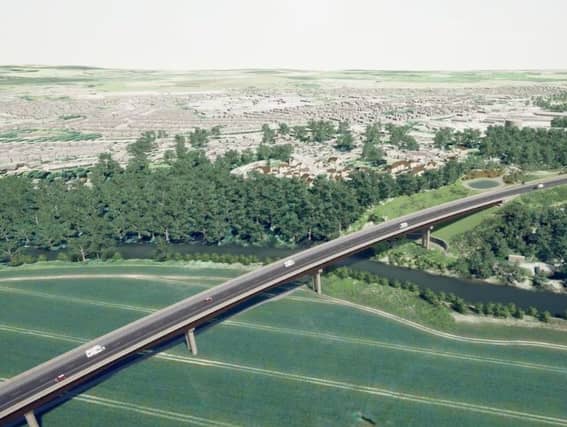


The Shropshire Council proposal was granted planning permission by its own Northern Planning Committee yesterday.
The decision was made despite more than 5,000 objections to the plans.
And while the major milestone of planning permission has been passed, there remain other issues to resolve before the council actually gets spades in the ground.
Some of those issues are predicted and expected, while others remain up in the air.
The council's next step will be to issue a tender for firms to bid for the contract to build the road – that much was confirmed by Shropshire Council's cabinet member for highways, Councillor Dan Morris, in the aftermath of the committee's decision yesterday.
While that is being done the authority will complete a document called the 'full business case', which must be submitted to the Government and approved before it releases the funds to pay for the construction of the road.
Prior to its submission to the Government, the full business case – which will include the estimated cost for the road – must be examined and signed off by the full council.
It is not anticipated that it will be submitted until early in the new year.
Another step which must be completed is the formalisation of planning conditions as part of the application.
Throughout the planning process the council has been dealing with concerns from Severn Trent Water and the Environment Agency that the construction of a bridge as part of the road could lead to the contamination of a borehole which provides Shrewsbury's water supply.
Both parties were also concerned about mitigation plans for a roundabout at Shelton Rough – with the worries centring on the need for a drainage system that could prevent pollution of the water source if there is a crash, or spill of hazardous material.
Severn Trent had agreed to drop objections to the plans if the council agreed to put planning conditions in place to make sure the concerns are addressed before construction.
The Environment Agency had said it would discuss conditions with the council if the plan was approved.
The issue was a major feature of the committee's debate over whether to approved the proposal, with the members only voting in favour after agreeing that the conditions must come back to the planning committee for approval.
The council's officers will now be expected to enter discussions with both organisations to ensure conditions are in place to satisfy their concerns before proceeding with any construction.
One less predictable matter is potential legal action.
There have been previous threats of a judicial review of the approval from one of the businesses which would be affected by the new road, while the council itself raised the prospect in its own list of 'risks', stating: "The decision may be challenged by way of a Judicial Review by a third party."
The issue of finance, which at one point appeared a major stumbling block, does however appears to have been resolved – due to the Government's decision to scrap the Northern leg of HS2.
In the wake of the announcement the Government said it would use funds originally earmarked for the high-speed rail route to pay for 100 per cent of the costs of the relief road.
Those costs were estimated to be £81m in 2019, but have been predicted to have risen significantly in the intervening period.
Despite that, the council's most senior officer, Mark Barrow, director of place, said in an email in September that he hoped the authority would be able to "crack on" with construction next year.
Comment Guidelines
Iconic Media encourages reader discussion on our stories. User feedback, insights and back-and-forth exchanges add a rich layer of context to reporting. Please review our Community Guidelines before commenting.