Celebrating Shropshire's bridges: The engineers who keep an eye on county's vital network - with video
Bridges are one of mankind's most enduring engineering feats. Vital to the nation's transport network, they often go unnoticed.
But over the next 12 months Shropshire Council engineers will check 400 of the county's 1,000 bridges to ensure that they are well maintained, as well as carrying out emergency repairs.
The council manages its bridges and structures, which include 1,500 walls and 50 cattle grids, through a programme of planned inspections and maintenance.
Each one is given a general inspection every three years with the more complex, larger structures – about 90 – getting a more detailed principal inspection.

In 2016/17, 334 bridges are due to receive a general inspection and 15 are set to get a detailed principal inspection.
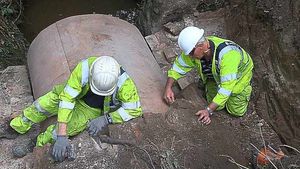
Ian Simpson, bridge engineer, said: "Due to the configuration of some bridges and/or the obstacles that they cross, such as deep water or railway lines, it's not always possible to fully inspect these bridges at a general inspection.
"To enable a thorough inspection of those bridges, we use divers and/or specialist access teams. Inspections of structures requiring a specialist confined or diver inspection team are generally carried out at six-year intervals, unless floods warrant one earlier."
The council is responsible for the majority of road and foot bridges in the county, but there are a significant number of bridges which are owned and maintained by other organisations, including Network Rail and the Canal & River Trust.
"We maintain records of these and if we receive any inquiries we'll pass them on to the appropriate owner or organisation," Mr Simpson said.
"Our work is essential to ensure that our bridges remain in good order but, more importantly, that they're safe for people and vehicles to cross. We aim to prevent problems before they happen."
Mr Simpson said engineers also carried out about 50 unplanned special inspections a year to establish the condition of a bridge or other structure. These unplanned inspections are carried out following a report of an accident or a concern raised by a member of the public.

"When a lorry reversed into Ludford Bridge, Ludlow, last year we were called to advise on the integrity of the structure. Unfortunately, due to the limited width over the bridge and the extent of the damage caused to the bridge, it wasn't possible to leave the road open to traffic and the bridge had to remain closed until the repair works were completed."
During the late 1980s and the 1990s, the council undertook a comprehensive programme to assess the load carrying capacity of bridges with a span of 1.5 metres or more. This was as a result of proposals to increase the weight of vehicles permitted to use the highway road network from 38 to 40 tonnes.
The assessment programme found that a number of bridges were unsuitable and, as a result, a bridge strengthening programme was instigated.
Mr Simpson said the bridge strengthening programme and other major maintenance work was funded by central government.
There are also about 1,500 retaining walls associated with the highway that the council inspects.
Cattle grids are not something many local authorities have to think about, but in Shropshire the council is responsible for 50 cattle grids and regularly carries out maintenance works, including the cleaning out of debris and the replacement of fencing and gates. This year engineers replaced two cattle grids which failed.