Scientists create artificial skin that could help robots sense touch like humans
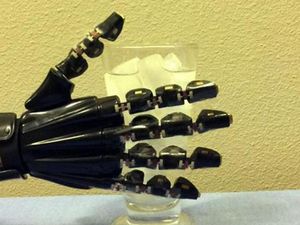
Researchers say their prototype skin can sense the temperature of hot and iced water in a cup.
A team of US-based scientists has developed “artificial skin” that could give robots and prosthetics a sense of touch.
Researchers from the University of Houston say they have created a stretchable electronic skin prototype that can differentiate between hot and cold.
They say it is the first time a semiconductor in a rubber composite format has been designed that enables stretchability while allowing its electronic components to retain functionality – even when the material is stretched by as much as 50%.

The team created the electronic skin and used it to demonstrate that a robotic hand could sense the temperature of hot and iced water in a cup.
The skin, which was prepared by using a silicon-based polymer known as polydimethylsiloxane and tiny nanowires, was also able to interpret computer signals sent to the hand and reproduce the signals as American Sign Language.

The scientists said their “stretchable skin” could have other uses as well, adding: “The discovery of a material that is soft, bendable, stretchable and twistable will impact future development in soft wearable electronics, including health monitors, medical implants and human-machine interfaces.”
The results are reported in the journal Science Advances.