Telford battery energy storage plan: Councillors defend their right to disagree with experts
Two sides in a planning battle over a proposed controversial battery energy storage scheme close to the Ironbridge Gorge World Heritage site have had their say.
Councillors turned out in numbers at the inspector’s hearing to defend their right to make their own decisions even when it goes against the advice of expert officers.
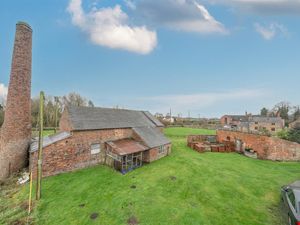
Lower Coalmoor BESS Limited had appealed against Telford & Wrekin Council’s decision to reject its proposed 50MW battery site on sloping land close to Buildwas Bank.
A hearing was held at the Ramada Telford – Ironbridge on Wednesday (July 2) so that inspector Lora Hughes could gather details to decide the issue.
One of the key reasons for rejecting the proposal was over the issue of land stability. Reference was made a number of times to money spent restoring Jiggers Bank after landslips.
The appellants said the battery site close to Buildwas Bank was on the other side of a geological fault and was not showing signs of instability
David Hardy, for the appellants, said: “The difficulty for the council is that members are not experts and they have to have a solid reason for deviating, and we have not seen it.”
He added that the question was whether members were right “without technical expertise to deviate from guidance provided by the experts”.
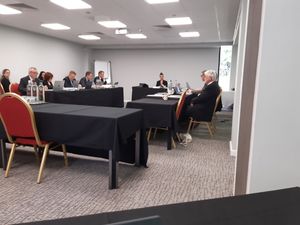
Councillor Giles Luter (Labour, Ercall) took exception at “speculation about the knowledge of members” of the planning committee.
He said there was an assessment of some ‘medium risk’ associated with the site and he did “not have the assurances” in this application.
“Our responsibility is as elected members not to rubber stamp,” he added.
He said that the appellants could have chosen to withdraw the application and resolve concerns before lodging a new plan.
Ward councillor Gareth Thomas (Conservative, Wrockwardine) said the planning committee have “decades of local experience” and referred to land slips affecting Jiggers Bank, back gardens and a local bypass that was “built on stilts”.
“There is decades and decades of local knowledge,” he said.
Councillor Arnold England (Labour, Brookside), said there is “widespread land instability in the Gorge”.
He added that “Telford & Wrekin Council has an emergency action plan if the Gorge slips. The whole area is unstable.
“It is said there is a low risk but if it’s a low risk, it is a risk.”
Resident Chris Deeley, whose house sits closest to the site at edge of the valley and has massive cracks in the walls, has personal knowledge of “major movement of the house and the ground”.
He said an electricity pylon close to where the battery system would stand shows signs that it may have moved.
Paul Cooper, for the appellants, said there is “no evidence of instability on the site. Jiggers Bank is not relevant to the site”.
Mr Cooper told planning inspector Lora Hughes that the application had made a ‘proportionate assessment’ of the risks at that stage. He claimed that neither an electricity pylon on the agricultural land nor trees nearby indicated any slips.
Mr Deeley, who has lived in the area for many years, disagreed.
Declan Kearney, a specialist working with Telford & Wrekin Council, said his own advice to the council was that there was a “lack of information” from the appellants.
“It was a very, very good starting point but was incomplete,” he said. “It was nowhere near a complete risk assessment.”
Planning officers had recommended that the plan could be approved and controlled with conditions. But councillors decided not to accept that.
The planning inspector told the hearing that the main issues for her were the issues of land stability, the character of the area and community participation. She said she has been out to visit the site.
A decision will be made at a future date.