'It’s going to be a rocky road' - Shropshire Council considering potential impact of Middle East conflict amid significant challenges
Shropshire Council is keeping one eye on the ongoing conflict in the Middle East and what possible implications it could have.
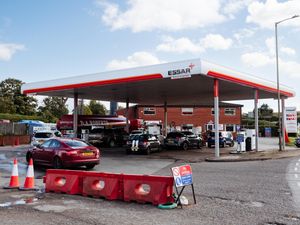
 Fuel prices – particularly diesel – have started to go up considerably across the country, with Shropshire not escaping unscathed.
Get the latest headlines delivered straight to your inbox with the Shropshire Star’s free newsletter
According to petrolprices.com, diesel at the Shell garages in Thieves Lane, Shrewsbury, and Holyhead Road, Oswestry, respectively were both 155.9p a litre on Tuesday (March 3).
Meanwhile, the Shell garage off junction four of the M54, near Shifnal, was reportedly selling diesel as high as 173.9p a litre on Wednesday (March 4).
It comes after the USA and Israel started a series of attacks against Iran on Saturday (February 28), targeting the country’s leadership, security forces, and nuclear programme. In response, Iran has launched a series of counter-strikes against Israel, US military bases in the region, and military and civilian locations in Arab states that house US forces.
UK bases in Bahrain, Qatar and Cyprus have also been attacked, with the RAF being deployed in a defensive capacity.
Shropshire Council is already facing significant challenges, and had to go to the Government for exceptional financial support (EFS) that has effectively staved it off bankruptcy.
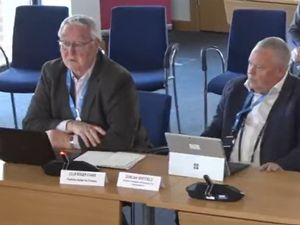
The authority’s latest overspend for the current financial year is £49.944 million – which is an improvement of £801,000 compared to what was last forecasted. However, while the authority has managed to stabilise its finances during the past two months, interim chief financial officer, Duncan Whitfield says there will still be a “rocky road” ahead.
This, said Mr Whitfield, is partly due to the implications of the Middle East conflict.
“Energy is the easy one to focus on, but it’s not only that – its the potential for repatriation and asylum seeking, and all the stuff that goes with global conflict,” he said.
“It’s going to be a rocky road, but at least in period 10, I take some comfort that we’re in a position that should be stabilising now, and our challenge is to keep that on course for next year.”
The main area of concern continues to be the pressure deliveries within social care, both adult and children, which around 74 per cent of the council’s budget goes towards.
The General Fund Reserve Balance is forecast to be £5m at the end of the financial year, while the council is also holding contingency funding of £2.962m within reserves. This, it says, provides some resilience over the remaining two months of the financial year should any further unforeseen pressures arise.
In terms of Government loans, the authority can borrow up to £198.8m, the majority of which (£121.4m) will be for the 2026/27 financial year. However, the council is going to ask no interest can be added for the first two years.
The EFS for this financial year is £71.4m, meaning that the council can borrow up to £21.5m to support funding the current overspend.
The remaining £49.5m will be used to cancel the North West Relief Road to the value of £39.9m, while £10m will be used to support the costs of transformation projects.
Cabinet will discuss the latest financial forecast next Wednesday (March 11).