Shropshire Star

Shropshire retro special: 45 pictures from 1966 showcasing everyday life, local faces, and the England squad training ahead of the World Cup

This collection of photos show our county in days gone by.

Plus
Published
Last updated

From everyday working life to community events and local sports - even the England squad training ahead of the ’66 World Cup - these moments capture the spirit of the time.

We hope these images from the Shropshire Star archive bring back fond memories for those who were there. 

The Old Porch House at Bishop's Castle showing the frontage on the steep slope of High Street, on January 1, 1966. It appears to be up for sale as there are For Sale notices in the windows.
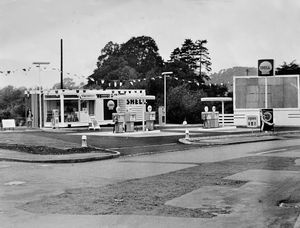
Newport filling station, Hotchkiss' garage c.1966. George Hotchkiss (born 1928) of Brookside Avenue, Newport, told us in 2016 how he took the licence to this garage when it was built new: 'We had premises behind this filling station, in Salters Lane, before this (was built),' he said. The filling station was (and still is) in Lower Bar, Newport.
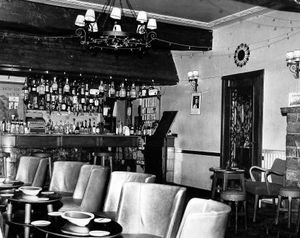
Lounge bar of the Stokesay Castle Hotel, February 2, 1966.
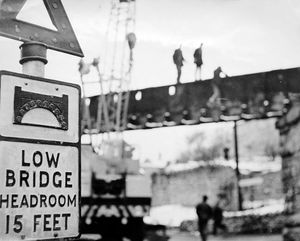
The demolition of the railway bridge over Shrewsbury Road, Much Wenlock, on February 13, 1966. The caption read: 'Up went the 'road closed' signs, in moved the workmen... and down came the main girders of the 100-year-old railway bridge at Shrewsbury Road, Much Wenlock...' It said it was done to make the road safer as the site was a well known bottleneck for traffic. It also said the demolition men then moved on to another doomed bridge on the Much Wenlock to Ironbridge road.
'Granville Buildings... 'disgusting, embarrassing, an eyesore.' Enclosed by the derelict window frame is the home, in a half-demolished terrace, of Mrs Florence Brown.' The accompanying story started: 'Seventy three year of Mrs Florence Brown is ashamed when visitors call at her terrace cottage in St Georges. For outside her home are ugly piles of rubble left since part of the terrace was demolished by contractors for Oakengates Urban District Council. 'They've been there since before Christmas,' said Mrs Brown, of Granville Buildings. 'I am disgusted'. Mrs Brown has lived in her 19th century home for nearly 50 years.
February 28, 1966. The derelict window frame is the home, in a half-demolished terrace, of Mrs Florence Brown.' The accompanying story started: 'Seventy three year old Mrs Florence Brown is ashamed when visitors call at her terrace cottage in St Georges. For outside her home are ugly piles of rubble left since part of the terrace was demolished by contractors for Oakengates Urban District Council. 'They've been there since before Christmas,' said Mrs Brown, of Granville Buildings. 'I am disgusted'. Mrs Brown lived in her 19th century home for nearly 50 years.
A rowing crew coming ashore on the River Severn at Shrewsbury on April 4, 1966. ''The crew of the host club, Pengwern, haul their boat ashore at the end of Saturday's Head of the River race at Shrewsbury.'
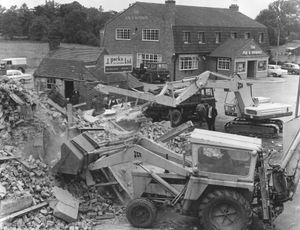
'The diggers moves in and the old Fox and Hounds at Shawbury comes down on August 11, 1966. Demolition work started on the pub this day using a new technique, with a demolition arm attached to a machine crashing down on the building. In the background is the new Fox and Hounds pub which was opened in April 1966.
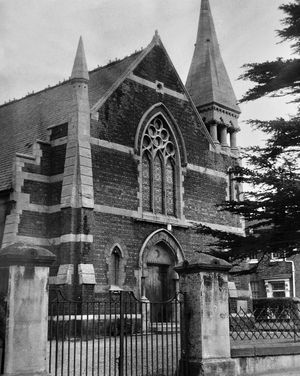
'Centenary of Market Drayton, Shrewsbury Road Methodist Church.' - April 13, 1966.
'Sir Reginald Pearson, chairman of Dawley Development Corporation, unveils a commemorative plaque today to mark the start of building work on the first factory on the Tweedale industrial site at Madeley. Dr Peter Beatton, chairman of Dawley Urban District Council, is on the right.' April, 1966. , so it was probably a submitted picture, i.e. not Shropshire Star copyright. Tweedale factory work. Tweedale estate. Tweedale was the first industrial estate of Dawley New Town, which became Telford New Town in 1968. The wording on the plaque can be read to read: 'This plaque commemorates the start of building on the first industrial site to be developed in Dawley New Town and was unveiled on the 25th April, 1966, by Sir James Reginald Pearson, Kt, O.B.E... first Chairman of The Dawley Development Corporation.'
April 1966. 'Sir Reginald Pearson, chairman of Dawley Development Corporation, unveils a commemorative plaque to mark the start of building work on the first factory on the Tweedale industrial site at Madeley. Dr Peter Beatton, chairman of Dawley Urban District Council, is on the right.' The wording on the plaque can be read to read: 'This plaque commemorates the start of building on the first industrial site to be developed in Dawley New Town and was unveiled on the 25th April, 1966, by Sir James Reginald Pearson, Kt, O.B.E. first Chairman of The Dawley Development Corporation.'
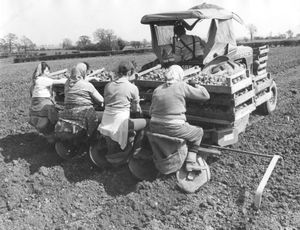
April 29, 1966: 'Performing the 'service' potato planting on a farm at Bicton.'
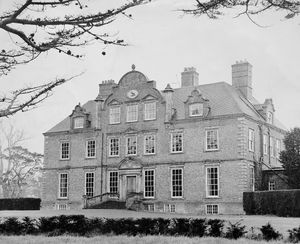
Longnor Hall, the historic stately home near Shrewsbury which Rolling Stone Mick Jagger thinks is 'a lovely place,' reads the caption. It was taken in May 1966. It may have been published initially around then, but the date by the caption is August 2, 1967, (a Wednesday) when the picture was carried with a story in the Shropshire Star starting: 'Rolling Stone Mick Jagger has been househunting in Shropshire. On Saturday, with friend Marianne Faithfull, he looked at one of the best known stately homes in the county, Longnor Hall, seven miles from Shrewsbury, which is on offer at \u00a348,000. Today he told the Shropshire Star: 'I have seen many, many houses. Longnor Hall is certainly a lovely place, but I have not yet made up my mind about it.'... The hall is owned by Kidderminster farmer Mr. A.E. Lawley, of Hexton Farm, Arley...On their visit, Jagger and Miss Faithfull visited The Gaskell Arms at Much Wenlock and the Valley Hotel at Ironbridge.' Shropshire grand mansion, stately home.
Longnor Hall, the historic stately home near Shrewsbury which Rolling Stone Mick Jagger thinks is 'a lovely place,' reads the caption. It was taken in May 1966. The Star carried a story in '67 starting: 'Rolling Stone Mick Jagger has been househunting in Shropshire. On Saturday, with friend Marianne Faithfull, he looked at one of the best known stately homes in the county, Longnor Hall, seven miles from Shrewsbury. He told the Shropshire Star: 'I have seen many, many houses. Longnor Hall is certainly a lovely place, but I have not yet made up my mind about it.'... The hall is owned by Kidderminster farmer Mr. A.E. Lawley, of Hexton Farm, Arley...On their visit, Jagger and Miss Faithfull visited The Gaskell Arms at Much Wenlock and the Valley Hotel at Ironbridge.'
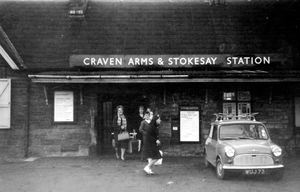
Craven Arms Railway Station in 1966. Craven Arms Railway Station. This was shared by Mrs Elizabeth Birnie, who said: 'From left, my mother Mrs Marjorie Borowik; daughter-in-law Janet Chambers and baby Donna; my brother Jan Borowik; and my sister Annabell Borowik, of Craven Arms.'
Craven Arms Railway Station in 1966. This photo was shared by Mrs Elizabeth Birnie, who said: 'From left, my mother Mrs Marjorie Borowik; daughter-in-law Janet Chambers and baby Donna; my brother Jan Borowik; and my sister Annabell Borowik, of Craven Arms.'
Traffic on the A5 at Atcham on May 29, 1966, the Whitsun Bank Holiday.
A traffic jam on the A5 at Ketley on May 30, 1966. The caption read: 'The seemingly never-ending stream of traffic on the A5 near Ketley Crossings today. The motoring organisations have reported generally good standards of driving during the holiday so far.'