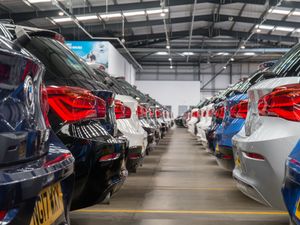
Drivers face fines of up to £40 for idling engines
City councils can penalise lazy drivers for not switching their engines off while stationary
Nottingham City Council has become the latest local authority to propose ‘anti-idling’ measures to reduce air pollution.
Similar schemes have already been adopted by Norwich, Wirral and Reading councils plus the London boroughs of Camden and Southwark, and take the form of an on-the-spot fine for drivers who leave their engines running while idling.
Leaving a car’s engine running ‘unnecessarily’ has been an offence since 1986, and councils were given the power to combat it in 2002. Fines are £20, doubling to £40 if not paid within 28 days.
While a car produces fewer pollutants when idling than it does while moving, there’s still an environmental impact. The RAC recommends motorists shut off their engines if they’re planning on being stationary for more than two minutes. The impact of an idling engine is worse as there’s less airflow around the back of the car, allowing harmful gases to collect in one place rather than dissipating over a wider area.
A study by King’s College London outlines the danger of local air pollution. It found that introducing measures to combat it in the London borough of Waltham Forest, such as road closures at peak times, green space and anti-idling operations, would give children born in 2013 an extra seven weeks of life.
Nottingham’s proposals to limit idling come as part of a larger air quality consultation, which also includes projects to retrofit clean exhaust technology on buses, replace heavy vehicles such as bin lorries with electric equivalents and bring in cleaner, more efficient taxis.

Councillor Sally Longford, Nottingham council’s portfolio holder for energy and the environment, said: “The good news is that Nottingham is now on track to hit the government’s clean air target by 2020 – but we don’t want to rest on our laurels. Clean air is too important to the health of our city, and there is more we could be doing to reduce air pollution.
“Anti-idling is one of the additional proposals we are investigating to further improve the air in our city, but additional legislation would have to be put into place first.”