Scaffolding at collapsed Ludlow walls 'does not appear to offer any structural support' - expert
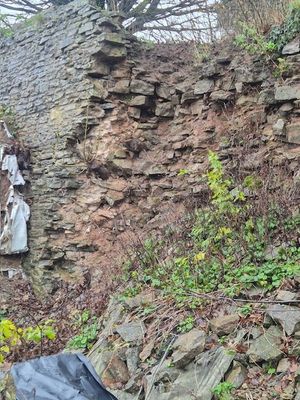
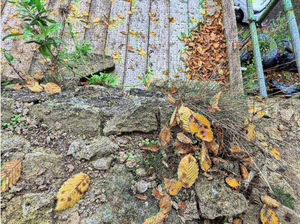
Further stonework has fallen off Ludlow's perilously unstable town walls.
The original collapse by St Laurence’s Church – which has been the subject of a heated dispute between Ludlow Town Council (LTC) and the Parochial Church Council (PCC) – happened in February 2013.
The dispute centres on who is responsible and liable for the upkeep and maintenance of the wall, with thousands of pounds having been spent on legal fees and no resolution in sight.
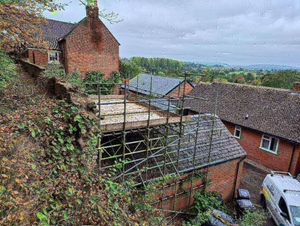
Martin Crowdy, who lives in a house directly beneath the churchyard, claims he has been repeatedly assured that LTC is the responsible body, and works were planned for 2019.
In 2021, Mr Crowdy said he gave permission for structural engineers from Morton to carry out work in his yard, and was promised a copy of the report.
However, LTC only decided to release its full contents in December 2024 after it “reconsidered its decision” to keep it confidential.
At a town council meeting in October, Mr Crowdy said he and his wife were “at their wits’ end” with the issue taking a serious toll on them.
He told members that they are in danger from falling masonry, and have collected a crate of debris from the wall since moving into their property.
Ahead of a LTC meeting on December 1, members were sent a letter from Longmynd Consultants regarding scaffolding at the town wall. The firm produced a report on the scaffolding but is not and has never been involved in the condition of the wall itself.
Josh Sansom, from the company, said its brief was purely to examine and report on the scaffolding currently in place at the partially collapsed section of the wall – with the specific objective of determining whether it offers any structural support.
“The primary function of the scaffolding appears to be the protection of the substation from falling debris,” said Mr Sansom.
“During our visit, we observed stones on the scaffold boards that appear to have fallen from the wall, though it is not clear how often the scaffold is accessed/cleaned.
“The scaffolding does not appear to offer any buttressing or structural support to the town wall, as evidenced by both the lack of physical connection to the wall, and the orientation of the scaffold bracing.
“The scaffolding appears to provide protection only from falling debris and does not appear to offer any support to the wall.
“Therefore, if the loose stonework at the top of the wall is removed or an alternative method of debris containment is installed (e.g. debris netting), we consider that the scaffolding may be removed, subject to agreement with all relevant stakeholders.”
Councillor Diane Lyle, who was chairing the meeting, proposed that the report is considered by the council’s policy and finance committee next month.
However, Councillor James Hepworth informed members that another section of the wall had fallen down the previous night.
“It is on the eastern section,” said Councillor Hepworth.
“I think we have to take that into account when we look into this fully. There is definitely another problem arising.”
Councillor Lyle told him that what he said is relevant, but is not part of the agenda item.
“We’ve got the recommendations,” she said.
“We don’t have the costs, and the costs of removing the scaffolding. I did make the proposal that it goes to the policy and finance agenda.”
Her proposal was seconded by Councillor Ian Maxwell-Muller and was approved by fellow members.