Covid crisis continues to impact waits for routine treatment
Figures show waiting lists for 'routine treatment' at the county's hospitals remain well above pre-pandemic levels, with the Covid crisis continuing to place incredible strain on NHS resources.
The number of patients waiting a year or more for routine treatment at both at The Robert Jones and Agnes Hunt Orthopaedic Hospital (RJAH) and the Shrewsbury & Telford NHS Trust (SaTH) reached a record high for the month of November.
The Royal College of Surgeons of England says “a huge, hidden waiting list is building” across the nation under lockdown.
NHS rules state that patients referred for non-urgent consultant-led elective care should start treatment within 18 weeks.
But NHS statistics show 540 patients listed for elective operations or treatment at RJAH at the end of November had been waiting for at least 52 weeks – for SaTH there were 1,190.
For both it was the highest figure for the month since comparable records began in 2011 – by the end of November the previous year, no patients had faced such lengthy delays.
It was also a rise on the October level when 418 had been waiting at RJAH and 839 at SaTH.
The picture is replicated across England, as the NHS finds resources dominated by the battle against Coronavirus.
In England the number of people waiting a year or more hit 192,200 in November, the highest figure since April 2008 and up from just 1,400 in November 2019.
Professor Neil Mortensen, president of the RCS, said the figures show the “calamitous impact” of Covid-19 on operation waiting times.
“For thousands of people in this country a corrective operation is the best way to relieve debilitating pain and get them back up on their feet, back to work and enjoying life again,” he said.
“Many of us were complaining about the pain of the lockdown restrictions in November. However, we should remember all those people waiting for an operation who had their physical pain to deal with, on top of the pain of lockdown.”
Prof Mortensen added: “A huge, hidden waiting list is building up under lockdown.
“When we eventually emerge from this crisis, we will need sustained investment to treat all those who have been waiting patiently for treatment.”
At the SaTH, 27,613 people were waiting to start hospital treatment at the end of November – broadly in line with the end of October.
At the RJAH, the figures was 11,017 – a one per cent rise from the end of October.
Across England, 4.46 million people were waiting at the end of the month – the highest number since records began.
This was compared to 4.42 million in November 2019 and 4.44 million in October.
Professor Stephen Powis, NHS national medical director, said: “Despite 2020 being the year of Covid, nearly 20 million people received emergency care in England’s A&E departments, while in November alone as Covid-19 was spreading more rapidly, patients still benefited from 4 million important elective treatments and essential checks on the NHS.”
He said the figures were a stark reminder of the “exceptionally tough challenge” facing the health service.
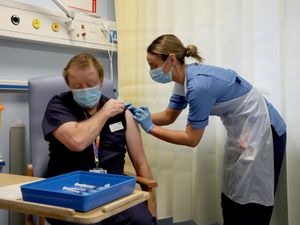
Dave Evans, Joint Accountable Officer for Shropshire and Telford & Wrekin CCGs, said: “Across our healthcare system, our staff and services are extremely busy right now. The number of Covid-19 admissions has increased significantly and the number of people needing critical care, both locally and across England, has gone up. Our critical care units have increased their capacity to support patients in need of intensive care and this has required drawing on staff from a number of other services.
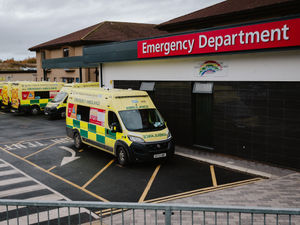
“At the same time, accident and emergency attendances are higher than during the first wave, with those coming in by ambulance at the same level as before the pandemic. We are also operating a number of services which were suspended during the first wave.
“Unfortunately, this means that some people are being asked to wait longer for non-urgent appointments. We apologise and know that this is really frustrating. Our staff are doing all they can, working incredibly hard around the clock, to provide the best possible care at this really difficult time. We’d like to thank everyone for their patience and understanding.
“We are continuing to see those patients who need to be seen urgently or as an emergency. Cancer related care is continuing as normal. If people need medical help they should contact their GP, pharmacy or NHS 111 to get advice and to make sure they access the most appropriate service for their health concern . If they have a serious or life-threatening illness or injury, they must contact 999.”