Fewer pharmacies per head of population in Shropshire than the national average
There are fewer pharmacies per head of population in Shropshire than the national average, it has been revealed.
A report sent to the Shropshire Health and Wellbeing Board ahead of a meeting on Thursday (September 18) says there are currently 43 community pharmacies and 17 dispensing GP practices in the county, with 91% of residents being within 10 minute car journey of one.
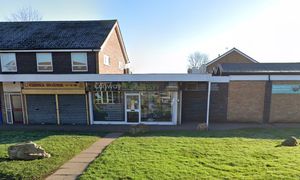
However, Mark Trenfield, senior public health intelligence analyst at Shropshire Council, said that the distribution of pharmacies per head of population, with or without dispensing GP practices, is of a lower ratio than the national average.
“Compared to the 15 other local authorities that are deemed comparable to Shropshire, Shropshire’s ratio of patients per pharmacy is the second highest (only lower than central Bedfordshire) based on their most recent Pharmaceutical Needs Assessment’s (PNAs), although when dispensing GP practices are included in this comparison, Shropshire is the sixth highest,” said Mr Trenfield.
“Shropshire has a significantly higher proportion of dispensing GP practices than the rest of England due to its rurality, and while they provide a vital pharmaceutical supply function for patients unable to access a community pharmacy, they are unable to offer the enhanced and advanced services community pharmacies can, which is a gap for Shropshire residents.”
Shropshire has an ageing population, with the medium population age now being 48.5 compared to 40.5 in England. Areas in the Harlescott, Monkmoor and Ludlow East wards have the highest deprivation levels within Shropshire, and fall winin the top 10% of most deprived Lower-Level Super Output (LSOA) areas within England.
“As much of Shropshire is very rural, many localities are supported by GP practices that dispense to patients that are outside of a 1.6km radius of a community pharmacy,” added Mr Trenfield.
“Dispensary opening hours usually reflect the opening times of the practice.
“Dispensing doctors offer a dispensing service to help fulfil the pharmaceutical needs of the patients in these areas but don’t offer the full range of pharmacy services that community pharmacies offer, that help reduce pressure on GP appointments.”
Mr Trenfield said that most pharmacies’ opening times generally mirror those of GP practices. However, while some open for at least part of the day on a Saturday, there are only two that stay open past 6pm, with four doing likewise on a weekday. And on a Sunday, only six pharmacies open their doors.
“There appears to be reasonable access to some services commissioned by Public Health in Shropshire, such as emergency hormonal contraception, however, some of these services do not operate at all pharmacies, and for some pharmacies that offer those services, activity is very low,” said Mr Trenfield.
“In addition to these pharmacies and dispensing GP practices in Shropshire, there are also 54 community pharmacies in other local authorities in England and seven in Wales that are within 5km of Shropshire’s borders which could offer pharmacy services to Shropshire residents.
“Several of these pharmacies are open past 6pm on a weekday, (mostly in Telford and Wrekin), most are open on a Saturday and eight of
them are open on a Sunday (seven in Telford and Wrekin and one in Cheshire).”
Mr Trenfield has also highlighted the need for more visibility of the services.
“The resident survey highlighted that there were several services that community pharmacies provide, but the respondents didn’t necessarily know that the pharmacy provided them,” he said.
“Likewise, there are some services that the pharmacies offer but activity was very low. Some of the services offered are quite new and have not benefitted as expected from the lack of referrals in many places.
“However, there may need to be a more detailed review as to whether there are specific gaps in provision.”