Fortress farms no solution to badger problem
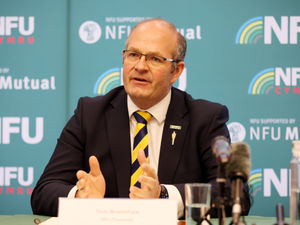
Chris Packham has been in Shropshire talking about wildlife and the environment again.
If I criticise him I'm sure I'll be in trouble with some of my friends.
Of course he's done lots to highlight the state of the environment and wildlife and to encourage people and many children, which is definitely a good thing.
However he's known for his views on hunting and TB, and I feel his solutions are not always based on all the evidence available. For instance, he thinks it's kinder to shoot foxes rather than use hounds, although in the latter case the fox either gets away or is killed.
He makes no reference to the numbers of foxes shot but not killed that limp away to die slowly of starvation or gangrene. That stat doesn't suit him.
Nor does he put both sides of the TB debate on badgers versus cows. Simply, there are too many badgers since they became protected.
Turning farmyards and buildings into fortresses doesn't solve the separation problem, and muddies the waters of cows passing to badgers and each other and back again.
It is impossible to keep badgers out of fields where cows graze or silage is made, thus passing it from badgers to cows indirectly, but just as lethally.
The sad old joke of two hedgehogs looking at a dead hog on the road and one saying 'he's my flat mate', is no longer applicable as there aren't enough dead hogs to notice. Quite a lot of badgers though, but no jokes. Do people prefer badgers to hedgehogs?
Maybe, because nobody counts the hogs eaten by badgers, which is the only predator with strong enough jaws to disembowel them, like the one in our garden. They blame the farmers for habitat loss.
He talks about biodegradable plastic, which he promoted on BBC's The One Show. But it still becomes micro-plastic in the seas, so is not a solution.
Mr Packham is a 'paid adviser' to a producer of biodegradable plastic, but didn't tell the BBC until after the programme. This is a dangerous road to go down as it could lull us into thinking that by taking his advice we are helping to solve the plastics problem. Not so.
Rosemary Allen is a retired livestock farmer living near Ellesmere