Wait and see approach to Brexit is high risk strategy roadshow highlights
By Keith Stevens
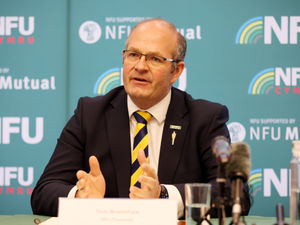
Whatever decisions are made on Brexit, and none have been made at the moment, they will have a profound effect on farming. That was clear from the first of the Brexit Roadshow meetings held at the Staffordshire County Showground by the NFU and the levy board AHDB, and attended by more than 70 farmers.
Both organisations have spent a great deal of time and effort in looking at the options and are offering advice to Defra. Though the Minister has strong links with the NFU, it will be civil servants, many new to the job, and probably not understanding how farming works who will be drafting the mass of new legislation that will be needed.
The first message was that all farmers need to look carefully at their present businesses and through means such as benchmarking make their enterprises as effective as possible. The top 25 per cent of farms will come through it, remaining in profit whatever happens, others will not, certainly “a wait and see approach to Brexit is a high risk strategy,” said David Swales of the AHDB.
Lucia Zitti the NFU EU Exit advisor spoke on ways the NFU believe a domestic agricultural can be developed post Brexit that will help farmers to do three things; mitigate volatility particularly in pricing, enhance farm productivity and deliver the environmental benefits that the Government is looking for. “Devising policies that can maintain a relative amount of stability for businesses is critical.”
“Farm businesses should be able to draw down bespoke assistance from across a range of measures to deliver these objectives.”
Agricultural support payments as we know them may remain for a couple of years after March 31st 2019, but then depending on what type of Brexit is decided they will change in emphasis and value whilst allowing time for an impact assessment of how farming will be affected by withdrawal from the EU That assessment she said will dictate the pace at which the industry moves from the current system of farm support to a new domestic agricultural policy.
David Swales of the Agricultural Horticultural Development Board, (AHDB) described the three different post Brexit scenarios that they believe are those most likely to be adopted.
Firstly, Evolution or business as usual, with trade arrangements staying much the same, though as we would not be in the Common Market the cost of imports will rise, so where we are a net importer domestic prices will rise in line with the price of imports.Where the UK is a net exporter like sheep meat, domestic prices will decline. Dairy, pigs and horticulture should benefit other farm types will be less affected.
Under Unilateral Liberalisation with no trade deal agreed with the EU, none UK regular labour restricted, and World Trade (WTO) rules applicable, alongside the removal of UK pillar one payments, only partially replaced by enhanced pillar two payments, farm business income(FBI) would fall for every type of farming except pig production. Horticulture and to lesser effect dairy where pillar one payments are less important to farm income, would be less affected than sheep and beef production. Beef and sheep production would also be affected by lower cost imports reducing domestic prices.
Their last scenario Fortress UK, with Direct Payments removed and agri-environment payments reduced to 25 per cent of current levels, and none UK regular labour restricted to 50 per cent of current levels and wages generally much higher, most farm incomes would drop compared to today, even though domestic farm product prices would be higher. The exceptions would be dairy, pigs and processing potatoes but their profits would be cut by higher labour costs. Beef and sheep farms would make almost no profit, and cereal farms would make losses.
Malcolm Roberts the NFU West Midlands chairman said: “There will be challenges for all farmers post Brexit but there will be opportunities as well and we should be ready for them.”