Subsidy axe would raise food imports, say Shropshire farming leaders
A call for farmers only to receive subsidies for managing the countryside in a wildlife-friendly way could lead to more food being produced outside Britain, according to Shropshire farming officials.
The National Trust has called for Government to re-think the way farming subsidies are paid when Britain leaves the European Union.
Dame Helen Ghosh, the trust's director, said that the current Common Agricultural Policy, which pays farmers and landowners about £3 billion a year, is "broken".
She said that post-war intensification backed by subsidies has produced a "double whammy" of harming wildlife, with 60 per cent of the UK's studied species in decline, and damaging the services such as healthy soils which help food production.
Leave campaigners have promised subsidies will continue in the short term after Brexit.
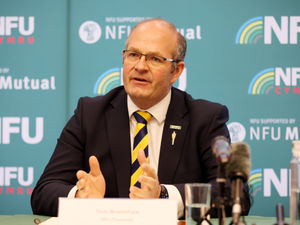
However, the National Trust view has been criticised as out-of-touch by NFU president Meurig Raymond, while NFU Shropshire advisor Jonathon Evans said that any reform of subsidies would have to focus on Britain's ability to produce its own food.
Mr Evans said: "In this debate we must not forget that food production is vital.
"We should not be contemplating doing anything which will undermine British farming's competitiveness or its ability to produce food.
"To do so would risk exporting food production out of Britain and for Britain to be a nation which relies even further on imports to feed itself.
"The NFU's view and that of Shropshire farmers is that food security should be considered to be a legitimate political goal and public good.
"County farmers and those across the country are proud of the high standards of production, traceability of the food they produce and high animal welfare.
"British food production is the bedrock of the food and drink sector – which is the largest manufacturing sector in the country contributing £108 billion to the economy and employing nearly four million people."
Mr Raymond dismissed Dame Ghosh's comments and said: "The picture the National Trust is trying to paint – that of a damaged countryside – is one that neither I nor most farmers, or visitors to the countryside, will recognise.
"Farmers have planted or restored 30,000km of hedgerows for example and have increased the number of nectar and pollen rich areas, to promote habitat and species, by 134 per cent in the past two years.
"Farmers take their responsibilities as custodians of the countryside seriously."