Farming chiefs back badger cull decision
Farming leaders today described the culling of badgers as "regrettable but necessary" in the battle to stop the spread of tuberculosis in cattle.
The National Farmers' Union defended the controversial decision to allow two trial badger culls in parts of the UK, arguing that stopping the spread of the disease is priority.
Two six-week pilot culls began on Saturday in west Gloucestershire and west Somerset where 5,000 badgers are set to be killed, despite fierce opposition.
The policy has caused nationwide outrage including seeing animal rights activists staging protests in Shrewsbury.
However, Shropshire farmers have spoken up for the Government's go-ahead to kill at least 70 per cent of badgers across the two regions with the possibility the cull could be introduced nationwide.
Farmer Mervin Mullard, from Bishop's Castle, said: "On this farm we are working with the Badger Trust to vaccinate badgers but I feel that it is not catching sufficient numbers to be fully effective."
He added: "Since April 2007 we have lost 133 cattle that have reacted to the test for TB, which we do every 60 days. I hope that the cull will stop the TB cycle in both wildlife and domestic stock. I feel the obvious answer is to vaccinate the cattle but EU regulations don't allow us to do this."
Shrewsbury MP Daniel Kawczynski called for Shropshire to be at the top of the list for any extension to the cull.
He said: "Bovine TB has long been a problem in Shropshire and dairy farmers within my constituency are among the worst suffering in the country.
"I understand that where other countries have tried to control the spread of TB by way of culling that they have seen a dramatic reduction in the spread of this debilitating disease. I am absolutely convinced that culling of badgers will help our farmers."
Figures provided by National Farmers Union show that eight million cattle were tested in Britain last year with 186,664 cattle culled due to TB between 2008 and January 2013.
In 1998 just 6,000 cattle were slaughtered, in 2012 this figure rose to 38,000, at a cost to the taxpayer of £100 million.
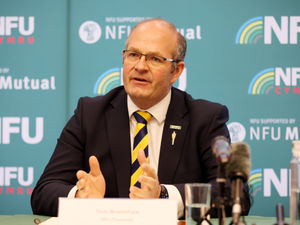
John Mercer, NFU regional director, said: "We are committed to supporting the Government's science-led policy as this disease is one of the biggest challenges facing our beef and dairy farms.
"This terrible disease causes untold misery and stress to wildlife, livestock and Shropshire farming families and therefore it is in everyone's interests to halt its spread.
"The industry is doing everything it can through strict testing regimes, tight on farm restrictions and improved bio-security. However, there is a terrible cycle of infection and re-infection because previously there has been no wildlife management.
"Now Shropshire farmers will wait to see what happens in the south of the country as the pilots examines if a cull can be done safely, effectively and humanely.
"Farmers actively manage their farmland to promote habitat and species, they just want to see healthy badgers and healthy cattle, so it is important to stress that while culling is a highly emotive issue this is not about badger eradication but disease control."
The trial culls have been championed by Environment Secretary, Owen Paterson. The MP for North Shropshire said it was estimated TB has cost taxpayers in England £500 million to control in the last 10 years.
Between January and February this year, 6,307 cattle were slaughtered, according to Defra. In Shropshire, more than 9,000 cattle have been slaughtered over the past five years.
Mr Paterson has said it will take 20 to 25 years of hard culling to get to the target of having no more than 0.2 per cent of cattle infected. If the trial cull is deemed successful then it will be extended, he has said.