At the root of better spud crops
Trials over the last five years have confirmed that FTC-1 a Methanoic Zinc Amonionate based fertiliser applied at planting consistently boosts rooting in potatoes by around 20 per cent.
Trials over the last five years have confirmed that FTC-1 a Methanoic Zinc Amonionate based fertiliser applied at planting consistently boosts rooting in potatoes by around 20 per cent.
As a result, plants are stronger, healthier and better able to forage for nutrients and moisture and at the same time more able to cope with stress and disease.
Furthermore, by using FTC-1 alongside Amistar, Rhino or Shirlan, there's an additional synergistic effect, leading to even higher yields and a significantly better skin finish.
In trials last year - in a season when moisture for bulking was readily available - FTC-1 produced a 10 per cent increase in bulking, boosting yields by four per cent and giving a £153/ha margin over input costs.
However, in summers when moisture and growing conditions restrict bulking, FTC-1 used alongside a fungicide can give consistent 20-25 per cent improvements in marketable yield, boosting margins particularly in the pre-packing market.
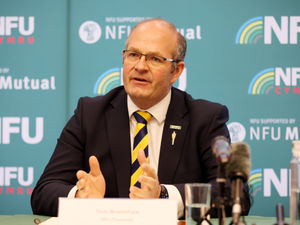
According to Shropshire-based Masstock root crop development manager, Peter Jones, any doubts over the benefits of the product - which has been exclusively marketed by Dalgety and now Masstock for 10 years - have been quashed following independent trials commissioned by the company.
"We now have a thorough understanding of the physiological effects of the product and armed with this knowledge see predictable responses on the right varieties whatever the season."
Mr Jones warns though that the starter fertiliser doesn't work with every variety and the benefits don't suit all markets. "The real benefits come from improving the finish of packing potatoes and also in bringing forward harvest in salad and seed crops.
"In essence, FTC-1 acts like a hormone rooting powder for potatoes," he says. "The 20 per cent increase in root mass it provides, in what is a notoriously poorly rooted crop, is highly significant.
"Because the product increases root mass, it also boosts water and nutrient uptake, fuelling growth, photosynthetic capability and leaf chlorophyll content. In most potato varieties this leads to a positive weight gain in the tuber.
"Estima and Maris Piper are particularly big responders and, because they are key packing varieties, growers benefit from the improved skin finish as well," says Peter. "Our work shows that benefits can be secured in the vast majority of most widely grown varieties."
The key to the response is to thoroughly soak the soil by the side of the tuber when planting and the fertiliser can easily be applied through the same system used for fungicides targeted at controlling Rhizoctonia and black dot.
Because of the larger root ball mass, the crop continues to grow for longer, putting on more bulk at the later stages of it's development.
Trials by a range of bodies, including Scottish Agronomy, Cambridge University and University College Dublin, show that much of the additional benefits from the greater bulking come in the last two to three weeks prior to lifting.
"The crop is stronger and bulks for longer, putting on extra weight which is converted into yield," says Peter Jones. Even last year, when the cold, wet August with reduced sunlight hours lead to tubers being reabsorbed by the plant, eventual yields were significantly higher than untreated crops."
While most growers will welcome the higher yield, the faster bulking provided by FTC-1 also means that some will choose to opt for an earlier harvest once their target yields have been hit.
"In similar fashion, seed or salad growers can burn down a couple of weeks earlier than normal and harvest in better conditions, maintaining or even improving the quality of their crop."
This year, Masstock is to assess the potential of FTC-1 as a means of improving fertiliser efficiency. "If the product enables more strongly- rooted plants to better scavenge for nitrogen, it may be possible to reduce fertiliser costs.
"With RB-209 consultants proposing a recommended 20 per cent reduction in N-use on the potato crop, it may well be that FTC-1 will better utilise what lower rates we can use in the future," says Mr Jones.