Beekeeper heartened by community support after bees wiped out in vandal attack
An avid beekeeper has set up a crowdfunder to raise money for beehives after his allotment site was vandalised, killing thousands of bees.
Charlie Syson, who keeps bees on his allotment site in Greenfields, Shrewsbury, noticed the damage a few weeks ago when he went to check on them at the start of the spring season.
"Between October to March, the bee keeping season is very quiet, we rarely check other than feeding bees that are hungry and run out of food, there isn't much to do," he said.
"So I last checked them around the start of March and then discovered them on the 12th, it was only left open a few days but in those days we had rain and frosts which had killed the bees."
Mr Syson had been supporting his two beehives for three years up until the attack by vandals, with lids and straps removed and the insides contaminated with a chemical substance.
"I was utterly devastated," he said. "I wanted to give in both beekeeping and allotmenting. It was really horrible, words cannot describe it really."
Instead of giving up his hobby though, Mr Syson decided to set up a crowdfunder for people to donate to the restoration of the hives – to lost equipment and the bees themselves.
He said that there was an overwhelming call from the community wanting to help him in his endeavour and so he and his partner decided to put the crowdfunder together.
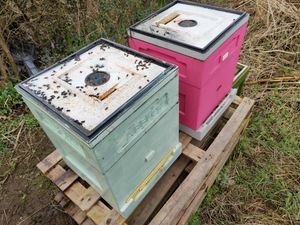
Mr Syson said that beekeeping is an expensive activity, with bees costing around £150 per nucleus colony (or 'nuc') of bees and £200 per hive, resulting in a lost of £600 worth of equipment altogether.
But, within six hours the Crowdfunder had already met its goal of £600 and the couple are now running it to raise money for some rare native black bees, with the goal of creating a 'wildlife hive.'
"The crowdfunding's aim is to replace the hives, and with the amount of support we have, we have decided to expand it to a wildlife hive, known as a "long hive", he said.
"These are a considerable cost, as well as investing in some Native Black Bees, which are the bees that evolved here and well adapted to our "rainy" weather, they are fairly rare and not kept a lot of the time."
According to the Royal Society of Biology, the overall abundance of pollinators has been in decline in the UK since the 1970s, with honeybee hives declining by 50 per cent between 1985 and 2005.
As well as being vital pollinators for vegetables and fruits such as broccoli, asparagus, apricots and strawberries, bees also produce honey which has medicinal properties.
Mr Syson has reached out to local artists to design some bee-themed prints to give as a thank you for donating and the promise of honey as well.
To donate or keep up to date with the fundraiser visit crowdfunder.co.uk/p/shrewsbees.