
Who really killed Hilda Murrell? New documentary raises more questions over murder of Shrewsbury peace campaigner

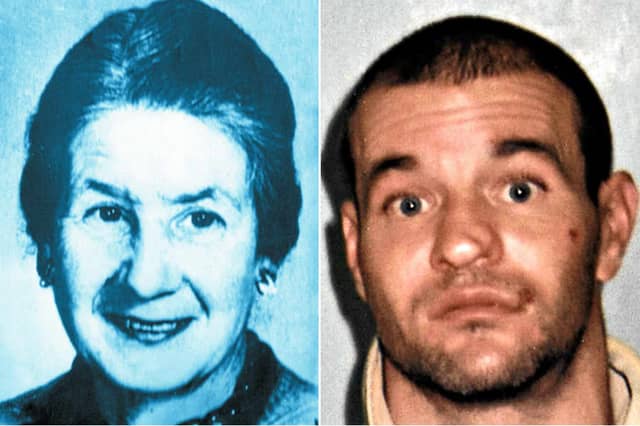

Nearly four decades after the brutal murder of Shrewsbury environmentalist Hilda Murrell, doubts still linger over what really happened — and whether justice was ever done.
For many years, suspicions have surrounded the murder of anti-nuclear campaigner Hilda Murrell, with some suspecting that the secret services were involved in her death.
Even though local man, Andrew George, was jailed two decades later for the murder of the 78-year-old Shrewsbury woman, her family continues to look for answers.
In part one of the new two-part documentary, Who Killed Hilda Murrell?, film-makers interview family members and police officers and journalists investigating the crime at the time.
It focuses on events leading up to the tragic murder and the police's controversial handling of the case.
Born in Shrewsbury in 1906, Hilda was the granddaughter of renowned rose grower and gardener, Edwin Murrell.
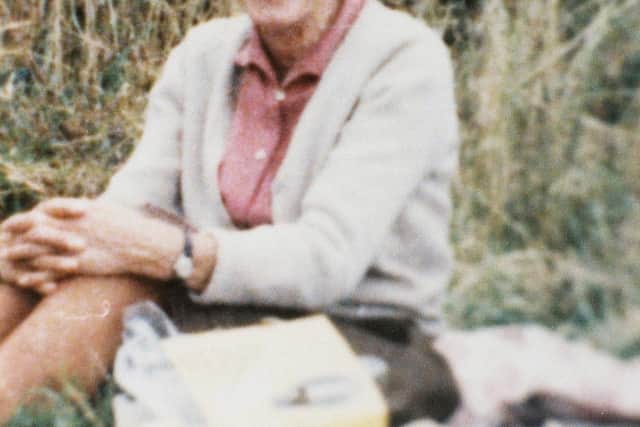
Described as a "determined young woman", Hilda was accepted as a student to Cambridge University, where she reportedly "shone".
After university, and despite her own ambitions to stay in academia, Hilda returned to Shrewsbury to take over the family rose business.
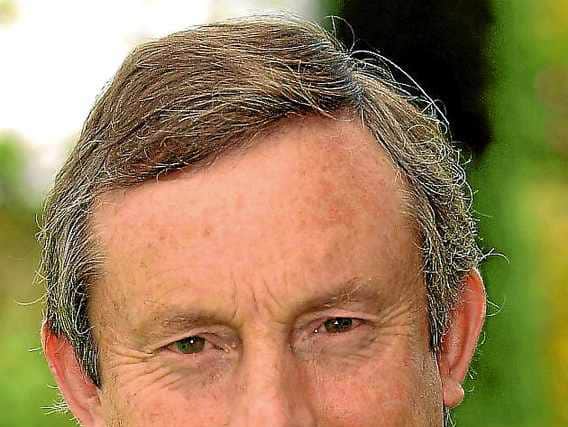
Hilda's nephew, Robert Green, has a leading role in the documentary, describing his aunt as one of the top rose growers in the country - "possibly even the world".
Following her international success and passionate about environmental matters, Hilda began persuing her own interests after retiring from the rose growing world.
The documentary features testimonies from those involved in the case, including Shrewsbury PC Debbie Winfield.
PC Winfield was out on her regular Shrewsbury beat on Saturday, March 24, 1984, when a call on her radio instructed her to go to Hilda's house on Sutton Road.
She said: "I remember going into the house and calling. and had no reply. I immediately thought, this seems to be strange.
"I radio'd in and said there's something not right, I need some assistance."
Describing the scene, Debbie noted drawn curtains, an upturned handbag on the kitchen table and telephone wires having been ripped out of the wall.
"Immediately I remember a sense of unease, I thought that maybe something had gone on."
Later that day, Hilda's body was found around five miles from her home in Shrewsbury in a small area of woodland.
A post-mortem showed Hilda had been outside for three days, the 79-year-old had died from hypothermia.
Police believed that Hilda had returned home from shopping the previous Wednesday and had interrupted a burglary at her house.
After being violently attacked, she was bundled into her Renault 5, which was seen by a "host" of witnesses being driven "wildly" through the centre of Shrewsbury.
Police then believed that Hilda was dragged from the car, across a field and into the neighbouring copse, where she was stabbed and left to die.
Not everyone, however, was so convinced by the police's assumption that it was a simple burglary-gone-wrong.
"She was someone who caused trouble," said anti-nuclear activist Sioned Huws.
"Report, write letters, discuss, that's what she did. She was well-known for doing that," added peace campaigner Meg Elis.
"It made her into a campaigner - dare I say, a dangerous one?"
Amid the Troubles, Thatcher's battles with the unions, and The Falklands War, dozens of women were leading a growing anti-nuclear movement in the face of the Government's plan to increase nuclear production.
"There was a feeling that the state was, in some way, oppressing those who opposed the establishment," Meg said.
As the government was working on plans to build a second £2.5bn reactor at Sizewell, Hilda undertook research that she reportedly planned to present to the inquiry.
Her nephew, Robert, said: "She wrote a paper for the management for radioactive waste. She was finalising the draft when, suddenly, she was murdered.
"She was such a special person. She loved her country. She refused to allow the nuclear industry to contaminate it. It meant her death warrant was sealed."
Without a murderer behind bars, the press began asking questions and raised concerns over the police's handling and interpretation of the case.
The documentary claims that Hilda's car had been reported "abandoned" the Wednesday she had supposedly gone missing, with two officers going to see the vehicle that evening.
Reporter, Gwenda Richards, said: "It seems that the police had missed an opportunity to find her."
The officers checked the immediate area, saw nothing, and left. Having tracked down the car's owner, police attempted to phone Hilda. The phone rang, but there was no response.
Meanwhile, the owner of the woodland where Hilda's body would later be found reported having walked the area thoroughly on Thursday, counting trees to be cut down.
He told reporters and police that he "would have seen a dead rabbit on the ground" - but did not see Hilda.
Officers investigating the abandoned vehicle visited Hilda's house on Friday, March 23, noting that downstairs lights were on and the side door was "wide open".
Despite entering the house and seeing papers "strewn across the table", the officer reportedly thought there was nothing suspicious about the situation - and left.
It wasn't until the following morning, following another visit to her house, that a search for Hilda began.
Gwenda said: "What did they think happened to her? A 78-year-old woman living alone. They hadn't really considered anything."
For every answer found, more questions seem to emerge — about the police investigation, about what she knew, and about why she died.
As the new documentary reopens old wounds, one question continues to echo through the decades: who really killed Hilda Murrell?
Both parts of the documentary, which form part of S4C’s Trosedd (Crime) programming, is now available to stream on S4C Clic and BBC iPlayer, with Welsh and English subtitles.