Dairy farms at crisis point
While emotions sometimes run high, the facts speak for themselves - England lost one dairy farm on each and every day of last year. Although milk is a commodity very few of us could do without, the dairy industry is in complete freefall.
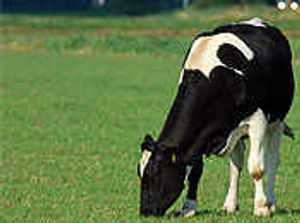
From 22,793 farms in 1990, there were just 12,918 left at the end of 2005.
That desperate trend has continued this year. Even Lord Rothschild has stopped dairy farming at his Waddesdon estate in Buckinghamshire, selling his 377-strong herd last month. Farmers rightly believe that if he cannot make any money, what hope is there for the rest of them.
Shrewsbury MP Daniel Kawczynski, the chairman of the All-Party Parliamentary Group for Dairy Farming, is leading the fight to get the Office of Fair Trading to force supermarkets to pay more for milk.
"I have dairy farmers in my constituency going out of business every week. If this trend continues, we won't have any dairy farmers in Shropshire by 2013. We cannot sit back and wait any longer. We must take action," he said.
To top it all, Waitrose chairman Sir Stuart Hampson believes Britain could end up importing milk within five years.
"I really sense that farmers aren't crying wolf. There is a lot of scaremongering about tipping points, but we are reaching a point where unless action is taken we won't have a viable sector," said Sir Stuart, who is a former president of the Royal Agricultural Society of England.
While the answer is simple - the small matter of an extra 3p per litre for the farmers - getting the money into their pockets is not quite so straightforward.
A decade ago milk made money for each of the parties involved: the farmer, the processor and the retailer.
But a supermarket price war soon attacked the margins on all sides. Milk and bread become two of the key battlegrounds, with "the big four" scrapping for customers by slashing prices.
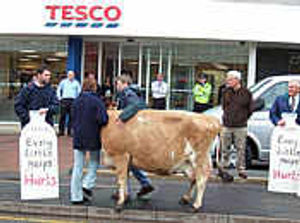
The industry may be able to wrestle back power by forming powerful farm co-operatives, but it's always difficult to drive a hard bargain when you have a tanker full of perishable goods.
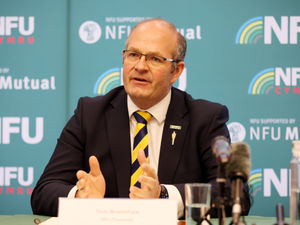
Tim Brigstocke, the chairman of the Royal Association of British Dairy Farmers, said that the future does not bode well.
"The worrying thing is that it's the young, business-orientated farmers who are getting out. They are doing the sums and realising it doesn't make sense."
Essentially, milk prices need to rise to a sustainable level to encourage a core of milk producers to stay in production.
NFU dairy board chairman Gwyn Jones said Sir Stuart's comments were a wake-up call for the industry about the risks of the current meltdown taking place on Britain's dairy farms.
"A reduced milk supply could have a devastating affect on the wider industry and the UK economy as a whole," he warns.
Meanwhile processors and retailers continue to make good profits on the back of dairy farmers.
Said Mr Jones: "This is no time for prevarication - our NFU Vision for Dairy made clear the direction we need to head in if we are to stem the flow of farmers leaving the industry - greater responsibility, more rationalisation, exploitation of all market opportunities and greater processing efficiency.
"Progress is being made but there is an urgent need to accelerate this to avoid a complete meltdown of the UK dairy industry."
This special report by Shropshire Star Rural Affairs Editor Nathan Rous is part of a two-page in-depth feature in Thursday's Shropshire Star
Have your say - What do you think about the state of the dairy industry? Are you a dairy farmer thinking of quitting? E-mail with your name and address to internet@shropshirestar.co.uk