Baby deaths - Victims of maternity failings in NHS "ignored and retraumatised" as national review of neonatal care delayed
Parents affected by maternity failings in the NHS say they feel "sidelined, ignored and retraumatised" as national review of neonatal care is delayed
Families have raised "significant concerns" about what the National Maternity and Neonatal Investigation (NMNI) "can and will achieve", and warned it risks becoming "an exercise in reassurance" for the health service instead of offering scrutiny and challenge.
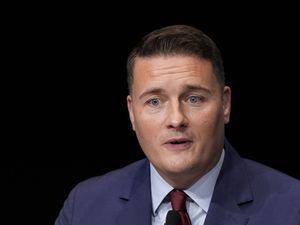
There have also been fresh calls for a full statutory public inquiry into maternity services in England. Health Secretary Wes Streeting ordered the rapid review into "failures" in neonatal care in England in September and appointed Baroness Valerie Amos to lead the probe. It will focus on 12 NHS trusts. The rapid review initially included 14 NHS trusts, but two were later dropped.
Shrewsbury and Telford Hospital Trust (Sath) was removed amid an ongoing police investigation, while services at Leeds Teaching Hospitals NHS Trust are now the subject of a separate independent inquiry.
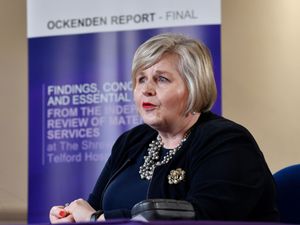
Sath, which runs Royal Shrewsbury Hospital and Telford’s Princess Royal Hospital. has already been subject to an inquiry, carried out by Donna Ockenden. Her Ockenden Report, which investigated failings at SaTH, concluded that there were at least 201 cases where mothers or babies died in the trust's care involving significant or major concerns where better care could have led to a different outcome.
West Mercia Police launched Operation Lincoln in 2021 and in 2022 the force revealed it initially identified 823 cases it wanted to examine. Included in the 823 cases were four cases that occurred since 2019. The force confirmed that 122 cases had been reviewed with a decision made that there was insufficient evidence to progress these cases any further. An extra £1.6m of funding from the government was given to the force earlier this year to extend the police investigation.
While local inquiries like the Ockenden Report have been launched, there had been sustained calls for a national probe into failings.
A call for evidence for the national inquiry was set to launch this month but has been pushed back to January, with some site visits also postponed until the new year.
A spokesperson for the NMNI said the move will allow it to "properly take on board family feedback".
However, Maternity Safety Alliance, a group comprising families whose babies died as a result of hospital failings, said: "It is now clear that the Amos review has become an exercise in reassurance for NHS maternity services, when what is needed is scrutiny and challenge.
"Furthermore, Amos and her team continue to say they are listening to harmed and bereaved families while doing the opposite - we have been variously sidelined, ignored and retraumatised, while being subjected to broken promises, lies and exploitative processes.
"Maternity services are in crisis, with negligent care killing or seriously injuring another baby every few hours.
"Streeting's response - to commission a review staffed by conflicted NHS insiders and taking only a cursory glance at the system - is wholly inadequate and extremely damaging. He must now order a full statutory public inquiry without any further delay."
Rebecca Matthews , co-leader of the Families Failed by OUH Maternity Services campaign group, said: "Initially, when Wes Streeting announced a rapid review of maternity services, we were pleased that he recognised maternity services were failing nationally and action was needed.
"But we now have significant concerns about what the NMNI can and will achieve, despite recognising the good intentions of Baroness Amos and her team."
The group claims the NMNI "simply hasn't had enough time or resources allocated to undertake a sufficient review across all of the selected trusts".
Ms Matthews added: "This shows that perhaps a 'rapid review' wasn't the right action - maybe Baroness Amos is realising that now.
"The harm is so, so extensive, horrific and preventable - surely we all deserve more than an under-resourced review which is appearing more and more tokenistic as the weeks go on?"
A spokesperson from the NMNI said hearing from families "is a priority" for the investigation.
They added: "This engagement has included insightful input into the draft call for evidence which will gather insights into families' experiences of maternity and neonatal care.
"In order to properly take on board family feedback, a decision has been made to delay the launch of the call for evidence from November 2025 to January 2026 .
"In addition, some site visits have been postponed to the new year."
Baroness Amos will publish her initial reflections on what she has heard so far in December, along with plans for the next phase of the probe.
The final report is expected to be published in spring 2026.
The spokesperson added: "This is in line with the timescales set out in the original terms of reference for the independent investigation and reiterated in correspondence sent to families last month.
"All of the evidence provided by families will be taken into account as part of the final report in the spring."
A Department of Health and Social Care Spokesperson said: "We are taking urgent steps to improve maternity services and are confident Baroness Amos's investigation will deliver meaningful impact.
"The review will identify ways to urgently improve care and safety, and Baroness Amos is working closely with families to gather evidence which will inform the review's recommendations.
"The National Maternity and Neonatal taskforce will also confront problems and drive the improvements needed so every woman and baby receives safe, high-quality care.
"Since the election, we have invested over £130 million to make maternity and neonatal units safer, rolled out programmes to reduce avoidable brain injury, and backed Martha's Rule which gives families the right to an urgent second opinion."