'I've worked on some of the biggest murder cases in the West Midlands and I've moved to Shropshire to relax'
A West Midlands Police crime scenes co-ordinator enjoys the quiet life away from work and appearing on TV in Forensics: The Real CSI in Shropshire
They always say that the hardest, most impressive and commendable work is done behind the scenes, often by people whose admirable sense of duty never fails to lead them to consistently put others first, and themselves second at best.
That has perhaps never been more true than in the case of a relatively new resident of our beautiful county, who firmly deserves the wider region’s thanks and applause.
Joanne Ward has been in the police force for 28 years. Initially joining West Midlands Police as an inquiry officer, she now works as a crime scene co-ordinator, principally dealing with murders and suspicious deaths. Jo’s career has put her at the frontline, dealing with some of the region’s most horrific crimes, and has seen her as a regular on BBC documentary series ‘Forensics: The Real CSI’.
Though now living in Shropshire, Jo continues to work for West Midlands Police, where her commitment to justice remains unflinching. She is happy, however, to enjoy more of a calming, rural environment when off duty.
“I’ve been in the police now for nearly three decades, and in my current role, on a day-to-day basis, I tend to deal mainly with suspicious deaths and murders,” she said.
“You’ve got to be a certain type of person – you’ve got to have a strong stomach and the ability to process the things you see in the right way mentally.
“Now that I am living in Shropshire, it is nice to come home to somewhere that helps me relax.”
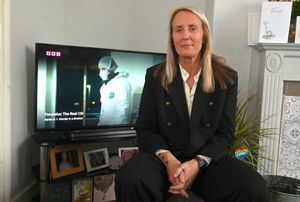
In her role as a crime scene co-ordinator, Jo will be acutely involved in a murder investigation from the moment it opens until the sentencing of the perpetrator – being one of the first at a crime scene with the senior investigating officer (SIO), and also contributing to court proceedings.
As Jo describes a typical day, the need for a strong resolve becomes all too apparent.
“When a job comes in, the investigating officer gives you a call and then you arrange to go and meet them at the scene,” she said. “By the time we get to the scene it’s locked down. Police officers are there, and there are cordons in place, so there is obviously no public access.
“Most of the time the deceased is left in situ for the crime scene co-ordinator and the SIO to go and have a walk through the scene. We get an update from the SIO about what we know about the deceased, what we know about the circumstances of the death, and if there are any suspects and if we have already got someone in custody.
“Then it’s about forensically suiting up. Once we have our suit, shoes, gloves and mask on, we go into the actual scene itself and will then discuss exactly what we’re going to do. Most importantly, we decide if there is anything in the scene that needs prioritising that may give us a quick turnaround in identifying our offender if they’re unknown.
“We’ll be looking for mobile devices, potential murder weapons – any intelligence that could lead us to an early arrest, because, as you can imagine, the first 24 hours can be crucial.