'You don’t need a finger up the bum to test' - Football-loving brothers from Shrewsbury join cancer campaign
Two brothers and prostate cancer patients from Shrewsbury joined a UK-wide movement to say "you don’t need a finger up the bum" to test for the disease.
Prostate Cancer UK states that one in eight men will get prostate cancer, and that it is now England’s most common cancer and the most common cancer without a screening programme.
A movement of men from the Midlands and across the UK came together during Men's Mental Health Week (June 9 to 15) to share a simple, but hopefully lifesaving, message.
Two of the men who are telling people that "you don’t need a finger up the bum to test for prostate cancer" are brothers and Shrewsbury Town supporters Dave and Pete Cossie, who have both each gone through a prostate cancer diagnosis.
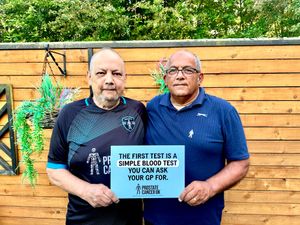
In December 2021, Pete received the devastating news that he had incurable prostate cancer.
Following Pete's diagnosis, and because of their Caribbean heritage, brother Dave underwent a PSA (prostate-specific antigen) blood test in May 2022 which gave normal results - as did another test in November 2022. But he was advised to continue testing every three or four months.
PSA is a protein produced by both normal and cancerous prostate cells. Cancer Research UK states that most men typically have a PSA level of less than 3ng/ml.
Doctors use the PSA test to help diagnose prostate problems, including prostate cancer, and a high reading may suggest prostate cancer.
In April 2023, results showed that Dave had an elevated reading of 6.4, and following an examination, an MRI, and a biopsy, he received a diagnosis of stage two prostate cancer on June 2.
Prostate Cancer UK said Dave is now doing well and said his brother, Pete, saved his life.
Pete got a prognosis of six months in 2021, and though he isn't currently very well, Prostate Cancer UK said he is "full of determination" to take part in the charity's campaign.
Men can quickly find out their risk of prostate cancer and what they can do about it using the charity's 30-second online Risk Checker.
In the Midlands, 8,030 men are diagnosed with prostate cancer each year, according to latest data.
The campaign comes after the British Association of Urological Surgeons made the landmark decision to join Prostate Cancer UK in calling for an end to the routine use of the rectal exam, with experts agreeing that it is no longer a useful or necessary test.
Since the introduction of MRI and modern targeted biopsies, the charity said the way that prostate cancer is diagnosed is "safer and more accurate than ever".
And, the charity said the 'infamous finger test' has long been associated with prostate cancer, and it is looking to end the stigma around it.
The campaign by Prostate Cancer UK has received backing from figures including former Scottish rugby international Kenny Logan, stars of screen such as Colin McFarlane, Dr Amos Ogunkoya from The Traitors, and Andy Ryan from The Great British Bake Off.
Amy Rylance, assistant director of health improvement at Prostate Cancer UK, said: "For a long time, prostate cancer testing has been associated with the rectal exam, and the fear and stigma around 'the finger' puts men off speaking to a GP about the disease, often until it's too late for their cancer to be cured.
"But now the experts agree that it's out of date and no longer necessary.
"You don't need a finger up the bum to test for prostate cancer. The first test is a simple blood test. I'm heartened to see men across the UK sharing this message with each other - they're busting a major prostate cancer misconception and are undoubtedly saving lives.
"The way prostate cancer is diagnosed today - without rectal exams - is safer and more accurate than it's ever been. However, it's important to know that prostate cancer is the only common cancer without a screening programme, and it often doesn't give you symptoms in its earlier stages. So, don’t wait for symptoms if you’re concerned about prostate cancer - you can take our 30-second online Risk Checker right now, which will tell you if you’re at risk of getting it and, crucially, what you can do about it."