Revealed: 18,000 homes across Shropshire where no-one is in work
More than 18,000 households in Shropshire have no working occupants, according to official figures.
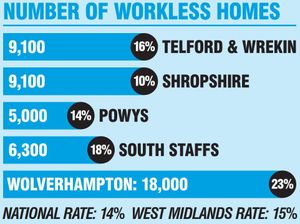
Data from the Office of National Statistics show that 10 per cent of the Shropshire Council’s area’s households were workless last year, lower than the UK-wide average of 14 per cent.
In Telford & Wrekin 16 per cent of the households were workless, while in Powys it was 14 per cent.
Across the West Midlands, this figure was 15 per cent .
The figures mean that there are around 9,100 workless households in both Shropshire and Telford & Wrekin, and 5,000 in Powys.
The ONS classes households as workless if no one aged 16 and over living there is employed.
While figures were not broken down locally, the most common reason people gave for not being in employment across the West Midlands was sickness or disability – cited by 32 per cent of those out of work.
Early retirees made up 16 per cent of jobless people, and students 12 per cent.
Only 13 per cent of the group were officially unemployed, or looking for work and able to start within two weeks.
Fallen
According to the Department for Work and Pensions, the number of workless households has fallen in all parts of the UK since 2010, with more than one million households with at least one adult in work.
A spokeswoman said: “We are committed to ensuring this trend continues by supporting people, especially parents, into work by providing personalised support through our jobcentres and under the new benefits system parents can claim up to 85 per cent of childcare costs.”
But this has masked an “explosion” of insecure work pushing people into the red, said Trades Union Congress general secretary Frances O’Grady.
She said: “Any drop in unemployment is good, but it’s not right that millions of hard-working people across Britain are struggling to make ends meet.
“And if the Government presses ahead it with its threat of a no-deal Brexit this will only get worse.”
Mike Hawking, policy and partnerships manager at the Joseph Rowntree Foundation, welcomed the rising employment rates, but cautioned that more working families were being “trapped in poverty”.
He said: “Low pay, low skills and a lack of good jobs in large parts of the country are holding people back from a decent life.”