Poignant memories of 'forgotten army' for Shropshire soldier
Seventy years on, veteran Bert Molsom says memories of the war are just as fresh as ever.
Mr Molsom, now aged 99, was an Army captain during the Second World War and served in the Royal Army Pay Corps supporting frontline staff in Burma when Japan surrendered in 1945.
Earlier this month, Mr Molsom attended the VJ Day commemorations in London, and said the day brought back a lot of memories of the war.
He said: "It was a very tiring day, but I wouldn't have missed it for the world.
"Although it was 70 years ago, it is all still fresh in my mind."
Mr Molsom, who lives at Morris Care's Corbrook Park Nursing Home in Audlem, near Market Drayton, said he initially trained up as a clerk along with his close friend, Ray Perryman.
He said: "When we had done our training, they called a group of us together, about 20 or 30 of us, and said they now had surplus clerks and would we mind being trained as something else.
"Well, I said I wouldn't be trained as something else – it was not my fault they had too many. But Ray said he didn't mind, and he was trained as a cook. We had some very nice meals after that.
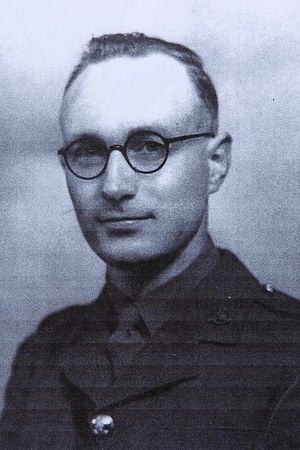
"Very soon after that he was sent out and was straight into a prisoner of war camp."
On VJ Day, Mr Molsom said he remembers all normal duties being abandoned and going to a thanksgiving service held in a rice mill.
Later, he was in Burma when all efforts were being made into getting prisoners of war back home.
Mr Molsom said soldiers would queue up to register to get sent back to Britain, and he was desperate to see his friend Ray again or hear news of what might have happened to him.
He said: "If there weren't many soldiers in the queue I used to say I lost a friend out here, and I don't suppose you know him?
"After all those years, one man said to me that he was with him.
"He said they were being moved on by the Japanese and he died on the train."
Mr Perryman died on June 1, 1945 – just six weeks before the end of the war.
Later on, Mr Molsom also found another person who knew where Ray had been buried and said the commemorations were one way of remembering all those who had not made it.
He said: "We used to have the newspapers sent to us and I remember on Victory in Europe Day everyone was out celebrating and we were in a camp with Japanese shells going over the top of it. A lot of people called it the forgotten army."
One thing Mr Molsom remembers strongly is the camaraderie between soldiers.
He said: "It was very strong. If you were ever in trouble or needed help there was always help for you."
His son, also called Bert, added: "Something I have always found from dad's stories is that that was always there.
"Anyone who needed help would have it. They had strong links between them.
"Even with dad finding out about his friend Ray – of all the people who must have been in the queues to come home and he found someone who knew what happened to his friend. I think it is quite amazing."
Mr Molsom attended the London ceremony to mark the 70th anniversary of VJ Day along with his son.
He joined other Burma Star and Pacific Star holders and was part of the parade down Whitehall to a reception at Westminster Abbey, hosted by the Royal British Legion.
His son said: "It was a fantastic day. I know dad wanted to go to say that he is still here and it is important to remember all those who aren't.
"It was interesting to hear the number of people who were there for the same reason.
"I am very proud of my dad, of course. It is only in the last 10 or 12 years he has talked about it.
"Thankfully he has written it all down now and it was amazing to be there for the commemorations.
"It really brought tears to my eyes."
His son added: "There were about 1,000 veterans there for the commemorations which I think is fantastic as there are only something like 4,000 left.
"To see them all there with their families made me feel very proud indeed.
"There is a feeling that it was the forgotten army, so it is very important for these veterans to talk about it and share the memories they have."
Today Mr Molsom has two sons, four grandchildren and eight great grandchildren. He lived independently until he moved to Corbrook Park nearly three years ago. He has spent the last few weeks looking back on his memories of the war and will now be looking forward to his 100th birthday next year.