Farming Talk: Preparation is key to getting best bird sites
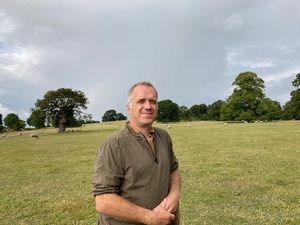
The Shropshire branch of the Game and Wildlife Conservation Trust was treated to a viewing of a wide variety of wild bird feed trial plots at Harper Adams University College.
The Shropshire branch of the Game and Wildlife Conservation Trust was treated to a viewing of a wide variety of wild bird feed trial plots at Harper Adams University College.
The plots are managed by Natural England's Geoff Howe, who also oversees Harper Adams' HLS agreement which includes the newly acquired peat land at nearby Weald Moors.
We heard that one of the biggest problems with wild bird seed mixes is sowing too early, when the ground is too cold – beyond that ground preparation is paramount. If you want a crop you have to prepare a good tilth and treat it as a crop to maximise seed production, so fertiliser is important too.
Options beyond that include the type of canopy you wish to achieve. Perennial grasses are excellent brood rearing cover, open in canopy and insect rich; however if there is clover in the bottom, it may be too wet for game bird chicks.
The crop should also provide summer habitat for the growing chicks and finally over winter feeding – and while the temptation might be to plough at the end of the shooting season – retaining the crop for a couple more months will carry birds through the identified 'hungry period'.
Indeed as a result of GWCT findings Natural England has now signed up to pay farmers to feed during the late winter months. The details are yet to emerge, but this is great news for all species of farmland birds. However, it is understood that without sufficient predator control much of the work providing feed and habitat can often be wasted.
It was good to hear the full praise given by Geoff to the GWCT for its research and development work, which were the main drivers behind the HLS and ELS prescriptions.
Ian Lindsay, GWCT chief adviser, was quick to acknowledge that in his 30 years with the GWCT the government's rural body – now Natural England – has never been so in step with the GWCT and its advice. Ian acknowledged to the visiting GWCT group: "This is thanks to your membership, support and generosity, in aid our research."
We are all now wondering what August and September weather will offer. For the sake of those working with game birds we all keep our fingers crossed that they will have rather more clement weather.
Tim Main chairman, Shropshire branch of the Game and Wildlife Conservation Trust