I visited the French city of Lyon and discovered a place packed with amazing food, wine, and architecture -not to mention the 'secret' walkways
Jean-Michel Jarre. Great musician, not so sure about his geography.
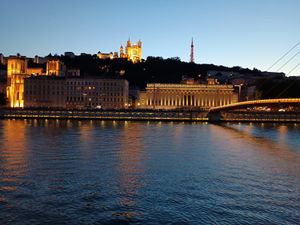
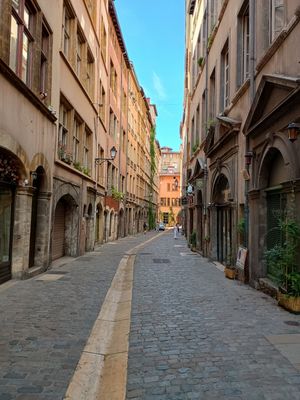
Those were my initial thoughts as I wandered through the Lyon's shady, cobbled Rue du Boeuf on a balmy Thursday evening.
Many years ago I had interviewed the Oxygene composer about his forthcoming performance in the Midlands, and he said that he loved visiting the region because 'Birmingham reminds me of my home town of Lyon."
The narrow, tranquil streets, with their weathered 15th century buildings, and laid-back pavement cafes did not immediately remind me of Birmingham's heaving Christmas market. The gentle descent past the Roman ruins to the River Seine did not seem especially reminiscent of Victoria Square. Presumably Monsieur Jarre was getting confused with a different British city, Oxford, maybe? Cambridge?
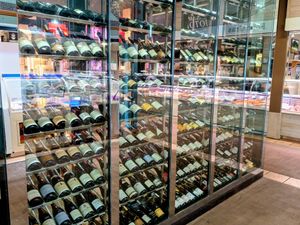
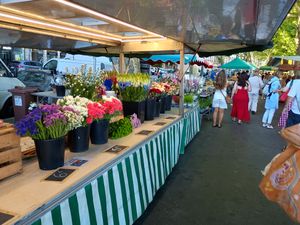
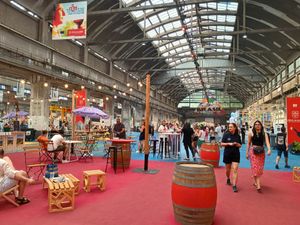
Nestled between the Rhone valley to the south, and Burgundy and Beaujolais to the south, Lyon is a bon viveur's delight, with 17 Michelin-starred restaurants and more wine shops than you can shake a stick at. Much of this is down to the influence of Paul Bocuse, considered by many to be France's first celebrity chef, and who continues to keep a watchful eye over the city, some eight years after his death, in the form of a giant mural in the Cours Lafayette. Immediately opposite is Lyon's world-famous food market, now named Les Halles Paul Bocuse in honour of the father of French gastronomy, which is a riot of colours, smells and tastes, packed with brightly-coloured chocolates and pastries, quenelles, and a mind-boggling array of different wines. Whatever your taste, there is something for everyone, and plenty of places to sit down for a casual bite to eat.
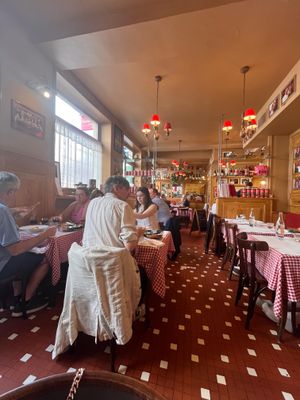
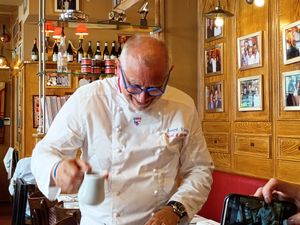
A short walk round the corner in Rue de Crequi is the famous Daniel et Denise bouchon, the ideal spot for a leisurely lunch after working up an appetite around the food market. Now under the management of Michelin-starred chef Joseph 'Pepo' Viola, who is best known for his signature pate en croute starter, for which he won the 2009 world title.
Bouchons are unique to Lyon, essentially bistro-style restaurants specialising in hearty, rich local-style food such as sausage, offal and pike quenelle in distinctive sauces, and Viola is passionate about maintaining the tradition. An animated man in bright blue spectacles, he talks at breakneck speed as he explains each step of meal preparation, exhibiting a flamboyant style and excitement for his work which Bocuse would surely approve of. And, as a holder of the 'Meilleur Ouvrier de France (Best Craftsman of France) award, no visit to Lyon would be complete without sampling his signature pate en croute starter, a duck foie gras and sweetbread pate. For those accustomed to the hushed formality of Michelin-starred restaurants in the UK, the easy-going informality of Daniel et Denise may come as something of a surprise, but to Viola that is all part of the experience: simple checked table cloths, balloon wine glasses, rustic menus and easy-going chatter around the table.
Foodies will not want to miss the city's street food festival at the end of June, where traditional Lyonnais cuisine with a modern twist meets gastronomical delights from around the world plus, of course, generous helpings of wine.
The city's Belle-of-the-Ball though is the Vieux-Lyon, or old town, a Unesco world heritage site, which dates back to Roman Times, when the city of Lugdunum began expanding eastwards towards the River Seine, to take advantage of the water supply.
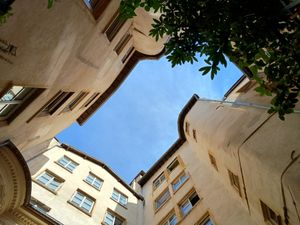
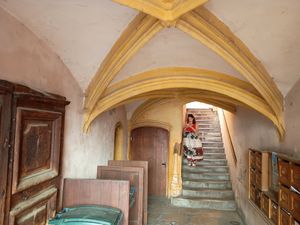
Rue du Boeuf, at the heart of the old town, takes its name from the ancient custom of traders displaying cattle carcasses for potential customers to peruse, although thankfully the restaurateurs of the 21st century employ more subtle techniques to lure customers. The main streets of the old quarter are best traversed by wandering through the traboules, fascinating corridors which provide public short-cuts through the long terraces of pastel-coloured Renaissance houses, often taking in picturesque courtyards.
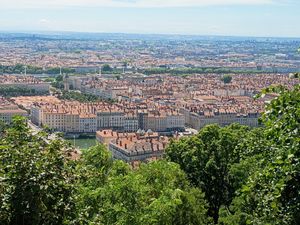
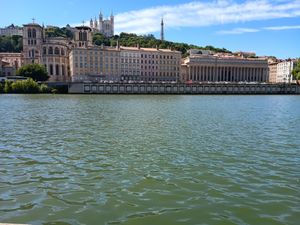
Up high on the embankment to the west of the old town is the Basilica de Fourviere, a stunning white marble cathedral where a Roman forum once stood. Dedicated to St Mary, who is credited with saving the city from bubonic plague in 1643, the basilica attracts two million pilgrims every year. Built with donations from the public, this spectacular piece of architecture took 27 years to build. When architect Pierre Bossan died in 1888, 18 years into the construction process, it fell to Louis Sainte-Marie Perrin to see the project through to completion, a process which took a further nine years. A square next to the basilica offers spectacular views across the city.
It therefore seems incredible to think that back in the early 1960s, plans were afoot to demolish the old city to make way for a new motorway link. At this time the old quarter appeared to be in a state of terminal decline, the wealthy aristocracy and silk merchants having abandoned the Renaissance-era quadrangles for the up-and-coming peninsular between the two rivers. However, the famous French revolutionary spirit led to a fierce campaign to save the old city, and in 1964 it became the first area to be protected under the Malraux law to protect France's cultural sites. This marked the beginning of a stunning revival, culminating in the award of World Heritage status in 1998. Walking around the old town today, it is hard to imagine it as anything other than a thriving centre where every square is a buzzing hive of activity, lined with cafes, wine shops or chocolatiers.
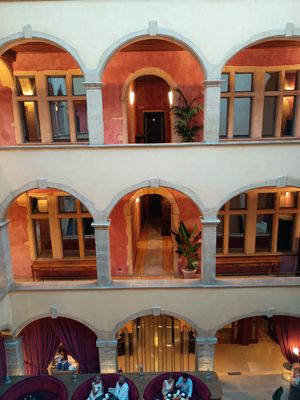
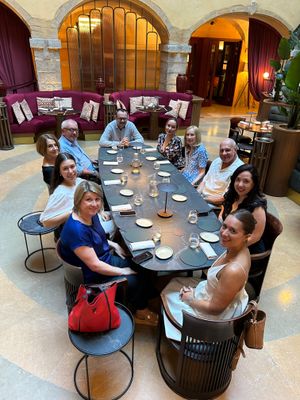
This mood of renewal is exemplified by the Cour del Loges, the beautifully restored hotel which is now an attraction in its own right. Originally four separate houses, the first three dating back to the 14th century, the fourth a couple of hundred years newer, the complex was acquired first by Claude de Beaumont, Lord of Burgundy, at the turn of the 17th century, and a short while later by a group of Jesuit monks. A glass roof was placed over the former traboule in the centre, creating an elegant dining spot, overlooked by the spectacular medieval balconies, and the hotel has recently received a top-to-bottom refurbishment to become the world's first example of Radisson's premium 'Collection' brand. Another celebrity chef, Anthony Bonnet, keeps the hotel's Le Comptoir restaurant. Given that we were in Rue du Boeuf, it seemed rude not to sample Bonnet's aged Haute-Loire beef with winemaker's red wine sauce, accompanied by a bottle of the city's finest Cotes du Rhone.

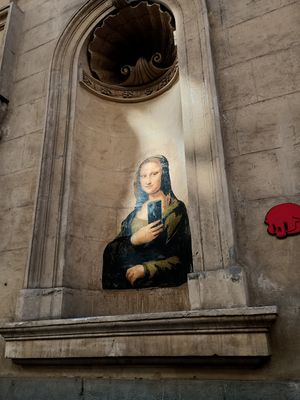
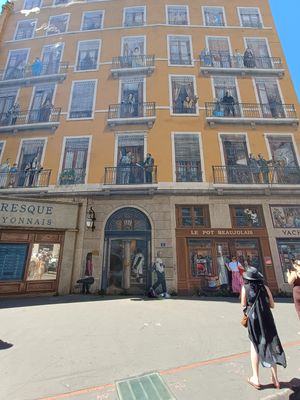
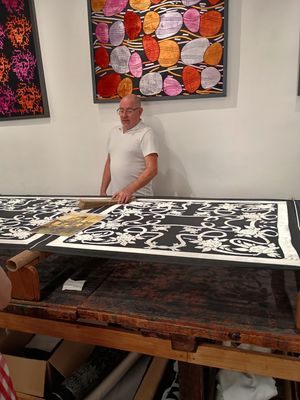
If you want to take a break from the food and drink - and it is probably wise to do so, if only to give you the chance to burn off the calories - the Brochier Soieres silkworks is well worth a visit, where skilled craftsmen keep alive the traditional skills on which much of Lyon's wealth was based. And it would be a crime not to see the famous Fresque des Lyonnais at the Quai de Saone - at first glance it looks like just another grand 17th century house, with a row of shops on the ground floor, but closer inspection reveals it to be just a blank wall, the 'building' being a mural which features 30 famous sons and daughters of Lyons.
Thinking about it from a more philosophical point of view, perhaps Jean-Michel had a point after all. Just as Britain's second city always lives in the shadow of its much larger, more exuberant capital, Lyon is a city which is painfully under-rated compared to the well-documented attractions of Paris. And like Birmingham, the past 30 years have seen it enjoy a remarkable comeback, after decades in the doldrums. If only the Brummies had that Gallic defiance which might have prevented so many of Birmingham's historic buildings being lost in the name of progress.
Paris is Paris, and if it is the Eiffel Tower, Arc de Triomphe and Cathedral of Notre Dame are your bag that is where you will go. But for something a little more enduring, a city with hidden depths beyond the hype of the capital, Lyon is a place which gets under your skin. And the more time you spend there, the more you learn to appreciate what it has to offer.
And it's a lot more relaxing than the Champs Elysees.
Lyon fact box
We stayed at the Radisson Collection Cour des Loges Hotel, where the average room rate is 325 euros (£284) per night
https://www.radissonhotels.com/en-us/destination/france/lyon
A return flight from Birmingham to Lyon, via Munich, with baggage through SwissAir is typically about £500. Return flights in February start from about £115, but may involve more than one carrier.
A three-course lunch at Daniel et Denise is 38 euros (£33) per head plus drinks from the set menu, or about 51 euros (£45) from the a la carte menu.
A three-course lunch at Anthony Bonnet's Le Comptoir restaurant at Cour des Loges is 45 euros (£40 ) from the fixed-price menu, plus drinks, with items on the a la carte menu ranging from 16 euros (£14) to 36 euros (£31.50).