Home of the Future shows it's better living in the past
Those of us of a certain age need no introduction to the Home of the Future. We grew up with it. In the 1950s, no magazine or comic was complete without its illustrated feature on how Mrs and Mrs Great Britain and their family would be living in the year 2000.
Those of us of a certain age need no introduction to the Home of the Future. We grew up with it. In the 1950s, no magazine or comic was complete without its illustrated feature on how Mrs and Mrs Great Britain and their family would be living in the year 2000.
All those bricks-and-mortar houses would be swept away and replaced with egg-shaped living pods. We would all wear one-piece jumpsuits, eat meals in the form of high-energy pills and travel either by mini-helicopter or jet backpack.
Our homes would be run by robots and our energy would come from nuclear fusion, producing electricity "too cheap to meter".
Nearly 60 years on we still live in traditional houses, still wear denims and shirts, still travel in petrol-driven cars and still burn coal to produce electricity we can hardly afford.
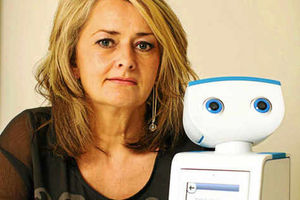
Amazingly we have not lost our fascination in the Home of the Future, created in this five-part series in the house of the Perera family in Sheffield.
The place has been gutted and packed with all the latest technology and gadgets.
But the big difference between this show and the future-vision of the 1950s is that all the kit being road-tested by the Pereras, from the automatic vacuum cleaner to the robot lawnmower and the park-itself car, are already with us. You can buy them now.
And that, in five little words, is the real motivation of this series.
It is not a serious examination of future living some decades from now but a series of mini-ads for things you can purchase today. Every item featured came with a long, lingering look at its trade name.
Having sorted out the product placement, add the obligatory drama. Michele, having moved out with her family for six weeks while the house was transformed into a home of the future, burst into tears when she returned and discovered it had been transformed into a house of the future.
"I thought there would have been a little bit of me in here," she wailed, puzzlingly.
How does this series turn out? All can be revealed, thanks to that amazing modern invention, the newspaper.
In an interview, Michele Perera reveals that the self-filling bath never got the temperature right, the robot vacuum was a waste of space ("You get better suction from a proper Hoover") and the electric kitchen-roll dispenser would appeal only to "hygiene freaks."
C4 could have made a far more interesting programme by asking why, when so much hi-tech gadgetry is available, are people so reluctant to buy it?
The answer is probably that we spend our working lives serving computers. Maybe we see our homes as a haven of simplicity. Frankly, there are better things to do with your time than programming the entire family's appointments for the week into a central household computer. Talking, for example.
The one item which might catch on is the £20,000 living "pod" which can be erected in your garden, usually without planning permission, to create an extra room.
Very useful in an age when house prices are far too high and the kids won't leave home.
Peter Rhodes