9 brilliant Shropshire hidden gems steeped in history and nature you need to visit this Spring
In a county full of great views, idyllic towns and village and rolling countryside, there are still plenty of places to see which are rarely seen or not well known.
Shropshire is a county full of notable sites, from the iconic Ironbridge bridge to the river walks along the River Severn, from the walks of the Long Mynd to the historic views of Shrewsbury town centre and the many towns and villages of the county.
However, take a step away from the beaten path and there are a host of hidden gems and secret spots that people may not know about, but which speak of the history of the county, the people who made it and some of the more unusual sights and sounds of what is there.
We've taken a look at the hidden gems and unusual sights of Shropshire and listed nine of the best ones for people to seek out and find out more about. They are listed here - in no particular order:
1. Much Wenlock Museum
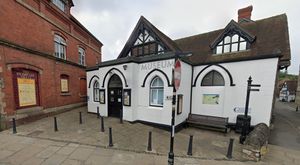
Can you name the town that was the inspiration for the modern Olympic Games? While the ancient games were created by and organised by Greece, the town which inspired the modern Games is much closer to home.
At the Much Wenlock Museum, you’ll be able to discover how Baron Pierre de Coubertin was inspired to start the modern Olympics when he visited the Much Wenlock Olympian Games in the 1880s.
The museum also provides greater details about the town and surrounding area’s past and geology, while there is also the opportunity to follow the Wenlock Olympian Trail that starts and ends at the museum.
2. The Shropshire Woolly Mammoth

Discovered by a a woman walking her dog by a nearby gravel quarry in 1986, this 14,000-year-old creature can be seen at various museums across Shropshire.
A replica can be found at the Shropshire Hill’s Discovery Centre in Cavern Arms, where there is also an entire exhibition of the discovery.
The fossilised bones can be seen at Shrewsbury’s Museum and Art Gallery in a temperature-controlled cabinet and is one of the most complete mammoth skeletons ever discovered in the United Kingdom.
The skeleton of the adult male was unearthed accompanied by partial skeletons of several juvenile mammoths.
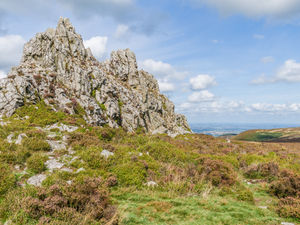
3. The Devils Chair, Stiperstones
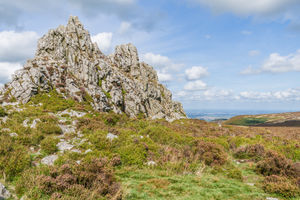
The Stiperstones are a distinctive part of Shropshire, stretching out from the south of Shrewsbury towards Bishops Castle, covering a large area and providing some spectacular scenery.
One of the more unique parts of the area is the Devils Chair, which local legend says the rocks of which were brought there by the Devil himself.
The story tells that he was carrying a load of stones in his apron and travelling across Britain and was in need of a rest, but as he got up after his rest on the highest rock of the Stiperstones, his apron strings snapped, and the rocks scattered across the hilltop where they still lie today.
There's no real answer as to why the Devil wore an apron, but the rock formation and setting make it a must-visit hidden gem.
4. Moreton Corbet Castle, Shrewsbury
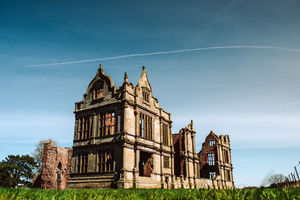
The ruins of Moreton Corbet Castle are the result of more than 800 years of building, combining elements of a medieval castle and a fashionable Elizabethan mansion.
The original timber castle of about 1100 was replaced in stone about 1200, then in the 1560s, Sir Andrew Corbet began to remodel the castle, and from 1579 his son Robert began its transformation into a mansion with an elaborate three-storey south range and a formal garden.
The Corbets lost interest in the castle as a residence after 1680 and it slowly fell into decay, but the site has become a popular site for visitors, as well as a place for picnics on a summer evening.
5. Caractacus' Cave on Caer Caradoc, Church Stretton
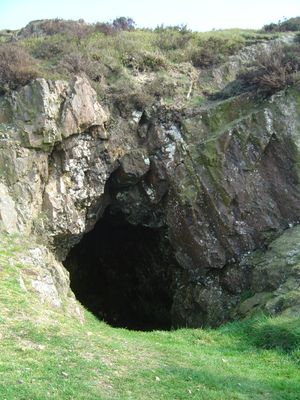
Within the Shropshire Hills lies Caer Caradoc, a hill with a secret waiting to be discovered.
Hidden on the slopes of the hill is Caractacus’ Cave, lying some 25 vertical metres beneath the highest point of Caer Caradoc.
The cavern is rumoured to be where Caractacus hid after making a last stand on the hill against the Roman legions during their conquest of Britain.
It's in a remote setting and hard to find, but well worth a look if you stumble upon it.
6. Flaxmill Maltings, Shrewsbury
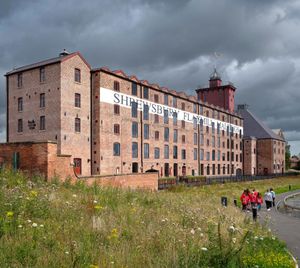
The Flaxmill Maltings is testament to Shropshire’s industrial heritage and was recognised as the world’s first multifloored iron-framed building.
The site offers visitors a glimpse into the past through its well-preserved architecture and informative exhibitions.
The Main Mill first opened in 1797 as a purpose-built flax mill. Since then, the site has grown and been repurposed and adapted many times.
It was a maltings from 1897 to 1987, a temporary army barracks during the Second World War, and today, it continues to evolve as a workspace and a place to celebrate and explore the past.
7. Hawkstone Park Follies, Weston
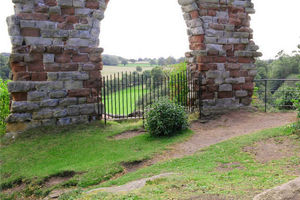
Set amid 100 acres of stunning scenery between Shrewsbury and Whitchurch, the park is filled with magical Follies around every corner.
It is one of Britain's original theme parks and is a fantasy landscape full of bridges, towers and caves which has been inspiring visitors for more than 250 years.
In amongst the tree-capped hills there's a tower, a 100ft-tall column with a statue on top and a platform that gives views to the Wrekin, the Breidden hills and Wales, down to Cannock chase and across the plains of Shropshire and Cheshire.
There's a grotto, a stone arch and a series of caves on one of the hilltops, and a network of pathways that lead to spectacular views from clifftops.
8. Snailbeach Mine, Shrewsbury
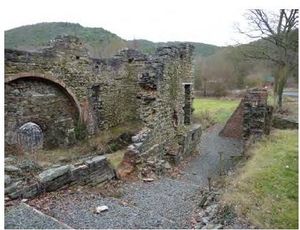
Discover the remnants of Snailbeach Mine, a once-thriving hub of lead mining activity in Shropshire and which is still one of the most complete collection of mine building remains in England.
With extensive, unspoilt views looking out over the beautiful Rea Brook valley, this site is a very important part of Shropshire's industrial heritage and is protected as a scheduled ancient monument.
Take an underground guided tour by Shropshire Mines Trust through the old mine tunnels to see how and where the miners used to work.
This large site also includes pools, a small reservoir and areas of woodland for visitors to explore on a warren of paths and trails.
9. Kerry Vale Vineyard, Pentreheyling
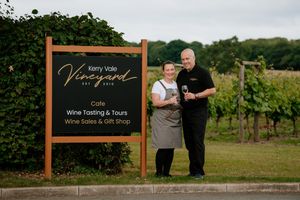
The family-owned winery sits on the England/Wales border and offers visitors the chance to sample award-winning wines amid some dynamic and panoramic views.
Visitors can take a walk through the vineyards, basking in the serenity of the surroundings, before enjoying a guided tour of the winemaking process.
The visitor centre is inspired by a Dutch barn that once stood on the vineyard, and the purpose built Cellar Door shop welcomes visitors with its contemporary and modern design.
The shop offers a range of wines, an exclusive collection of guest wines, and a selection of locally produced food which can be gift-wrapped for a present.
Have we missed a sight that you think people should know about? If so, please list it in the comments below.