Peaky Blinders: Splitting the fact from the fiction ahead of new film with Professor Carl Chinn
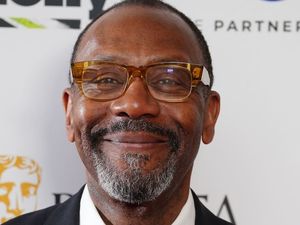
Proud Birmingham patriot and the world’s premier authority on the real Peaky Blinders, Professor Carl Chinn MBE sat down with a chat for us to help separate fact from fiction ahead of the release of Peaky Blinders: The Immortal Man.
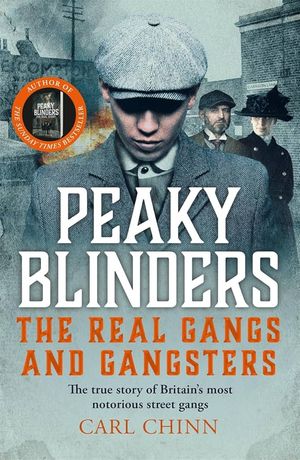
In his latest book, Peaky Blinders: The Real Gangs And Gangsters, Carl delves into the stories of the real men and women who were part of the times, and illuminates how the drama we love is, of course, just a drama, yet the reality is all the more brutal.
“I've gone back to the real Peaky Blinders and looked at them in a lot more detail,” said Carl. “I wanted to understand who were the men, who were the worst people, who were the gang leaders, what were the worst gangs. I wanted to then embed that within a broader context of time and place.”
In the book, Carl paints the picture of the class divide that existed in Victorian and Edwardian Birmingham, and how this played a huge part in the birth and growth of the region’s gangs.
“Birmingham was praised as the best governed city in the world, but the poor didn't see any of that,” he said. “I wanted to understand why so many men - young men and then older men - remained violent and petty thieves all their lives. What made them that way? And I came to the conclusion that they were marginalized - they were excluded.
“They had no political power. They didn't vote. It wasn’t until 1918 that all working class men got the vote. So they were politically excluded, but they were also economically excluded.
“Bar for a few rare exceptions, they were laborers, unskilled men and street traders. They were scratching around for a living. So, they've got no political power, no economic power, and no cultural power in a class-biased system. The only thing they've got is their fists.
“I'm not excusing it, but we have to understand that this was a really, really physical world, and ‘hardness’ was valued to be able to survive.”
Grandson of a Peaky Blinder himself, Carl has spent a 40-year career digging into the stories and history of the working people of 19th and 20th century Birmingham. With this he is able to set the record straight about the pop culture presentation of the Peaky Blinders, including the truth about their famous fashion, and how they actually came by their moniker.

“The backstreet gangs really came in from 1868-69, and from 1872 they were known as ‘sloggers’,” said Carl. “From 1890, the term ‘Peaky Blinder' came in for sloggers who had a new fashion.
“They're wearing billycock hats, and they have skinhead haircuts, and a quiff. They wet the brims of their hats, held them over a fire, and they make it like a funnel. Then they pull it over one eye - ‘blinding’ the eye. This is where the name comes from. When the flat cap comes in, they do the same.”
With this, we were curious to find out if there was any truth to the legend of the razor blades in the peaks - portrayed as a weapon of choice for Tommy Shelby and Co. in Steven Knight’s drama.”
“I’m afraid there isn’t,” said Carl. “They couldn't afford safety razors. Working class men went to the barbers for a shave. In the First World War, British Tommys were given cut-throat razors. The American soldiers, from 1917 when they joined the war, were given disposable safety razor blades, but our lads weren’t.”
Alongside this, Carl points to another fable surrounding the so-called ‘dapper’ gangsters.
“There was a fashion that distinguished them - the quiff, the silk scarf knotted at the front, the bell-bottom trousers - but a lot of Peaky Blinders couldn't afford all this fashion,” he said. “In the drama we see them wearing very sharp new suits, but in reality they would more likely be wearing second and third-hand clothes - really poor quality clothing.”
Yet, as Carl illuminates, the biggest difference between reality and what we see on screen is the morality of the men behind the flat caps.
“The real Peaky Blinders were not antiheroes - they weren’t ‘Robin Hoods’,” he said. “They were very violent men - thugs - and not men to be admired. They baited the police and they bullied the hardworking poor amongst whom they lived.
“They were not misunderstood men who were respectful to women, kind to children, and who looked after the elderly. In reality, there was nothing glamorous about them.”
Though Peaky Blinders has, naturally, been created using a helping of artistic licence, Carl is delighted about the impact the show has had, and hopes that this will continue now that Small Heath’s most scurrilous are headed for the big screen.
“Steven Knight has been very successful in drawing younger people into wanting to know more,” he said. “The Black Country Living Museum has boomed because of the filming there and I'm hoping that his Digbeth Loc Studios in Birmingham is a huge success because in the West Midlands we've lost out to Manchester and Salford and London in terms of studios.
“I wish him every success and I’m sure the new film will be great!”
Peaky Blinders: The Real Gangs and Gangsters by Carl Chinn is available now.
Carl was also interviewed for feature documentary Peaky Blinders: The Real Story byReel2Reel Films. This is available to buy or rent now on iTunes, Sky, Amazon, Google, Virgin, and Rakuten.