War widens to include Tehran-backed militias as Israeli and US planes pound Iran
The US embassy compound in Kuwait has apparently been struck as Iranian-backed militias fired missiles at Israel and Arab states.
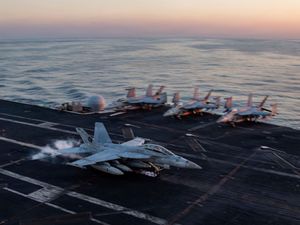
Iran and Iranian-backed militias have fired missiles at Israel and Arab states, apparently hitting the American embassy compound in Kuwait, while Israel and the United States pounded targets in Iran as the war in the Middle East expanded.
Fire and smoke rose from inside the embassy compound in Kuwait City after the Iranian attack, which came not long after the US issued a warning to Americans there to take cover and for others to stay away. There were no immediate reports of damage or casualties.
Later, Kuwait’s defence ministry said several US warplanes crashed in the country on Monday, with all the pilots safely bailing out.
The ministry did not elaborate on what caused the crashes but it came during an intense period of Iranian fire targeting the country.
The Kuwaiti defence ministry said the pilots had been taken to a hospital for checks and their condition was stable.

The Iranian Red Crescent Society said the US-Israeli air strike campaign has killed 555 people so far in Iran so far.
As the American and Israeli air strikes continued, top Iranian security official Ali Larijani vowed on X that “we will not negotiate with the United States”.
In Iraq, a pro-Iranian militia claimed responsibility for a drone attack targeting US troops at Baghdad airport, the day after it said it fired at an American base in the city of Irbil in the north.
Cyprus said a drone attack targeted a British base on the Mediterranean island nation.
Also on Monday morning, Saudi Arabia’s Ras Tanura oil refinery came under attack from drones, the kingdom’s defence ministry said, with authorities downing the incoming aircraft.
A Saudi military spokesman made the announcement on the state-run Saudi Press Agency.
Online videos from the site appeared to show thick black smoke rising after the attack. Even successfully intercepted drones cause debris that can spark fires and injure those on the ground.
Ras Tanura, near Dammam, has a capacity over half a million barrels of crude oil a day.
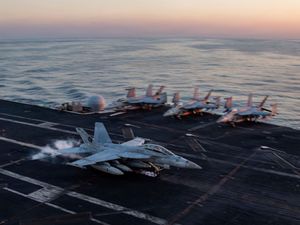
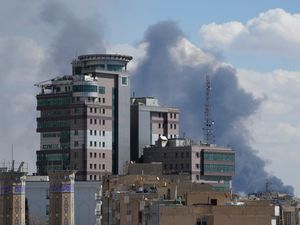
Israel and the US bombed Iranian missile sites and targeted its navy, claiming to have destroyed its headquarters and multiple warships.
More than 200 people have been killed since the start of the strikes, according to Iranian leaders.
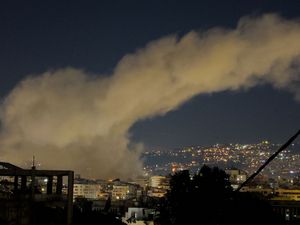
As the bombardment continues, Hezbollah said it fired missiles from Lebanon into Israel early on Monday in response to the killing of Iranian Supreme Leader Ali Khamenei and “repeated Israeli aggressions”.

It was the first attack the Lebanese militant group has claimed in more than a year. There were no reports of injuries or damage, and Israel said that it had intercepted one projectile while several fell in open areas.
Israel retaliated with strikes on Lebanon, killing at least 31 people and wounding 149 others, according to Lebanon’s health ministry.
About two thirds of the dead were in the country’s south.
Following its initial strikes on Beirut, Israel urged civilians in nearly 50 villages in eastern and southern Lebanon to evacuate ahead of more possible attacks, sending people fleeing.
Lebanon’s government said it was holding an emergency meeting after Hezbollah’s attack on Israel triggered the Israeli air strikes.
Iran has been firing missiles at Israel and Arab states in a counter-offensive since the joint America-Israeli attack on Saturday that killed Mr Khamenei and many top Iranian officials.
Gulf Arab states have warned that they could retaliate against Iran after strikes that hit key sites and killed at least five civilians, and US president Donald Trump promised Washington would “avenge” the deaths of three American troops who were killed in Kuwait.
“Sadly, there will likely be more before it ends,” Mr Trump said. “That’s the way it is.”
Mr Trump has urged Iranians to “take over” their government. While he also signalled he would be open to dialogue with new leadership there following the death of Mr Khamenei, he suggested on Sunday there was no end in sight to the military operations.
“Combat operations continue at this time in full-force, and they will continue until all of our objectives are achieved,” the US leader said in a video message. “We have very strong objectives.”
The US military said B-2 stealth bombers struck Iran’s ballistic missile facilities with 2,000lb bombs.
Mr Trump said on social media that nine Iranian warships had been sunk and that the Iranian navy’s headquarters had been “largely destroyed”.
In an indication the conflict could draw in other nations, the UK, France and Germany said they were ready to work with the US to help stop Iran’s attacks, and a group of Gulf Arab countries said it reserved the right to respond to Iranian strikes.

The weekend attacks were the second combined strikes in eight months from the US and Israel against Iran.
In the 12-day war last June, Israeli and American strikes greatly weakened Iran’s air defences, military leadership and nuclear programme. But the killing of Mr Khamenei, who ruled Iran for more than three decades, creates a leadership vacuum, increasing the risk of regional instability.
Also on Monday, the World Health Organisation called for sparing civilians and healthcare facilities in the Middle East amid the escalating conflict.
“The protection of civilians and health care must be absolute,” Hanan Balkhy, regional dietitian at WHO wrote on social media. “All parties must … ensure medical facilities remain protected.”