Russian and Ukrainian officials in Geneva for US-brokered talks
The talks, due to be held over two days, were expected to start later in the day.
Delegations from Moscow and Kyiv were in Geneva on Tuesday for another round of US-brokered peace talks, a week before the fourth anniversary of Russia’s full-scale invasion of its neighbour.
Ukrainian President Volodymyr Zelensky said his government’s delegation was in Switzerland, and Russian state news agency Tass said the Russian delegation also had arrived.
Talks, due to be held over two days, were expected to start later in the day.
“Tough” discussions about the future of Russian-occupied Ukrainian territory are expected as US President Donald Trump’s envoy, Steve Witkoff, and son-in-law Jared Kushner, sit down with the delegations, according to a person familiar with the talks who spoke to The Associated Press on condition of anonymity.

That is because Russian officials are still insisting that Ukraine cede control of its eastern Donbas region.
In Geneva, military leaders from the three countries will discuss how ceasefire monitoring will work, and what is needed to implement it, the person said.
During previous talks in Abu Dhabi, military leaders looked at how a demilitarised zone could be arranged and how everyone’s militaries could talk to one another, they said.
But expectations for any breakthrough in the latest negotiations are low, with neither side apparently ready to budge from their positions on key territorial issues, despite the United States setting a June deadline for a settlement.
Ukraine’s short-handed army is locked in a war of attrition with Russia’s bigger forces along the roughly 1,250-km (750-mile) front line. Ukrainian civilians are enduring Russian aerial barrages that repeatedly knock out power and destroy homes.
The future of the almost 20% of Ukrainian land that Russia occupies or still covets is a central question in the talks, as are Kyiv’s demands for post-war security guarantees with a US backstop to deter Moscow from invading again.
Mr Trump described the Geneva meeting as “big talks”.
“Ukraine better come to the table fast,” he told reporters late on Monday as he flew back to Washington from his home in Florida.
It was not immediately clear what Mr Trump was referring to in his comment about Ukraine, which has committed to, and taken part in, negotiations in the hope of ending Russia’s devastating onslaught.
The commander of the US military – and Nato forces – in Europe, General Alexus Grynkewich, and Secretary of the US Army Dan Driscoll will attend the meeting in Geneva on behalf of the US military and meet with their Russian and Ukrainian counterparts, Colonel Martin O’Donnell, a spokesman for the US commander said.

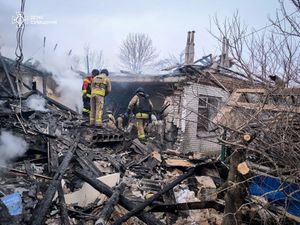
Overnight, Russia used almost 400 long-range drones and 29 missiles of various types to strike 12 regions of Ukraine, injuring nine people, including children, according to the Ukrainian president.
Mr Zelensky said tens of thousands of residents were left without heating and running water in the southern port city of Odesa.
Mr Zelensky said Moscow should be “held accountable” for the relentless attacks, which he said undermine the US push for peace.
“The more this evil comes from Russia, the harder it will be for everyone to reach any agreements with them. Partners must understand this. First and foremost, this concerns the United States,” the Ukrainian leader said on social media late Monday.
“We agreed to all realistic proposals from the United States, starting with the proposal for an unconditional and long-term ceasefire,” Mr Zelensky said.
American, Russian and Ukrainian military chiefs will discuss how ceasefire monitoring might work after any peace deal, the AP source said.
Talks earlier this year in Abu Dhabi focused on issues such as how a demilitarised zone might be set up in disputed areas and how all the sides’ militaries could remain in contact, the source said.
The talks in Geneva are taking place as US officials also held indirect talks with Iran in the Swiss city.
Following the second round of talks in Abu Dhabi, the US said it re-established direct military communication with Russia and that Gen Grynkewich hoped to start high-level dialogue with General Valery Gerasimov, the head of Russia’s military.