Myanmar holds initial phase of first election since military seized power
Final results will not be known until after two more rounds of voting are completed later in January.
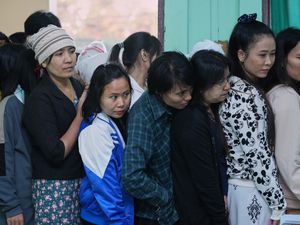
The initial phase of Myanmar’s first general election in five years has been held, under the supervision of its military government while a civil war rages throughout much of the country.
Final results will not be known until after two more rounds of voting are completed later in January. It is widely expected that Min Aung Hlaing, the general who has ruled the country with an iron hand since an army takeover in 2021, will then assume the presidency.
The military government has presented the vote as a return to electoral democracy, but its bid for legitimacy is marred by bans on formerly popular opposition parties and reports that soldiers have used threats to force voters to participate.

While more than 4,800 candidates from 57 parties are competing for seats in national and regional legislatures, only six are competing nationwide with the possibility to gain political clout in parliament.
The well-organised and funded Union Solidarity and Development Party, with its support from the military, is by far the strongest contender.
Voting is taking place in three phases, with Sunday’s first round held in 102 of Myanmar’s 330 townships. The second phase will take place on January 11, and the third on January 25. Final results are expected to be announced by February.
Critics charge the election is designed to add a facade of legitimacy to military rule that began when the military removed the elected government of Aung San Suu Kyi in February 2021. It blocked her National League for Democracy party from serving a second term despite winning a landslide victory in the 2020 election.

They argue the results will lack legitimacy due to the exclusion of major parties and limits on freedom of speech and an atmosphere of repression.
The expected victory of the military-backed Union Solidarity and Development Party makes the nominal transition to civilian rule a chimera, opponents of military rule and independent analysts say.
“An election organised by a junta that continues to bomb civilians, jail political leaders, and criminalise all forms of dissent is not an election – it is a theatre of the absurd performed at gunpoint,” Tom Andrews, the UN-appointed human rights expert for Myanmar, posted on X.
But holding the election may provide an excuse for neighbours such as China, India and Thailand to continue their support, claiming the election promotes stability.
Western nations have maintained sanctions against Myanmar’s ruling generals due to their anti-democratic actions and the war against their opponents.

According to a count carried out at one polling station in Yangon after the polls closed on Sunday, 524 of 1,431 registered voters – just under 37% – had cast their ballots.
Of those, 311 voted for the pro-military Union Solidarity and Development Party, suggesting opposition calls for a voter boycott may have been heeded.
Ms Suu Kyi, Myanmar’s 80-year-old former leader, and her party are not participating in the polls.
She is serving a 27-year prison term on charges widely viewed as spurious and politically motivated.
Her party, the National League for Democracy, was dissolved in 2023 after refusing to register under new military rules.
Other parties also refused to register or declined to run under conditions they deem unfair, and opposition groups have called for a voter boycott.

Amael Vier, an analyst for the Asian Network for Free Elections, noted a lack of genuine choice, pointing out 73% of voters in 2020 cast ballots for parties that no longer exist.
Mobilising opposition is difficult under the military’s repression.
According to the Assistance Association for Political Prisoners, more than 22,000 people are currently detained for political offences, and more than 7,600 civilians have been killed by security forces since they seized power in 2021.
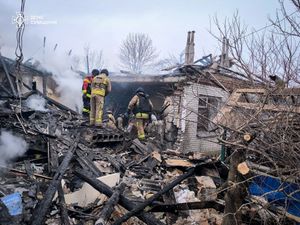
Armed resistance arose after the army used lethal force to crush non-violent protests against its 2021 takeover. The ensuing civil war has left more than 3.6 million people displaced, according to the UN.
A new Election Protection Law imposes harsh penalties and restrictions for virtually all public criticism of the polls.