Bangladesh tribunal indicts ousted PM Hasina over deaths of protesters
A mass uprising last year saw hundreds of students killed.
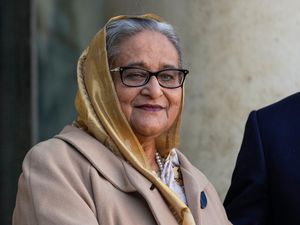
A special tribunal has indicted Bangladesh’s ousted prime minister Sheikh Hasina by accepting charges of crimes against humanity filed against her in connection with a mass uprising in which hundreds of students were killed last year.
A three-member panel, headed by Justice Golam Mortuza Mozumder, indicted Hasina, former home minister Asaduzzaman Khan and former police chief Chowdhury Abdullah Al-Mamun on five charges.
Hasina and Khan are being tried in absentia.
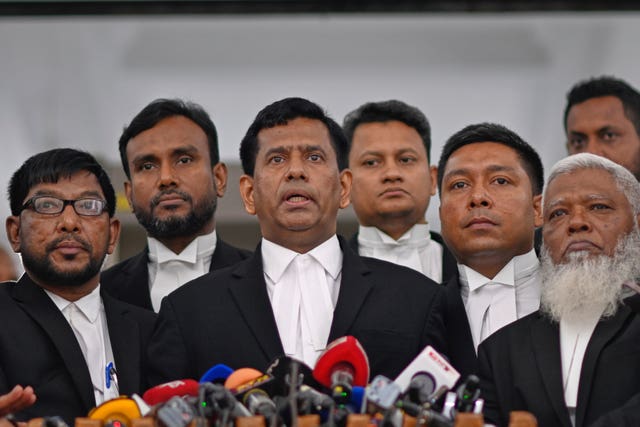
The tribunal opened the trial on June 5 and asked Hasina to appear.
Authorities published newspaper advertisements asking Hasina, who has been in exile in India, and Khan to appear before the tribunal.
Hasina has been in exile since August 5.
Bangladesh’s interim government, headed by Nobel Peace Prize laureate Muhammad Yunus, sent a formal request to India for Hasina’s extradition but India has not responded.
Khan is possibly also in India.
Al-Mamun was arrested and was in the dock on Thursday while the judges indicted them.
Al-Mamun pleaded guilty and told the tribunal that he would make a statement in favour of the prosecution at a later stage.
The prosecution offered a leaked audio of Hasina and other documents as evidence to the tribunal.
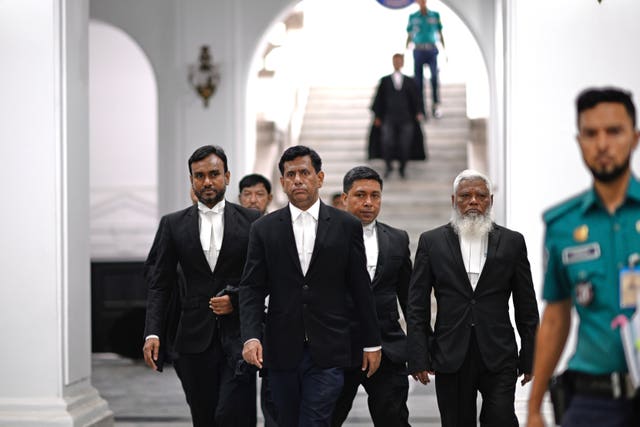
Amir Hossain, a lawyer appointed by the state for Hasina and Khan, appeared at Thursday’s hearing and filed a petition to drop their names from the case but the tribunal rejected the plea.
The tribunal later fixed August 3 for the opening statement by the prosecution and August 4 for recording witness statements.
In a post on X, the Awami League accused the Yunus-led administration of manipulating the judiciary.
“People have lost their faith over the judicial system as Yunus regime has reduced this key state organ into a means to prosecute dissenters,” it said.
“We condemn in strongest term the indictment against our party president and other leaders as we assert that this step marks another testament to the ongoing witch hunt against our party and weaponization of judiciary by Yunus regime.”
Hasina and her Awami League party previously criticised the tribunal and its prosecution team for connections to political parties, especially the Jamaat-e-Islami party.
Filing five charges, the prosecution argued Hasina was directly responsible for ordering all state forces, her Awami League party and its associates to carry out actions leading to mass killings, injuries, targeted violence against women and children, the incineration of bodies and denial of medical treatment to the wounded.
The charges describe Hasina as the “mastermind, conductor, and superior commander” of the atrocities.
The interim government has already banned the Awami League party and amended relevant laws to allow the trial of the former ruling party for its role during the uprising.
In February, the UN human rights office estimated up to 1,400 people may have been killed in Bangladesh over three weeks of crackdowns on the student-led protests against Hasina and two weeks after her fall on August 5.
Earlier this month the tribunal sentenced Hasina to six months in jail after she was found in contempt of court for allegedly claiming she had a licence to kill at least 227 people.
The sentence was the first in any case against Hasina since she fled to India.
The contempt case stemmed from a leaked audio recording of a supposed phone conversation between Hasina and a leader of the student wing of her political party.
A person alleged to be Hasina is heard on the audio saying: “There are 227 cases against me, so I now have a licence to kill 227 people.”
The tribunal was established by Hasina in 2009 to investigate and try crimes involving Bangladesh’s independence war against Pakistan in 1971.
The tribunal under Hasina tried politicians, mostly from the Jamaat-e-Islami party, for their actions during the nine-month war.
Aided by India, Bangladesh gained independence from Pakistan under the leadership of Sheikh Mujibur Rahman, Hasina’s father and the country’s first leader.