Nato leaders agree to hike military spending after pressure from Trump
The leaders also underlined their ‘ironclad commitment’ to Nato’s collective security guarantee – ‘that an attack on one is an attack on all’.
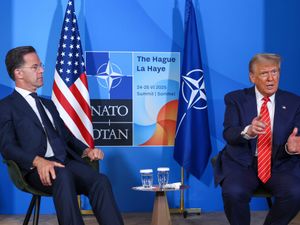
Nato leaders have agreed on a massive hike in defence spending after pressure from US President Donald Trump, and expressed their “ironclad commitment” to come to each other’s aid if attacked.
The 32 leaders endorsed a final summit statement saying: “Allies commit to invest 5% of GDP annually on core defence requirements as well as defence- and security-related spending by 2035 to ensure our individual and collective obligations.”
Spain had already officially announced that it cannot meet the target, and others have voiced reservations, but the investment pledge includes a review of spending in 2029 to monitor progress and reassess the security threat posed by Russia.

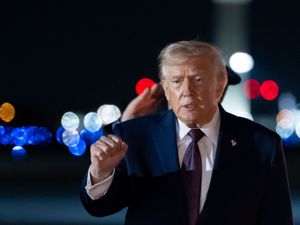
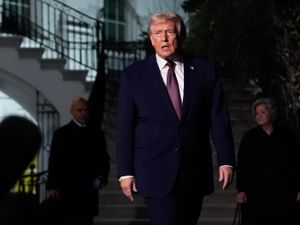
Mr Trump called the spending boost “something that no-one really thought possible. And they said, ‘You did it, sir. You did it.’ Well, I don’t know if I did it, but I think I did”.
The leaders also underlined their “ironclad commitment” to Nato’s collective security guarantee – “that an attack on one is an attack on all”.
Ahead of the summit, Mr Trump had again raised doubts over whether the United States would defend its allies.
The show of unity vindicated Nato secretary general Mark Rutte’s billing of the summit as “transformational”, even though it papered over divisions.
“Together, allies have laid the foundations for a stronger, fairer and more lethal Nato,” Mr Rutte told reporters after chairing the meeting in The Hague.
“This will fuel a quantum leap in our collective defence.”
The spending hike requires each country to spend billions of dollars.

It comes as the United States – Nato’s biggest-spending member – shifts its attention away from Europe to focus on security priorities elsewhere, notably in the Middle East and Indo-Pacific.
But ahead of the meeting, Spain announced that it would not be able to reach the target by the new 2035 deadline, calling it “unreasonable”.
Belgium signalled that it would not get there either, and Slovakia said it reserves the right to decide its own defence spending.
Spanish Prime Minister Pedro Sanchez stood conspicuously aside from other leaders in the summit family photo.
After the meeting, he said that Spain can execute Nato’s defence plans by spending only 2% of gross domestic product on defence.
“In today’s summit, Nato wins and Spain wins something very important for our society, which is security and the welfare state,” Mr Sanchez said.
Mr Trump lashed out at Spain after the meeting.

“They want to stay at 2%. I think it’s terrible,” he said.
“You know what we’re going to do? We’re negotiating with Spain on a trade deal. We’re going to make them pay twice as much.”
Many European countries face major economic challenges, and Mr Trump’s global tariff war could make it even harder for America’s allies to reach their targets.
Some countries are already squeezing welfare and foreign aid spending to channel extra funds into their military budgets.
On Tuesday, Mr Trump complained that “there’s a problem with Spain. Spain is not agreeing, which is very unfair to the rest of them, frankly”.
He has also criticised Canada as “a low payer”.
In 2018, a Nato summit during Mr Trump’s first term unravelled due to a dispute over defence spending.
But Mr Rutte conceded that “these are difficult decisions. Let’s be honest. I mean, politicians have to make choices in scarcity. And this is not easy”.
But he said: “given the threat from the Russians, given the international security situation, there is no alternative”.
Other countries closer to the borders of Russia and Ukraine – Poland, the three Baltic states and Nordic countries – have committed to the goal, as have Nato’s European heavyweights Britain, France, Germany and the Netherlands.
In their statement, the leaders said they were united “in the face of profound security threats and challenges, in particular the long-term threat posed by Russia”.

It had been feared that Mr Trump would object to that assessment, which European governments need to justify higher spending.
The US president has been reluctant to support Ukraine in its war against Russia’s full-scale invasion.
“We stand by Ukraine in its pursuit of peace and will continue to support Ukraine on its irreversible path to Nato membership,” Mr Rutte said.
The Trump administration has vetoed Ukraine’s bid to join Nato for the foreseeable future.
Finnish President Alexander Stubb said the agreement “is a big win, I think, for both President Trump and I think it’s also a big win for Europe”.
He told reporters that “we’re witnessing the birth of a new Nato, which means a more balanced Nato”.
Mr Stubb said it would take nations “back to the defence expenditure levels of the Cold War”.
Nato countries started to cut their military budgets in safer times after the Berlin Wall collapsed in 1989.
UK Prime Minister Sir Keir Starmer threw his weight behind the hike, declaring: “This is the moment to unite, for Europe to make a fundamental shift in its posture and for Nato to meet this challenge head-on.”
In a fresh take on Mr Trump’s Maga movement, Lithuanian President Gitanas Nauseda said: “We should choose a motto, ‘make Nato great again’.”
After Russia’s full-scale invasion of Ukraine in 2022, the Nato allies agreed to make 2% of GDP the minimum spending level.
Last year, 22 countries were expected to hit that target, up from just three a decade ago.
In The Hague, the allies endorsed a major revamp of their spending targets.
They upped the ante for what Nato calls “core defence spending” to 3.5%, while changing how it is counted to include providing military support to Ukraine.

To hit Mr Trump’s 5% demand, the deal set a second target of 1.5% of GDP for a broader range of defence-related spending, such as improving roads, bridges, ports and airfields so that armies can deploy more quickly, countering cyber and hybrid attack measures, or preparing societies to deal with future conflicts.
Progress will be reviewed in 2029, after the next US presidential election.
“This declaration is historic. We are 32 allies supporting that ambition, which is huge,” said Norwegian Prime Minister Jonas Gahr Store.
“We have been struggling to get above 2% and now we said 3.5%, which is necessary in order to reach our capabilities.”
Earlier this month, Nato agreed individual purchasing targets for nations to stock up on weapons and military equipment to better defend Europe, the Arctic and the North Atlantic, as part of the US push to ramp up security spending.
Extra funds will also be needed should the Trump administration announce a draw-down of forces in Europe, where around 84,000 US troops are based, leaving European allies to plug any security gaps.
The Pentagon is expected to announce its intentions in coming months.
Beyond Mr Trump’s demands, European allies and Canada have steeply ramped up defence spending out of concern about the threat posed by Russia.
Several countries are concerned that Russia could carry out an attack on Nato territory by the end of the decade.
Hungary is not one of them, though.
“I think Russia is not strong enough to represent a real threat to us. We are far stronger,” said Hungarian Prime Minister Viktor Orban, fielding questions from reporters, leaning back with his hands thrust into his pockets.
Mr Orban is considered Russian President Vladimir Putin’s closest ally in Europe.