Starmer says UK working with allies on ‘viable plan’ to open Strait of Hormuz
The Prime Minister has resisted Donald Trump’s demands to send Royal Navy warships to help secure the vital shipping route.
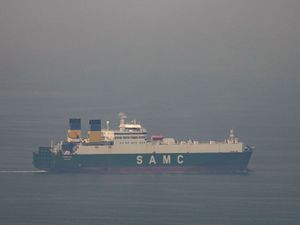
Sir Keir Starmer said he is working with allies on a plan to reopen the Strait of Hormuz.
The Prime Minister has resisted Donald Trump’s demands to send Royal Navy warships to help secure the vital shipping route for oil and gas which has been effectively closed to tankers by the Iran war.
He said the UK was working with countries, including European allies, on a “viable plan” to ease the crisis, which has driven up global oil prices.

The Prime Minister also set out measures to ease the cost-of-living pressures in the UK, with a plan to help households reliant on heating oil.
Setting out his response in a Downing Street press conference Sir Keir said he would not allow the UK to be drawn into a “wider war” in the Middle East.
He said: “We’re working with all of our allies, including our European partners, to bring together a viable collective plan that can restore freedom of navigation in the region as quickly as possible and ease the economic impacts.”

The Prime Minister discussed the issue with Mr Trump on Sunday.
The US president has warned the future of Nato could be at stake unless allies agreed to his demand to provide ships.
The UK could potentially send mine-hunting drones to the region rather than a warship, although Sir Keir insisted no final decisions had been made.
Mr Trump said Nato faces a “very bad” future should its member states fail to help, adding: “We’ll see if they help us, because I’ve long said that we’ll be there for them but they won’t be there for us.”
In an interview with the Financial Times, Mr Trump reiterated his call for allied assistance in the Strait of Hormuz, telling the paper: “It’s only appropriate that people who are the beneficiaries of the strait will help to make sure that nothing bad happens there.”
He has previously called for the UK, China, France, Japan and South Korea to send ships to secure the route.

Mr Trump again hit out at Sir Keir’s refusal to allow US forces to use UK bases in the initial wave of attacks against Iran.
“The UK might be considered the number one ally, the longest serving et cetera and when I asked for them to come, they didn’t want to come,” he told the Financial Times.
“And as soon as we basically wiped out the danger capacity from Iran, they said, ‘oh well we’ll send two ships’, and I said, ‘we need these ships before we win, not after we win’. I’ve long said that Nato is a one-way street.”

Asked about the Strait of Hormuz situation, Sir Keir said: “It is a discussion, we are not at a point of decisions yet, I want to really stress that.”
He said he had discussed the issue with countries in the Gulf and Europe as well as Mr Trump.
“It’ll have to be something which is agreed by as many partners as possible, is my strong view. We’re not at that stage yet, but we are working hard.”

The Prime Minister acknowledged the impact of rising oil and gas prices on households in the UK.
He announced the Government had issued a “legal direction” to energy companies to pass on savings from government policies already announced.
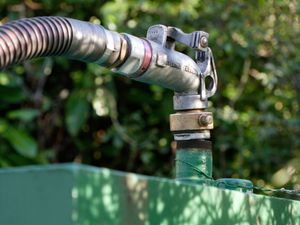
And he set out a £53 million package of support for “vulnerable” heating oil customers, focused on “those households that are most exposed”.
He also raised concerns about claims that suppliers of heating oil have cancelled orders and then hiked bills as prices have spiked.
“I simply will not allow companies to make huge profits from the hardship of working people,” he said. “That kind of conduct is completely unacceptable, so if the companies have broken the law, there will be legal action.”
England will receive £27 million to support heating oil customers, which will be distributed by local authorities.

Northern Ireland, which has the highest proportion of homes reliant on heating oil of the UK’s four nations, has been allocated £17 million, Scotland £4.6 million and Wales £3.8 million.
The Treasury said the funding has been allocated based on census data, with the money going to the devolved governments to distribute.
But the Government was not able to provide an estimate of the number of households that would benefit from the extra support.
Further measures could follow if the crisis continues, with Sir Keir declining to rule out a more significant intervention once the current energy price cap expires in July.
Asked whether he could implement a similar policy to the energy price guarantee introduced by Liz Truss in 2022 at a cost of tens of billions of pounds, he said it was “not sensible to say within a number of months’ time, not knowing what the situation will be, that the following will be ruled in or be out”.
He said: “My instinct is always to help working people in a situation like this.”

The Conservatives welcomed the announcement of the extra support, saying it would be “welcome for rural households who have been ripped off by rogue heating oil suppliers”.
But shadow energy secretary Claire Coutinho said the Government should “go further and cut everyone’s electricity bills by 20%” by adopting Tory energy policies.
She said: “The uncomfortable truth is that this scheme will be funded by Labour’s tax rises on working people – tax hikes that wouldn’t be necessary if (Energy Secretary) Ed Miliband hadn’t chosen to leave £25 billion worth of tax revenue in the ground by shutting down the North Sea.”